Pages

google analytics

Showing posts with label 1929. Show all posts

Monday, March 30, 2015

Dealing with Disloyalty within The Salvation Army


Many things have changed in The Salvation Army since it began in 1865 but, as the expression goes, plus ça change, plus c'est la même chose.  I have been reading A Man of Peace in a World at War–a biography of The Salvation Army’s fifth general, George Carpenter and it occurs to me that one of the things that has not really changed very much in all those years is the autocratic nature of our leadership.

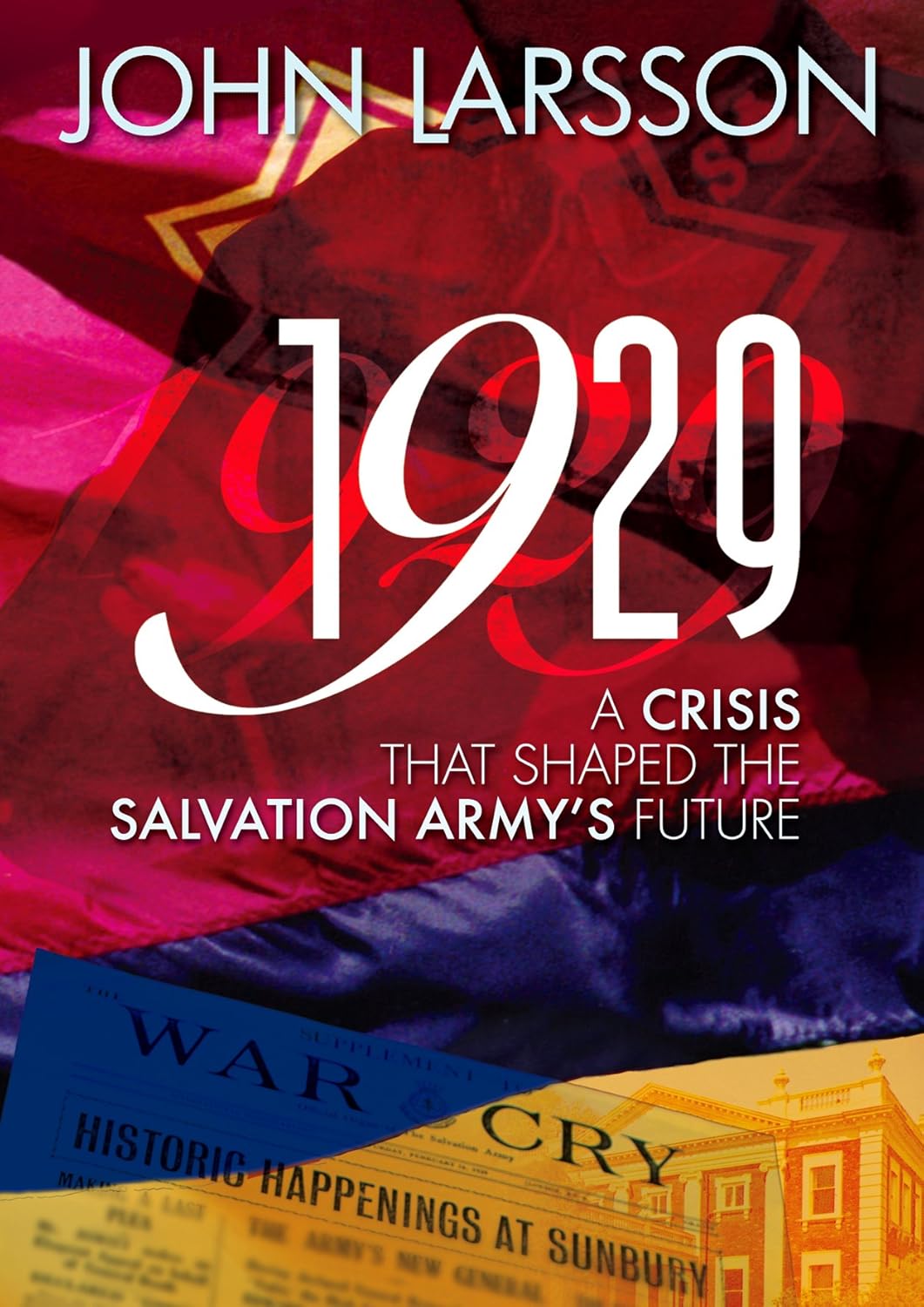
Carpenter confronted this dealing with General Bramwell Booth (son of the founders, and second general).  Then (in the 1920s) the issue was of Bramwell’s preferential treatment of his children within the army, and his inability to receive constructive criticism without taking offense.  (Some of those problems are dealt with in General John Larsson’s book 1929: A Crisis that Shaped The Salvation Army’s Future.) 

A letter from Carpenter to Bramwell Booth is quoted in the biography:

“The Army is perhaps the last great public body to remain under autocratic government.  In most civilized lands a man may speak openly as he feels concerning public affairs and rulers-from King, President, Prime Minister down.  And so long as he avoids libel no one may penalize him for so doing.  Within the Army there is a settled belief that one may be a Salvationist of unimpeachable devotion, of ability and godliness.  But should he or she express views out of accord with the General…he or she is accounted disloyal and is in consequence discredited.  This has a most unwholesome influence and produces an evil of secret disaffection much more to be feared in its present and ultimate effects than outward disloyalty. (Carpenter 160)”

The crisis of 1929 resulted in a change in the way that one becomes the General of The Salvation Army – but it did not change the autocratic style of leadership within our ranks. Officers and soldiers are still expected to salute and follow without question or comment.   Dissenting opinions are not tolerated. Officers who have opinions that are at variance to those held by our leaders at HQ are labeled as trouble makers, as heretics, as divisive.  I know of officers who have been told to “seek other employment” merely because they endorse the inclusion of LGBTQI individuals within our ranks.  I, myself, have been told, on more than one occasion, that if I hate the Army so much then I should leave –because I’ve had the temerity to interpret our doctrinal statements differently than some other officers.    

How did General Bramwell Booth respond to (then) Colonel Carpenter’s letter? 

“My Dear Carpenter,
Your letter, which is a bomb! needs consideration before I see you.  But let me say at once that your difficulties (if that is the right word) are really moonshine. (Carpenter 161)”

Colonel Carpenter was then transferred from his appointment at International headquarters to Australia.  Even though a memo went out instructing officers that no one was to attend Carpenter’s departure several Commissioners, senior officers, and employees gathered to bid him farewell. (163)

Punishment appointments and sudden transfers based on personal enmity?  These things don’t still happen, right?  Yeah, right.


Carpenter, Stella.  A Man of Peace in a World at War. Australia. Privately published. 1993.

Tuesday, December 31, 2013

What I’ve Read this Year- 2013

These are not  listed in the order I read them, or in order of my favor, or alphabetical order either... just a list.  My reviews and comments are in the links

Fiction
Stephen R. Lawhead – The Silver Hand
Stephen R. Lawhead – The Endless Knot
Stephen R. Lawhead - Byzantium
Alan Goldsher - Paul Is Undead: The British Zombie Invasion
Seth Grahame-Smith - Unholy Night
Madeleine L'Engle - A Wrinkle in Time
Madeleine L'Engle -A Wind in the Door
Madeleine L’Engle - A Swiftly Tilting Planet
Madeleine L'Engle - Many Waters
Katy Stauber - Revolution World
Robert A. Heinlein - The Moon Is a Harsh Mistress
C.S. Lewis - Out of the Silent Planet
C.S. Lewis – Perelandra
C.S. Lewis - That Hideous Strength
Franz Kafka -The Metamorphosis, In the Penal Colony, and Other Stories
Paul L. Maier - Pontius Pilate: A Novel
Jonathan Maberry - Rot and Ruin
Walter Wangerin Jr. - The Book of the Dun Cow
Tad Williams - The Dragonbone Chair
Tad Williams - Stone of Farewell
Tad Williams - To Green Angel Tower (Parts 1 & 2)
Philip K. Dick - The Man in the High Castle
Philip K. Dick - VALIS
Phillip K. Dick - A Scanner Darkly
Philip K. Dick - Do Androids Dream of Electric Sheep?
Philip K. Dick - Flow My Tears, the Policeman Said
Philip K. Dick - A Maze of Death
Jim Butcher - Summer Knight
Brandon Sanderson - The Rithmatist
Frank Herbert – Dune
Frank Herbert - Dune Messiah
Frank Herbert - Children of Dune
Orson Scott Card - Seventh Son
Orson Scott Card - Red Prophet
Orson Scott Card - Prentice Alvin
Orson Scott Card – Heartfire
Orson Scott Card - Alvin Journeyman
Orson Scott Card - The Crystal City
Ben Bova - Jupiter
George R.R. Martin - A Game of Thrones
Cullen Bunn - Deadpool Killustrated  
Clive Barker -The Thief of Always
Richard Adams - Watership Down
Robert Penn Warren - The Cave
Glenn Beck - Agenda 21
William Shakespeare - Hamlet
Henning Mankell - Faceless Killers
Henning Mankell - The Dogs of Riga
Newt Gingrich - 1945  
Dan Brown - Inferno
William Golding - The Inheritors
William Golding - Lord of the Flies
Joseph Conrad - Heart of Darkness  
Vladimir Nabokov - Lolita
Stephen King - Carrie
Stephen King - Joyland
Stephen King - From a Buick 8
Stephen King - The Shining
Stephen King - Firestarter
Stephen King - The Dark Half
Stephen King - Dolores Claiborne
Kim Paffenroth- Dying to Live
Matt Bronleewe - Illuminated
Jeff Lindsay - Darkly Dreaming Dexter

Non-Fiction
Madeleine L'Engle - Bright Evening Star: Mystery of the Incarnation
Deborah Blum - The Poisoner's Handbook: Murder and the Birth of Forensic Medicine in Jazz Age New York
Richard A. Burridge - Faith Odyssey: A Journey through Life
Archibald MacLeish - J.B.
Marvin Meyer -Judas: The Definitive Collection of Gospels and Legends about the Infamous Apostle of Jesus  
Charles R. Pellegrino - Return to Sodom and Gomorrah: Bible Stories from Archaeologists
Laurence Gardner - Bloodline of the Holy Grail (here, here, and here)
John Larsson - 1929
Edward Jay Epstein - The Annals of Unsolved Crime
Langston Hughes - Langston Hughes
Thomas Cahill - Desire of the Everlasting Hills: The World Before and After Jesus
Bill Bryson - Made in America: An Informal History of the English Language in the United States
Marion L. Soards - Scripture and Homosexuality: Biblical Authority and the Church Today
Valerie Mindlin - The Epic of the Maccabees
E.P. Sanders - The Historical Figure of Jesus
Travis Walton - Fire in the Sky: The Walton Experience
Louis Untermeyer - The Pan Book of Limericks
Lee Gurga  - Haiku: A Poet's Guide
Susan Stryker - The Transgender Studies Reader
Joseph Reino - Stephen King the First Decade: Carrie to Pet Sematary
Kenneth E Bailey - Open Hearts in Bethlehem: A Christmas Drama
Raymond E. Brown - An Adult Christ at Christmas
Michael J. Nelson - Mike Nelson's Mind over Matters
Jason Draper – A Brief History Album Covers
Marcella Althaus-Reid - Indecent Theology


Tuesday, June 25, 2013

1929 – The Salvation Army in Crisis – Hagiography Fails Us


These are a few of my thoughts as I’ve been reading former General John Larrson’s book -1929: A
Crisis that Shaped The Salvation Army’s Future [i]  (chapter 14)

The story of the 1929 crisis within the Salvation Army (the deposition of General Bramwell Booth and efforts to reform the leadership structure of the Army) is, for The Salvation Army, a slightly embarrassing story; some of our saints and heroes don’t come out so well.  Our hagiography fails us because the individuals in this story and participants of this struggle were fallible humans.  And this is not something we like to admit about our heroes and founders.    We (in whatever organization we belong) want to remember them as being heroic and brave and always advancing in righteousness and holy zeal.  But we know- if we will allow ourselves to admit it- that this isn’t really the case.

When the High Council of The Salvation Army voted to adjudicate Bramwell Booth as unfit to hold the office of the General, it was not with rancor or ill will; it was not a matter of personal resentments (at least, overall it was not.  Some of that may have played into their actions as well – they were, as we’ve said, fallible.)  They had pleaded with him to resign of his own free will so as to not force them into this last dramatic and painful step.  But Bramwell clung to the position even when it was clear to most everyone else that he should let it go.  Call it pride, call it fear, call it selfishness, Bramwell would not relinquish the command of The Salvation Army that had been bequeathed to him by his father, the Founder and first General. 

After receiving the news that the High Council had voted (55 to 8) to pass the ‘resolution relating to the adjudication and removal of General William Bramwell Booth’[ii]  Bramwell and his family announced that they were filing a legal injunction prohibiting the High Council from electing a new general – on the grounds that the 1904 Deed Poll (which gave the High Council the necessary legitimation) was never legally valid and, as such, the High Council had no authority to adjudicate the General’s fitness to hold office and that Bramwell was still the sole authority.

This was duplicitous and bare hypocrisy on the part of the General and his family. 

The 1904 Deed Poll (which augmented without changing the 1878 Constitution of The Salvation Army) had been enacted by William Booth and Bramwell was not only one of the driving forces behind its drafting, but had received his own generalship under its provisions.  Bramwell had long resisted the challenges of the High Council toward change arguing that he felt compelled to honor the wishes and intent of his father, the founder.  But as desperation often drives us to sacrifice our principles, Bramwell stood ready to throw out a quarter of a century’s worth of organization in order to retain his position.

Bramwell and the other members of his family (namely his wife, Flora, and his daughter, Commissioner Catherine Booth) had repeatedly assured the High Council,  the Salvation Army at large and the fascinated public (who were following the story in the newspapers and tabloids) that they would not stoop to taking legal action.  But now that the tide had turned against them, they had announced a legal injunction against the High Council.  This sudden reversal felt like a betrayal to four of those eight members of the High Council who had, to this point, refused to side against Bramwell, and they disassociated themselves from any further support of the Booth family.

Many were also quick to point out that the General’s action directly violated the Orders and Regulations of the Salvation Army: “In no case may Salvation soldiers go to law in the ordinary way with respect to differences which may exist between them.  This is positively prohibited by the Holy Spirit and must never be practiced – 1 Corinthians, Chapter 6, Verse 1.”[iii]

Our hagiography fails us – not because these were terrible, wicked people involved in nefarious plots and maliciousness – but because hagiographies always fail. They’re inherently problematic.  We humans are prone to failure, even the best of us will, when faced by pressure and anxiety, succumb to fear and pride and selfishness.

If we can remember this about our saints and heroes, we’ll be a lot better off. 


[i] Larrson, John 1929: A Crisis that Shaped The Salvation Army’s Future Salvation Books, London England, 2009.
[ii] Page 220
[iii] Orders and Regulations, 1927 edition, quoted on page 233

Wednesday, June 19, 2013

1929 – The Salvation Army in Crisis – Here Comes Your Nineteenth Nervous Breakdown


These are a few of my thoughts as I’ve been reading former General John Larrson’s book -1929: A Crisis that Shaped The Salvation Army’s Future [i]  (chapter 8)

As the movement to reform the leadership of The Salvation Army (in the issue of succession to the office of the General) gained momentum, General Bramwell Booth collapsed.  He had a nervous breakdown[ii] - the pressures of leadership piled upon his human frailties and rendered him incapacitated, unable to face the necessary changes and unable to think about anything else. This collapse broke his stride and he never fully recovered.

He was instructed by his doctors to take an extended break in order to rest and to recuperate his strength. There was nothing physically wrong with him. He just needed a healthy way to deal with stress of leading an international organization through a difficult period of transition.

But relax is exactly what Bramwell Booth could never do.

In her biography of her father, Catherin Bramwell Booth wrote of her father’s service during the years 1878 - 1928, “Fifty years of continuous work intervened.  He had furloughs, so called.  They never again included one work-free day.”[iii]

He worked when he was sick.  He worked on his days off.  He had no hobbies, no pass-times.  He worked and worked and worked.  But he could never rest.

We in the Salvation Army often celebrate the unflagging zeal of the early Salvationists.  We look back in awe at the work they accomplished in such a short time.  But at what cost?  Bramwell Booth, as an example of this ceaselessness, ruined his health and left the international Army in a dangerous lurch.  And, what is more, it demonstrates a poor understanding on the Scriptural concept of rest – of Sabbath.

We are instructed by God – commanded even – to rest.  God rested himself. God who created and preserves and governs the universe rested.  Should we presume that God needs us to work without rest?

In a way, it’s also a behavior of arrogance.  The work of God, the spread of the gospel, the expansion of the Kingdom does not hang solely upon the work of any one individual.  God works in many varied ways his will to unfold.  To presume that we cannot stop to rest, that our work is that necessary sets us above God himself. 

You better stop, look around
Here it comes, here it comes, here it comes, here it comes
Here comes your nineteenth nervous breakdown.
-The Rolling Stones -


[i] Larrson, John 1929: A Crisis that Shaped The Salvation Army’s Future Salvation Books, London England, 2009.
[ii] Page 120
[iii] Quoted on pate 120.

Monday, June 17, 2013

1929 – The Salvation Army in Crisis –Bigger than the General


These are a few of my thoughts as I’ve been reading former General John Larrson’s book -1929: A Crisis that Shaped The Salvation Army’s Future [i]

People change.  The pressures and joys of life are constantly affecting us – changing our attitudes and our responses.  Sometimes for the better.  Sometimes for the worse.   And organizations (which are made up of changeable people) change over time as well. 

Bramwell Booth – son of The Salvation Army’s founder, William Booth, was beloved by Salvationists around the world.  When he became the Army’s second General after the death of his father, the Army cheered.  He’d been with them from the beginning, serving at his father’s side.  They knew and respected him.  And though he may not have had the same impetuous imagination as his father, he shared the same zeal for the Army’s mission and purpose.

And yet, in the years after he became the head of the Army in all its functions and responsibilities, Bramwell changed.  He became increasingly controlling and overly sensitive to perceived slights; he interpreted dissenting opinions as disloyalty, and sent officers who displeased him to “the freezer.”  He further alienated officers and soldiers by promoting members of his own immediate family.
Bramwell was much like his father, and led the Army in much the same way – but, like people, organizations change.

William Booth was a towering individual, full of zealous fire and intensity.   He believed that he and his fledgling organization would bring about the jubilee, millennial reign of Christ on earth.  And while the Salvation Army was a relatively small force, he could act as the single ruling authority in every regard.   But the Army was growing and expanding, increasing its work and influence.  The Salvation Army became bigger than the General, bigger than even William Booth himself.

And while Booth may have been a controlling autocrat – there were times that he could recognize the fact that the Army was bigger than he was.  His daughter, Evangeline Booth, recalled how her father once said to his children, “The Army is not mine! It is not yours!  The Army is God’s and it is the world’s!”[ii]

The Army was bigger than the General.  And the officers and soldiers began to grow uncomfortable with idea that the General would be entrusted solely with the power and authority to appoint his (or her) successor – especially a General who seemed intent on promoting his own children. 

Bramwell  was approached by many Salvation Army officers (including his sister, Evangeline Booth, who was the Commander of the Salvation Army forces in the United States) to consider making changes to the Salvation Army’s constitutional documents – to limit the power of the General in this regard, and to establish a system by which a High Council would appoint the new General  (both in rank and in laudatory articles in Salvation Army publications.  .

Bramwell was reluctant  - no… Bramwell was unwilling to make any changes to the constitutional deeds (despite the fact that his father had changed them several times himself…).  And concerning a High Council to determine the General, he wrote,  that potential appointees would be in danger of having to rely on currying favour with the council in order to obtain or retain their positions.[iii]   Which was a rather ironic statement coming from the General who sidelined officers who expressed disagreements or dissatisfaction with his leadership.

But the Army was bigger than William, and it was bigger than Bramwell and it would change…


[i] Larrson, John 1929: A Crisis that Shaped The Salvation Army’s Future Salvation Books, London England, 2009.
[ii] Quoted on page 113
[iii] Page 86

Sunday, June 16, 2013

1929 – The Salvation Army in Crisis –Hereditary or Not?


(These are a few of my thoughts as I've been reading former General John Larrson’s book -1929: A Crisis that Shaped The Salvation Army’s Future [i])

The issue of succession is difficult and dangerous to negotiate; organizations have collapsed in chaos and nations have been engulfed in war because of competing claims for the seat of power. For William Booth’s fledgling organization, The Salvation Army, the issue had been settled with its 1878 constitution and augmented by the 1904 addendum.  The General retained the authority to appoint his (or her) successor by placing the name in a sealed envelope to be opened after death or retirement.

Bramwell Booth became the second General of The Salvation Army following his father’s death in 1912.   William left a letter for his son filled with words of a father’s advice and counsel to his son now taking over his role as General of The Salvation Army.  In particular he left some words of “general direction as to the selection of a successor.”[ii]

He encouraged his son to seek God’s will in prayer in this most serious task and to seriously consider the importance of this decision.  He also listed a number of qualifications to look for.  His successor should be “an officer in good standing… an enthusiastic Salvationist…healthy and vigorous…” and etc. etc.

But, he went on, it would be best if these attributes could be found in a direct descendent.  “Now it will be good if these qualities, or any considerable number of them, meet in the direct heir of the General for the time being.  That is if the best man for the position happens to be the son or daughter of the General himself, or should they meet in any prominent member of the family”[iii]

And, William Booth – who was a controlling autocrat in life – continued from the grave to try to control the course of his organization.  He wrote to his son, “You will follow the general directions just given as to the selection of your successor.  So far as I at present know the Army, I think in the first instance your choice should fall upon Herbert…”[iv]

That is, Herbert Booth, one of Bramwell’s younger brothers. Keep it in the family.

This wasn't, necessarily, the stated policy of The Salvation Army.  As early as 1910, the Salvation Army Yearbook had affirmed that, “The succession to the position of the General is not in any shape or form, hereditary, nor is it intended to ever to be so.”[v]

Publically – the policy was that the best qualified individual (man or woman (and this was always an important point for William Booth)) was to be appointed.  Privately – Booth maintained the same – but that it would be better if this individual were part of the immediate family…

Ambiguous?  Yes.  But I see this as another example of Booth’s autocratic (and maybe even tyrannical, at times) control of his organization.  I keep writing the phrase “his organization,” and it very much was HIS organization.  He ruled.  He decided. He ordered and the soldiers obeyed. 

I think that this emphasis on keeping it in the family (as much as possible) is an example of Booth straining to control his beloved Salvation Army – to keep it  as close to himself as he could, even in death.


[i] Larrson, John 1929: A Crisis that Shaped The Salvation Army’s Future Salvation Books, London England, 2009.
[ii] Page 44
[iii] Page 45
[iv] Page 45
[v] Quoted on page 48

Friday, June 14, 2013

1929 – The Salvation Army in Crisis – Power and Control (some thoughts on chapters 1 and 2)


In the wake of the announcement of the retirement of General Linda Bond –international leader of The Salvation Army – I have decided to re-read the book 1929: A Crisis that Shaped The Salvation Army’s Future [i]by former General John Larrson.  It deals with one of those ‘dirty linen’ aspects of our history – specifically the deposing by the High Council of General Bramwell Booth.[ii]

This was an awkward moment in our organization’s history – to remove from office its duly appointed international leader, the son of its founder. 

In Chapter One (Laying the Foundation) Larrson outlines the sources  of this conflict – and that may, ultimately be found the apparent struggle of founder and first General, William Booth (and that of his son / successor, Bramwell, to accept anything but his own personal autocratic control over the organization he had founded.

Before it was known as The Salvation Army, it was The Christian Mission, and it’s original constitution, written in 1875 (actually it’s 2nd constitution, but 1st to have binding legal authority), stipulated that it would be lead by two authorities – the General Superintendent (William Booth) and an Annual Conference of members who would vote on executive and legislative issue s– but Booth held on to the power to override any resolutions of the Annual Conference.

However this proved too cumbersome and time consuming for the fiery young organization and for William Booth who was impatient with the long hours of discussion and debate, and for the members as well -one of whom came to William Booth and said, “You tell us what to do, and we’ll do it.  I can’t see the good of a lot of talk, with one wanting one thing and another another.”[iii] 

So in 1877 Booth announced that the Annual Conference would function more as a “Council of War” to advise the General Superintendent. However, legally, there were still the two authorities.  This was rectified with another new constitution in 1878 – one that directed that the Christian Mission will “…always be under the oversight, direction, and control of some one person, called the General Superintendent…” who would be the sole legal trustee of the organizations property and funds – that William Booth would be the General Superintendent until he died (or resigned) - and that Booth and his successors would have the power to appoint his own successor.  [iv]

Mr Cozens-Hardy, the solicitor (lawyer) who was tasked to draft this new legal document, said to Booth, “Mr. Booth, you want me to make you a pope, and I do not think it can be done.”  To which Booth replied “Well, M. Cozens-Hardy, I am sure that you will get as near to it as you suitably can.”[v]  General Larrson describes Booth’s retort as humorous, and it may have been so – but it was true too.  William Booth (and his son Bramwell, later) had a reputation for being an autocrat, who micromanaged his organization and who would brook no dissent.

Cozens-Hardy warned Booth that as written, the new constitution could not be changed except by an act of the British Parliament.  This was now the third constitution in eight years, but Booth would not move on this point.  He knew what he wanted and that was all he wanted.  He seems to have felt that it was divinely inspired as it was and didn’t want tinkering with it after he was gone.  [vi]

On August 7, 1878 William Booth became the sole trustee and single authority of The Christian Mission with the sole prerogative to declare his successor.

But he had doubts – what if the General died without having named a successor? What if the successor refused to accept the office?  What if the General and his named successor were to die at the same time (a possibility that nearly became a reality when a bomb exploded near Booth and his son[vii])?
Any of these would leave the organization in chaos without a duly appointed leader.

But Booth was stymied by his own obduracy.  He often liked to say “what I have done, I can undo,” but this time he couldn’t.  The constitution of 1878 could not be changed without an act of Parliament, and Booth was reluctant to entrust his organization to that body – that would be allowing others to meddle and would be admitting a mistake.

So he sought legal council from some of the best lawyers of the time.  Their recommendation came back that the constitution, indeed, could not be changed without an act of parliament, but that a supplement to the constitution could be added, provided that it only amplified or supplemented the original deed and did not make any changes.

Booth had the supplementary deed written by late 1897[viii] but hesitated to sign it.  He hesitated for seven years.

It seems that he was worried 1) that it would prove to be legally invalid.  Indeed, some very fine hair-splitting went into making sure that this supplementary constitution did not make any changes to the 1878 constitution.  And he was worried 2) that the new provisions for removing a General from office (one of the not-quite-changes to the constitution) might be misused.  Was he afraid that someone would try to wrest control of his organization away from him?

Booth wanted to keep absolute control of his organization.  "Give us a King" cried the people, but they didn't really know what they were asking for.  

I’ll write more about this book and my thoughts in the next several days…


[i] Larrson, John  1929: A Crisis that Shaped The Salvation Army’s Future Salvation Books, London England, 2009.
[ii] For the Record – I do not know, nor do I claim that General Linda Bond has been deposed.  Her retirement was announced by the Chief of the Staff yesterday without any explanation.  Any speculation or questions that may have risen to the surface is the result of this lack of transparency and forthrightness.
[iii]  William Ridsdel, later a Commissioner of The Salvation Army, quoted on page 12
[iv] Page 17
[v] Page 11
[vi] Page 20
[vii] Page 29
[viii] Page 31
Jeff Carter's books on Goodreads
Muted Hosannas Muted Hosannas
reviews: 2
ratings: 3 (avg rating 4.33)

Related Posts with Thumbnails