Pages

google analytics

Showing posts with label Gustavo Gutiérrez. Show all posts

Tuesday, November 11, 2014

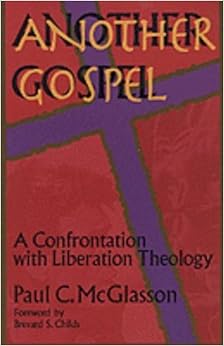
What I’m Reading: Another Gospel – A Confrontation with Liberation Theology


I’ve just finished reading the short little book Another Gospel: A Confrontation with Liberation Theology by Paul C. McGlasson.  It’s a scant 94 pages – which includes the preface and the select bibliography and index.  But I didn’t need to read very much of it before I realized how very flawed it is. McGlason makes it very clear that the argument of his book is that “liberation theology is a lie” (Another Gospel 17). He argues this point with passion and ferocity. But as I said, the argument is very flawed – in several ways.


1)McGlasson is arguing against an unnuanced caricature of Liberation Theology.  He deals only in generalizations and unproven assertions about liberation theology and its adherents.   Very early on in the book he acknowledges that there are varieties and differences among the those who stand under the umbrella term “liberation theology” but he refuses to distinguish among them. They’re all to be condemned.  “Can one cast one’s net so broadly?  Must one not distinguish the various movements, and voices, and assess each case by case?  Perhaps for a time; but now is not that time” (Another Gospel 16).

McGlasson also fails to cite or quote any actual liberation theologian’s writings.  He makes assertions about what “they say” but never – not a once – quotes their words.  As such, anything McGlasson declares that “they say” is an allegation without evidence.He won’t even engage with liberationists’ defense against his claims.  “Liberation theologians will of course deny this [allegation that I’ve just made]; but the rule of faith to determine the truth of their claim is clear and dependable in Holy Scripture” (Another Gospel 26).

2) And he says something like this quite often.  Several times throughout the short little book, McGlasson asserts that “…here Scripture speaks with clarity” (Another Gospel 28). And it’s always –scripture clearly endorses my point of view… But if this argument were actually true, there would be no arguments, there would be no need for this book.  McGlasson fails (or refuses) to accept that the bible is not clear on most issues.  There are disagreements on just about everything. 

3) He has no use for the Wesleyan (or Methodist) Quadrilateral (that is – interpreting through the lens of a) scripture, b) reason, c) tradition and d) experience).   He insists that his interpretation (though I doubt he would recognize it as an interpretation) of scripture is based solely on scripture itself.  Coming from the Reformed tradition, he insists on Sola Scriptura.

Which leads to 4) he accuses liberationists of creating their own version of Jesus (who he asserts is not at all the Jesus of the gospels (Another Gospel25)) but cannot seem to recognize that he does this as well.  We all do it.  It’s impossible to not do it. 

5) His tone is belligerent. He variously describes liberationists as heretical, blasphemous (64), profaners (64), idolaters (63), fascists (80), false prophets and ravenous wolves (80). He even invokes the inevitable Hitler comparison (45). I realize that “tone” is a difficult metric. But McGlasson has no interest in reasoned, polite discourse or dialogue (Another Gospel 17).  He wants a decision and he wants it now! When you’ve already written your opponent off as a diabolical and unredeemable heretic, I guess there’s no reason to be polite or to engage in dialogue.

6) He, without anything in the way of proof or evidence, describes Martin Luther King jr. as a “self-attested Messiah (Another Gospel 46).” In fact, he frequently sneers at MLKjr and the civil rights movement as whole.

7) He blames Barth.  If not on every page, then at least in every chapter, McGlasson lays the blame for the rise and spread of Liberation Theology at the feet of Karl Barth.  I don’t know enough about Barth to evaluate his claim, but the ire he directs toward Barth is unmistakable.


This “Confrontation with Liberation Theology” is just that: Confrontational.  The argument is loud and petulant. It is not civil.  Neither is it particularly well argued. He sets up straw-man generalizations about evil Liberation Theologians and then proceeds to beat them down with a whirlwind of angry rhetoric – but never actually engages with any liberation writings.  


McGlasson, Paul C. Another Gospel: A Confrontation with Liberation Theology. Grand Rapids, MI: Baker Books, 1994.

Tuesday, September 30, 2014

I Don't Think I Understand how this Meme Is Played

Maybe you’ve seen this meme starting to float around the interwebs – along with the accompanying challenge:

The American Challenge
Many of you have done the Ice bucket challenge. Let’s see how many of you will do the American Challenge! You have 48 hrs to post a pic of yourself with an American flag, a Bible, and a gun or post on your timeline why you do not accept the American Challenge! Let’s show the world that we are PROUD AMERICANS!


I decided to join in the fun, but I don’t think I understand how this meme is played.

(by-the-way: that's a book of Gustavo Gutiérrez's writings...)

Wednesday, September 24, 2014

To Participate in the Kingdom Is To Participate in the Struggle

I am currently enrolled in my local community college (Des Moines Area Community College) and taking a composition class.  Our assignment this week was to write in response to a remembered event that moved us emotionally or greatly affected our lives. 

I have taken part of a post I wrote earlier for this blog - reworked and expanded it for the assignment.


Earlier this year I went on a tour of Israel and Palestine with a group of pastors.  We were tourists and pilgrims visiting the Holy Land.  We did the things that tourists and pilgrims do.  We saw the historical sites, we went to museums, listened to lectures, bought souvenirs, and took pictures of everything. 

During the trip I frequently wore a keffiyeh – the Arab head-covering scarf.  My brother had bought it for me when he was in Israel earlier.  They’re available for purchase from merchants in many cities in Israel and Palestine.  But I wore mine, not just as a stupid American tourist, doing the things that tourists do, but because I understand the symbolic connection the keffiyeh has with the Palestinian people and their desire for a free and independent state.  I wore my scarf in support of the Palestinian people and to identify with them.

During most of the trip it caused me very little trouble.  In the northern parts of Israel, around the Sea of Galilee, it didn’t even occasion a second glance. When we went into the city of Bethlehem, which is part of the Palestinian territory, I was hailed by a couple of street venders, “Hey Mr. Arafat!”

It was at Masada, near the Dead Sea, that I had my first discomforting encounter on account of my scarf.  Our group had gone up to that mountain fortress that was at one time a stronghold of King Herod, and later was the last stand of the Zealots during the Jewish revolt against the Romans in AD 72.  Masada today is almost a religious site for the Jewish people and a symbol of Israel’s national identity, a symbol of their national determination to live free or die. While we were there we saw a family celebrating their son’s Bar Mitzvah in the remains of the synagogue used by the Zealots before their mass suicide.

As our group was preparing to leave the remains of that mountain fortress I stepped aside to take a few last pictures.  I approached the vantage point that I wanted to photograph and realized that my path would take me right in front of two women who were taking pictures in the same area. Not wanting to photo-bomb their pictures, I waited as one of the women gave instructions (in Hebrew) to her friend on how to use the camera.  When they were finished I said, “Shalom” and made to pass on by.  The woman with the camera then rattled off a string of Hebrew to me in return.  I apologized (in English) and said that I’d just about exhausted my knowledge of Hebrew. 

“That’s okay,” she said, “I’m Canadian.”

Then she picked at my shirt and vest and my keffiyeh and said, “Why do you wear this Arab scarf?”  Not wanting to engage in a confrontational debate right there and then, and also because our group was starting to leave, I made polite excuses and continued on my way. Most of our group rode the cable car down from the top, but some of us walked the long and rugged “snake path” down the steep cliff side. 

When we arrived, hot and sweaty, at the bottom of the mountain we ate lunch at the visitors’ center and, after the obligatory few minutes at the gift shop, went outside to wait for our bus.  That’s where I saw her again – or rather – she saw me.

“There’s my Arab American friend!” she called out.  She waved me over to speak to her. “Do you know what this means?” she asked, picking at my scarf again. “Do you know what this is?”

“Yes.  I do understand the implications of the keffiyeh,” I explained.  “I know something of the history of the conflict between Israelis and the Palestinians.” We engaged in a short conversation there in front of the visitors’ center about the long history of conflict between these two groups. 

When she learned that I’m a Christian pastor she said to me, “As follower of Jesus, you must support the sons of Abraham.” 

“But aren’t the Palestinians, aren’t the Arabs, sons of Abraham too, through Ishmael?” I asked her. 

My new Canadian Jewish friend waved her hand and dismissed my question, “Pfffft.” 

Our bus arrived shortly after that.  I shook hands with my Canadian Jewish friend and we both said, “Shalom.”  The confrontation was over.  It was brief and it was mild, but it wouldn’t be my final confrontation. 

When our time in Israel and Palestine was over, we returned to Ben Gurion airport to catch our flight home.  As I made my way through the checkpoints in the airport I was stopped by a security agent because of the keffiyeh I was wearing.  The guard pulled me out of the line of travelers to ask a few questions.

“What is your purpose in Israel?” the security agent asked me. I don’t recall what he looked like; all I could see was the firearm on his hip.

“I’ve been here as a tourist.”

“Who do you know in Israel? Do you have friends here?” 

“No.  I don’t.  I’ve just been here a few days as a tourist.”

He interrogated me with firm voice and stern eyes. “You don’t have any contacts in Israel or in the Palestinian territories? Who do you know in Israel?”

“No one.  As I said, I’ve been here ten days with a tour group. Now I’m heading home.”

The guard examined my passport and my boarding pass, poked through my camera bag, and looked me over before speaking into his shoulder mounted radio.  He spoke Hebrew rapidly – but I recognized my name being said.  He stared at me as we waited for a response.  It was one of those moments that seems to last much longer than the actual elapsed time.  I could see my wife standing on the other side of the checkpoint ready to cry.  

When an answer finally came back to the security agent from some unseen officer, he returned my passport and boarding pass.  “You should proceed immediately to your plane, Mr. Carter,” he said to me as he handed me the documents.

The Catholic theologian Gustavo Gutiérrez has written, “To place oneself in the perspective of the kingdom [of God] means to participate in the struggle for the liberation of those who are oppressed by others (Gutiérrez, 287).”  But in my normal everyday life I am not oppressed or persecuted.  I live a fairly privileged life; as a white American male, I occupy a position of relative comfort and ease.  How can I identify with those who are persecuted and oppressed? 

I’m not stopped in the streets by police armed with assault rifles.  I’m not, in my ordinary life, questioned by armed guards at military checkpoints when I travel.   I don’t live behind concrete and barbed wire barricades.  I had a few brief moments of fear and anxiety in Israel because of the keffiyeh.  What is it like to live every day with that constant anxiety?  I had a difficult few moments at one checkpoint.  What is it like to have to endure a checkpoint interrogation in order to leave or return home every day?

Christian theologians talk about the kenosis of Christ – that is his “self-emptying,” the giving up of his place in heaven in order to take on a human incarnation and to live among us.  He did not count equality with God a thing to be grasped, but emptied himself, by taking the form of a servant, being born in the likeness of men. And being found in human form, he humbled himself by becoming obedient to the point of death, even death on a cross (English Standard Version, Philippians 2: 6 – 8).” He became as we are so that he could identify with us in our struggles.

It’s not enough for me, as a minister of the gospel of Jesus Christ, to speak the good news from the pulpit on Sundays.  It is a hollow gospel that is proclaimed merely from a place of safety and comfort. If the gospel is about life and freedom for all of God’s people, I cannot sit idly silent while others struggle to live and be free. It may have been a small action, but I wore the keffiyeh as a way to identify with and to, for a few moments, participate in that struggle. 


English Standard Version. Wheaton, Ill: Crossway Bibles, 2007. Print.
Gutiérrez, Gustavo, “Theology of Liberation.” Gustavo Gutiérrez: Essential Writings.  Ed. James B. Nickoloff. Maryknoll NY: Orbis Books, 1996. Print.


Friday, August 29, 2014

Blessed Are the Poor (That’s not You)


This is a sermon I wrote back in 2002.  I’ve dug it up from the basement and dusted it off a little bit…

Then he looked up at his disciples and said:
“Blessed are you who are poor,
for yours is the kingdom of God.
“Blessed are you who are hungry now,
for you will be filled.
“Blessed are you who weep now
for you will laugh.

Luke 6: 20 – 21

This section of scripture is not for you.  This scripture passage is not for me.  This scripture is not for us – not directly. 

The beatitudes as recorded by Matthew are better suited to those of us living in America today.  We can claim to be the poor in spirit, the hungry for righteousness, the peacemakers (even if our continually increasing reliance on militarization would seem to belie those claims).  But we cannot claim to be the poor, not as Luke has defined them.

A good question might be – “why is Luke’s version of the beatitudes different than Matthew’s?”  It is very likely that Jesus preached this sermon on several occasions to different groups of people in different locations.  The two authors have combined the various sermons in slightly different ways so as to emphasize different parts of Jesus’ message.  Matthew included more of the blessings.  Luke left off some of the blessings but balanced them with curses.  Matthew focused on spiritual aspects, Luke on physical. If you want warm fuzzies, read Matthew’s version of the beatitudes.  If you want a confrontational challenge, check out Luke’s.  If you want balance, read both.[i]

Preachers, teachers, pastors, and priest have usually preferred to stick to Matthew’s version – choosing to talk about the poor… in spirit and the hungry… for righteousness because, for the most part, the preacher, teachers, pastors and priests are not among the poor, and Luke’s version of this sermon causes us to feel more than just a little uncomfortable.

“Luke’s blunt talk about the ‘poor,’ we are instructed, must be interpreted in light of Matthew’s fuller ‘poor in spirit,’ a classification to which we can all aspire since it has none of the rude realities of ‘material poverty’ (lack of food, clothing, shelter, employment) attached to it.  ‘Spiritual poverty’ in fact becomes a Christian virtue, and we are encouraged to affirm a life-style that puts no premium on goods and possessions but equally does not suggest that we need to get rid of them (Brown, 89).” Reading the beatitudes only from the gospel according to Matthew is a way of letting ourselves off the hook without requiring any sort of compromise to our materialistic lifestyle.

In the New Testament there are two different Greek words used for “the poor.”  The first of which is penes. This simply describes “the man for whom life and living is a struggle, the man who is the reverse of the man who lives in affluence (Barclay, 248).”  That is most of us.  We live from day to day, week to week, paycheck to paycheck.  We sometimes struggle to make ends meet.  We don’t often have the money to afford the “nicer things.”   We don’t drive flashy cars.  We don’t wear designer clothes.  But we do have a home to live in, food to eat, and clothes to wear.  We have hospitals and doctors available to us.  We have clean water to drink.  If we are “poor” we are penes poor.

The word used by Luke in his version of the beatitudes describes those who don’t have any of those things.  The word is ptóchos and it comes from the verb: to cower.  “It describes abject poverty, which has literally nothing, and is in imminent danger of real starvation (Barclay, 248).”  They are the oppressed, the abused.  The poor, according to Luke, are those who have absolutely nothing, and have no help and no hope.

“The poor in the bible are the helpless, the indigent, the hungry, the oppressed, the needy, the humiliated.  And it is not nature that has put them in this situation; they have been unjustly impoverished and despoiled by the powerful (Brown, 89).”

They are the Restavek children in Haiti, orphaned children who are taken in by individual families with detrimental results.  These boys and girls are reduced to lifestyles that are close to slavery.  They spend their days doing chores – toting water and working the fields – without pay. They get leftovers to eat and are regularly abused (Campolo, 12).

They are the poor, the hungry, the weeping.  They have been beaten down, their land has been stolen from them and their children taken.  Their husbands have been killed, their dignity trampled.  And because they have nothing on earth they have come to put their trust – their complete and total trust – in God to provide and protect.  They are blessed, not because they are good, but because God is good. They are God’s people because their faith is in him.

But, an easy life is not promised to us.  Immediate vindication is not promised.   The hungry, who are hungry now, will be filled in the future.  Those who are weeping now are promised that they will laugh later.  If they are hated and abused now, they will have great rewards in heaven.  It’s all in the future.

Except for this one:  the poor who are poor now they have the Kingdom of God now.  The Kingdom of God is with them now.  The Kingdom of God is present in the lives of those who trust him.  The Kingdom is daily being built by those who rely on him and his strength.

The rich seem to be excluded from the Kingdom of God in the here and now, not because they don’t seem to perceive their need for the saving power and healing work of Jesus.  They have what they need, and if they don’t have it they can certainly buy it, or take it from someone who does.  Jesus said that it is easier for a camel to go through the eye of the needle than for a rich man to enter the Kingdom of God.

That’s not to say that being rich is sinful in and of itself.  The bible never condemns the rich for being rich – but rather for being proud of their riches, for greed, for the abuse of others by the rich and powerful.  It just seems more difficult to get around their money. 

Where Matthew’s account has Jesus speaking to the crowds, Luke describes Jesus delivering this message to his disciples directly, “fixing his eyes upon them.”  It was addressed to them to strengthen them, and encourage them in a life of sacrificial giving.  Jesus called them to follow him – but he had no home, and no bed.  He had no job, no money of his own.  He was one of the poor.  He was one of the oppressed – despised by many, abused and murdered by the powerful.

 But blessed are you the poor, you the hungry, you who weep, you who are hated, despised and denounced as criminals.  Rejoice and leap for joy because this is how they treated the prophets.
These blessings upset our expectations.  They’re backwards.  They’re wrong.  The world does not bless the poor, it blesses and esteems the rich. 

Jesus’ message continues by further upsetting his listener’s (and our) expectations by delivering a series of woes and curses.

“It will be hell for you rich people, because you’ve had your fling.  It will be hell for you whose bellies are full now, because you will go hungry.  It will be hell for you who are so gay now, because you will sob and weep.  It will be hell for you when everybody speaks highly of you, for their fathers said the same things about the false prophets (Jordan, 31).”

We are not the poor, not the ptóchos poor, as Luke has described them.  But neither are the rich – not really.  So what do we do with this scripture?  How do we make it ours?  How do we read it?

We need to be willing to be poor – even if we are not – both physically and spiritually, admitting that everything we have (money, food, grace, forgiveness) comes from our good and gratuitous god and not through our own efforts. 

We need to be hungry.  In America we eat – too much, I think.  But we need to be hungry, for food nad for righteousness.  Food tastes better to the hungry.  We appreciate it more.  We need to accept grief and sadness as part of this world here and now.  We are not promised a happy life.  If you came to Jesus to be happy, you’re in the wrong place. In this world we will have trouble – not, as so many televangelists claim, health and wealth, and prosperity.  We need to be ready to be hated, despised, abused. (And by this I do not mean whining about people who say “happy holidays” instead of “merry Christmas…”) The prophets of God have been cut in two, boiled alive, thrown to the lions, burned at the stake, beheaded…

We also need to remember that we are responsible to the poor, the hungry, the mourning.  We are to help those in desperate need.  We are to relieve their sufferings and end their abuse wherever we can.  We are to bring good news to the afflicted.  We are to soothe the broken hearted and comfort those who mourn.

This text isn’t for us – not directly.  We are not the poor, even if we’re not exactly rich.  But we are followers of Jesus.  We are his disciples.  We are to take his message and let it transform our lives so that the Kingdom of God is made more and more evident in the world today.

Blessed are you who are poor for the Kingdom of God is yours.


Barclay, William, New Testament Words, The Westminster Press, Philadelphia, PA 1964.
Brown, Robert McAfee, Unexpected News: Reading the Bible through Third World Eyes, The Westminster Press, Philadelphia, PA 1984.
Campolo, Tony, Following Jesus Without Embarrassing God,  Word Publishing, Dallas, TX 1997.
Nickolof, James B, editor, Gustavo Gutiérrez: Essential Writings, Orbis Books, Maryknoll, NY 1996.
Jordan, Clarence, The Cotton Patch Version of Luke and Acts, New Win Publishing, Inc. Clinton, NJ 1969.


[i] If I were writing this sermon today I’d draw this distinction a little less starkly – it is not as if Matthew’s gospel is focused on spiritual aspects of the faith to the exclusion of physical realities – there is a notable insistence “on the need for concrete and ‘material’ actions toward others and especially toward the poor,” in Matthew.  – Gustavo Gutiérrez (Nickoloff, 162).

Sunday, December 15, 2013

Christmas Books (Hurrah!)

I was given an Amazon.com gift card as a Christmas gift. (Hurrah!)  In a few days the following should be arriving in my mail box.  (Hurrah!)


Ancient Christian Martyrdom: Diverse Practices, Theologies, and Traditions – by Candida Moss

An Adult Christ at Christmas: Essays on the Three Biblical Christmas Stories-Matthew 2 and Luke 2  - by Raymond Edward Brown

The Real Jesus: The Misguided Quest for the Historical Jesus and the Truth of the Traditional God – by Luke Timothy Johnson

Jesus and Judaism – by E.P Sanders

Sharing the Word through the Liturgical Year – by Gustavo Gutierrez

Gustavo Gutierrez: Essential Writings – by Gustavo Gutierrez (edited by James B. Nickoloff)


Jeff Carter's books on Goodreads
Muted Hosannas Muted Hosannas
reviews: 2
ratings: 3 (avg rating 4.33)

Related Posts with Thumbnails