Pages

google analytics

Showing posts with label God. Show all posts

Friday, May 22, 2026

Not More than I Am Able


    I find Saint Bernard of Clairvaux to be both a compelling and disturbing individual in the history of Christianity.

    I appreciate his devotional writing. He wrote some eighty-six sermons from the Song of Solomon - and never got past chapter two! He was one of the co-founders of the Knights Templar. 

    He also stirred up enthusiasm for the second crusade by promising that it would be a means of grace and absolution for sin. And then, when the crusade failed, blamed it on the sins of the crusaders. Go figure. 

    Today's backyard recording is based on one of his writings. 


    My God, my help, I shall love you as I am able
    yet my love is less than your due
    not more, not more, not more than I am able
    for even if I cannot love you 
    as much as I should
    still, I cannot love you
    more than I can. 
    I shall only ever be able 
    to love you the more 
    when you give me more
    and still, you'll never find my love worthy of you. 


Sunday, August 6, 2017

The Blessing of Defeat


So the man who has wrestled all his life comes to his final battle at the Jabbok ford. He’s been wrestling all his life, since his birth, even before his birth. He tussled with his twin brother, Esau, within the womb, grasping his heel, still trying to win over him on the way out the birth canal. He strove with his brother for the birthright and the patriarchal blessing. He wrestled a stone away from the mouth of a well to impress his future bride. He contended again and again with his father-in-law.  And now comes the culmination of his life, the climactic, defining event. He wrestles with “a man” at the Jabbok ford.

But what kind of man is this? Jacob, the trickster, thief, deceiver encounters a stranger in the dark – a man without a name and without provenance; he grapples with the mysterious unknown in the dark of the night. And in that long battle neither opponent is able to toss or pin the other; they are unable to hold or throw the other down.

This man in the dark may be more than a man. There is something strange in this encounter. Is he some sort of night spirit or troll that will lose its power or be turned to stone at the breaking of dawn and the light of the sun? Is he an angel of the Lord or a demon from the desert? Is he, perhaps, even God himself?

Or is this man in the dark the embodiment of all Jacob’s guilt and fear – a psychic projection.  In this man that he cannot defeat, Jacob sees the face of those he has offended and wronged. He sees the face of God and his own face, and the face of his twin brother Esau.[1]

Jacob struggles on heroically determined, and stubbornly relentless.  He refuses to admit or accept defeat. But then, with a touch (and not a crushing blow), the slightest touch, the man from the dark blows Jacob’s hip out of joint. He is hobbled, wounded. The supplanter is supplanted. He falls – but even in this defeat he finds a victory of sorts. Even in defeat he demands a blessing.

All his life he’s wrestled for and demanded a blessing from others. Give me the birthright and patriarchal blessing. Give me a bride. Give me sheep, and goats, and camels. Give me a blessing! But what kind of blessing has he won here? The blessing of defeat and a limp to remind him of it. He is no longer Jacob, the deceiver, but Israel who has wrestled with gods and men and has won.


[1] Compare Jacob’s words: in Genesis 32: 31 he says, “I have seen God face to face and I came out alive,” and in 33: 10 he says to Esau, “…for have I not seen your face as one might see God’s face, and you received me in kindness?” (Alter 183, 186)

Alter, Robert. Genesis: Translation and Commentary. New York, NY: W.W. Norton and Company, Inc. 1996. Print. 

Sunday, June 18, 2017

Biblical Limericks: How Many Seahs to a Gallon?


God came to Abe in the noon-time heat;
Abe said, “I’ll get you something to eat.”
He instructed Sarah
to cook up three seah
of flour – five gallons! Quite a treat.

Genesis 18: 1 - 6

Friday, January 13, 2017

Scraps and What Not


Every so often I page through the notebook that I carry everywhere and note the various bits of writing that I haven't done anything with. Here are a few bits that otherwise would have gone to waste:


*Though I’m only 41 (nearing 42), I’ve lived at least that long, and I’ll go on living till something better comes along.

*If I preach peace – and I do – it’s because I know I’ve been a beast to you.

*God, my Mother, gave birth to me and I was born again.


*The footmen have worn me out; I don’t want to run with the horses. (Jeremiah 12:5)

*Many of my friends say the word “Liberal” as if it were a swear, a vulgarity, but Psalm 37: 35 – 26 says the liberal are righteous.


Friday, November 4, 2016

The Powerful Kindness of God


There once was a man, a good man who tried to live by his faith, who sought to find the kingdom of love and grace. But he was tired. He was depressed by the evil that he saw in the world around him. And he began to doubt. ‘If God is good,’ he pondered, ‘and if God is active in the world then why,’ he wondered, ‘does evil so often prevail?’

One night as he lay down to sleep he prayed, “O God! The world is gone bad and there is no kindness anymore. I just want to see something of your goodness before I lose all hope.” He put his head down on his pillow and was soon asleep.

As he slept he saw a vision of an angel that said to him, “Your prayer has been heard, and God will answer. Tomorrow you will see the powerful goodness of God on display. You will see the light of kindness in this darkened world and your faith will be restored.”

He awoke the next morning with great anticipation. “Today I will see the power of God fighting the forces of evil.” He dressed and set off for work, eager to see the goodness of God prevailing during the course of the day.

At the bus stop, he bounced on the toes of his feet as he waited for the bus, he was so anxious. “God will show me something good,” he said to himself. Just then he saw a young woman being threatened by three teenagers, hoodlums. They were grabbing at her as she walked, and shouting sexually aggressive comments at her.

“Hey you!” he shouted at them. “Leave off! Get out of here. Leave her alone.” The trouble-makers cursed him and threw an empty beer bottle at him and the woman, but did not cause any more trouble. The bus arrived and he and the young woman found their seats inside. “Thanks,” the woman said to him.

The man sat in his seat, thinking about the young punks who caused so much mischief. “Why do they get away with it?” he wondered.

He exited the bus and walked the block and a half to the office where he worked. Outside the building stood an Asian couple puzzling over a piece of paper. They stopped him before he could enter his building, thrusting the paper in front of his face and speaking rapidly in a langue he didn’t understand. On the paper was an address. The couple motioned, pointing up and down the street. The man understood that they were lost and looking for directions.

He tried to explain how to get to the address written on the paper, it wasn’t far but the inability to communicate left them both stymied. He shrugged and motioned for them to follow him and he walked with them the short distance to their destination. They thanked him in their strange language, and shook his hand and patted his arm.

He was late getting to work, so he had to stay later than usual to finish his work for the day. Afterwards he took the bus back home again. It was nearly dark as he walked back from the bus stop to his home. 


As he walked he noticed a jumble of furniture and appliances piled at the curb in front of an apartment building. There was a couch and a stained mattress, a microwave and bags of clothing and a refrigerator. Closer now, he heard muffled screams and sobs coming from inside the fridge.

He dashed to the refrigerator and saw that the hinged door was wedged shut – and someone was crying inside. He pulled the other debris away from the ice-box and yanked the door open. Out tumbled a boy with a dirt-smudged face; his tears had carved canyons through the dirt. The boy fell on the ground and rolled over on his back gasping. His sobs dried up quickly as he caught his breath. Then he stood and ran away, towards home the man hoped.

Back in his own apartment again, he sighed and locked the door. He changed out of his work-day suit and into casual clothes, then set about making a meal for himself, a meal that he ate standing in the kitchen over the stove.

“God,” he said between bites. “I thought you were going to show me something today. I thought I was going to see your powerful goodness on display, but I saw nothing. Nothing except the same sort of violence and desperation I see every day. Nothing changed.”

Just then the angel appeared to him again. “Nothing changed, you say, but you are wrong. You saw the powerful kindness of God on display three times today.”

The man snorted, a cynical sort of laughter. “What? Am I living out the Russian cobbler’s story? When I helped those people I was helping God? Is that what I was supposed to learn?”

“No,” said the angel. “Not at all. When you helped those people today you were not helping God. God does not need your help. No. When you helped those people you – YOU – were the powerful kindness of God to them.”

Wednesday, March 30, 2016

Biblical Limericks: He Does What He Wants


Maybe he is baking fresh croissants,
perhaps making a list of cool fonts,
or drinking espresso,
but devout psalmists know
God’s in heaven; he does what he wants.

Psalm 115: 3


Sunday, March 6, 2016

The Parable of the Unreliable Narrators - Sermon


In my sermon last week, I said that we should be surprised by parables, that they really are intended to surprise, to catch the audience off guard with an eternal truth wrapped within a pleasantly told tale. But can be difficult to retain that surprise when the parables have become familiar.

Movies with a twist, surprise ending are enjoyable once, and Mystery and Detective novels lose their thrill after the first reading. The story in Luke 15: 11 - 32 of the prodigal son (a title that I really don’t like[i]) is very familiar to us; it is probably the most familiar, most well-known of Jesus’ stories. And because of that over-familiarity it is challenging to retain a sense of wonder as we read it. Familiarity in this case breeds, if not contempt, then at least indifference. We’ve heard the story, read the parable multiplied multiple times and, since we already know the ending, we may have a tendency to breeze through it without critical thought. It is difficult for us to retain the thrill of the twist, the surprise ending, the aha!. But, perhaps it’s time to be surprised by the parable again. We want a sort of ‘second naiveté’ when we come to the parable of the Lost Son[ii] .

As I read and re-read the parable this week, one of the things that caught me by surprise was the unreliability of sons as they described their circumstances. Neither the younger nor the elder son seems able to speak the truth, to himself or to others around him. They omit certain details and highlight others in order present themselves in the best light possible. They do not tell the truth, the whole truth, and nothing but the truth. Their stories are shaded and shady.

And everyone does this; sometimes we do it purposefully and with deliberate calculation, sometimes unconsciously. When politicians do it, we call it “spin-doctoring.” Corporations hire Public Relations teams to do it. Governments create propaganda. Individuals do it by shading the truth. We do it, all the time; we reveal only parts of the truth, those parts that we think are acceptable, the parts that we think other people want to hear, those parts that will make us look good. Even when we’ve sworn to tell the truth, the whole truth, and nothing but the truth, we emphasize our success and our strength while hiding and disguising our failures and weakness. (Firestone)

Pamela Meyer, author of the book Liespotting, has said, “We wish we were better husbands, better wives, smarter, more powerful, taller, richer-the list goes on. Lying is an attempt to bridge that gap, to connect our wishes and our fantasies about who we wish we were, how we wish we could be, with what we're really like. And boy are we willing to fill in those gaps in our lives with lies.”

 In Jesus’ story, the younger son, after blowing through his inheritance, finds himself working on a pig farm in a far off country. And there he says to himself, “…here I am dying of hunger…” (Luke 15: 17) But I think he’s lying to himself. Yes, there was a famine in that country and, yes, times were hard, but he was working, presumably being paid. If the famine had not yet proceeded to the point where all of the pigs had been slaughtered for food, there must have been other food still to eat. And considering what must have been his pampered life of comfort and ease–under an extravagantly generous, softy of a father-I doubt that this callow uncalloused boy had any previous experience with hunger or labor. His tender hands and pale skin must have blistered from work and sun. His stomach must have cramped from hunger. But I read his complaint with a measure of distrust–not outright disbelief. I’m sure he was hungry, and tired, and sore, and dismal. But I doubt his claim of starvation.[iii] He is exaggerating his peril, somewhat.

When he finally comes to his senses and realizes  that he has made a foolish mistake he begins to formulate a plan, prepares and rehearses a speech that he hopes will minimize his failures and at the same time, engender a compassionate response from his father: “Father,” he says, rehearsing, “Father, ehem, uh… Father, I have sinned against heaven and against you; I no longer deserve to be called your son; treat me as one of your hired men.” (Luke 15: 18 -19 NJB)

It doesn’t seem honest. It is calculated for effect. It’s as if he is afraid to confront the truth about himself and so puts the burden of this very practiced apology on his father. What he wants is for his father to accept him, so he prepares this nonpology[iv] to get that acceptance. One author has written that, “[w]ith great privilege comes an equally great ability to be irresponsible and yet succeed, be cared about, get out of jail free.” Saying “I’m sorry,” in this case is really only saying “Please like me.” (Prickett)

The younger son in this parable is not entirely honest-not with himself, and not with his father.

But the elder son is not any better. He first claims that he has “slaved” for his father for many years and “never once disobeyed any orders.” (Luke 15: 29) The elder son wants to portray himself as the wounded martyr, the aggrieved innocent, so he accentuates the positive and eliminates the negative. (Arlen and Mercer) But I suspect that his slavery is only a whining exaggeration and that his claim of perfect obedience is not perfectly true.

He then goes on to say that despite all of his perfect obedience and loyalty, his father has “never offered [him] so much as a kid for [him] to celebrate with [his] friends.” (Luke 15: 29) And this, too, I disbelieve. The father in this story is the true prodigal–giving money and resources extravagantly, wastefully even.  I cannot believe that this lavishly giving man, would have never given his son anything. But the elder son isn’t a reliable narrator; he shades the truth and, like his younger brother, puts the burden on the father.

And the extraordinary thing about this story, the really surprising thing in this familiar parable, is that the father doesn’t care. He accepts the self-serving stories from both of his sons, and responds with an outlandish generosity, with a prodigal grace. The younger son isn’t quite able to own up to his own immaturity and failure, but the father accepts him, welcomes him home anyway. The elder son is angry and unforgiving and unable to admit that he is just as greedy for their father’s estate as his younger, irresponsible brother. But the father loves him anyway, and gives him everything. 

Both of the sons are unreliable narrators. They have not told the truth (not the whole, unvarnished truth, anyway) to themselves or to their father. Even so, the father remains absolutely reliable in his outlandish, extravagant, prodigious love. He loves them, welcomes them, embraces them even as they are attempting to manipulate him. He knows what they’re trying to do, but he ignores it. He cuts off the younger son’s rehearsed nonpology apology, to have him dressed in a fine robe and have the family ring thrust upon his finger. He interrupts the elder son’s complaint, “you’ve never given me anything” to tell him that “everything I have is yours.” The father is steadfast in his merciful love to these unworthy boys.

And if this is to be read as a parable of God’s love for us unworthy people, we should be surprised and taken aback by the steadfast reliability of his merciful love. Even when we try to manipulate God, bargaining, pleading, demanding… he loves us. Even when we try to pretend to ourselves and to God that we’re not really so bad, not as bad at least as the other guy… he loves us. Lavishly. Wastefully, even. Prodigally.

Like the psalmist in Psalm 32, we have a tendency to keep silent about our sin and shortcoming; we don't tell the whole and complete truth. And while we are lying to ourselves, and to others, and to God about ourselves, our bones are wasting away, groaning day and night. (Psalm 32: 5) But when we finally come to our senses and tell the truth, when we confess, God, for his part, takes away our sin and forgives our guilt. This is is extraordinary, prodigal, wasteful grace-that he loves us, even as we are telling lies.

For his mercies shall endure
ever faithful, ever sure.
-John Milton 


***
Arlen, Harold and Johnny Mercer. “Ac-Cent-Tchu-Ate the Positive” 1944.

Firestone, Lisa. "Shades of Truth: The Many Ways We Lie." The Huffington Post, 23 Sept. 2013. Web. 5 Mar. 2016.

Meyer, Pamela. "How To Spot a Liar." TEDtalk. July 2011. TED. Web. 5 Mar. 2016.

Prickett, Sarah Nichole. “Saying Sorry Is a Pretty-Girl Trick.” The Hairpin, 20 Aug. 2013. Web. 5 Mar. 2016.


Friday, December 11, 2015

God’s Silent Song of Joy


“Sing!” says the prophet,
“Sing and shout in great rounds of joy-
psalms, and hymns, and spiritual songs,
chants, and raps, and choruses
of festal joy.

For the king who is above all
is, above all,
among you.”

And this king of rich justice sings too;
rejoicing over us with happy songs,
dancing festival dances
with whoops of joy.

But

He will be silent in his love,
gathering them that are bruised,
and those who grieve
for solemn assembly.


(Zephaniah 3: 14 – 18)

Wednesday, September 30, 2015

When God Closes a Door and Other Odds and Ends


*Sometimes when God closes a door - he stands there grumbling about the kids trying to heat the whole outdoors...


*I've decided to adopt Jeremiah 17:5a as my life verse: "trust no one."

*In a recent lesson on Loneliness among Leaders -based on the life of David - we were told that we each need someone in our lives who can be  1)an Abiathar - who can come work alongside us 2) a  Jonathan - who can be our intimate and trusted friend 3) a Nathan - who can keep us accountable and honest and 4) a Solomon - to whom we can pass on a legacy.

Great, I think, but all I've got are a bunch of Shimeis - cursing and throwing stones.

Monday, August 10, 2015

Biblical Limericks: The Name of the LORD


“It’s so hard to know,” I’ve heard some say,
“which of God's names to use when I pray.”
It is a mystery-
Jehovah’s got hist’ry
but the better name would be Yahweh.

Friday, April 17, 2015

If Abraham Were like some of Today’s Christians


Abraham stepped forward and said, “Will you really not destroy the city?  It is filled with wicked and evil men, with gays and lesbians and abortionists and secularists who teach our children evolution.  Send a hurricane or an earthquake to punish them for their many sins.”

And Yahweh replied, “I could not think of doing such a thing, putting to death the upright along with the guilty.  Is not the judge of the whole world to act justly?

Abraham spoke up and aid, “It will not be presumptuous of me to speak this way to you, but you must punish sin.  Destroy the city, my Lord.”

And Yahweh replied, “What if there are five upright men and women within the city?  Should I destroy them with the city?”

“Yes,” said Abraham.  “You must destroy the city.”

“But if there are ten?”

“Even if there were ten,” said Abraham, “you must punish the city for its sin.”

“ But suppose there are twenty?  Should I still destroy the city?”

“I trust my Lord will not be angry with me,” said Abraham through clenched teeth, “but you must, even then, destroy it.”

Once more Yahweh spoke to him, “What if there are fifty good and upright believers in the city? Is that not enough to save it?”

Abraham sighed and said, “Even you could not find fifty upright men in that wicked place.  Destroy the city as proof that you are a righteous God that will not be mocked...”


Wednesday, September 17, 2014

Anomalies A – Z: The Fear of Isaac


Had not the God of my father, the God of Abraham and the Fear of Isaac been with me, you would have sent me away empty handed.  Genesis 31: 42

Feel the electrostatic changes in the air
that signal the presence of the one we cannot see;
feel the fine hair rising on your neck and arms.

Heart rate increasing, skin pimpling,
your muscles tense, ready to fight or to flee.

Swear, and swear true
by the God of our Father Abraham;
Swear by that numinous terror that comes at night,
the Fear of Isaac.

Let him stand between us, you and me.

Friday, September 12, 2014

Anomalies A – Z: The Destroyer


“For I will pass through the land of Egypt that night, and I will strike all the firstborn in the land of Egypt, both man and beast; and on all the gods of Egypt I will execute judgments: I am the LORD.”
Exodus 12: 12


I am awakened by the sound of the city screaming,
startled from my bed into a tangle of sheets on the floor.
Sirens are blaring, the building shakes -
an explosion somewhere near.

When I finally find my feet I rush to the window
and look out on the city burning.
It is hell, nor am I out of it.

And then I see you in an apophatic sort of vision,
seeing only the places where you haven’t yet passed.
My vision blurs and darkens, but I will not faint.

I am determined to stare into that void.
I will see your face!

But resolve alone is no strength against you.
Your sword, if it is a sword, cuts through another city block.
Sparks fly upward as power-lines
and humans lives are cut down.

“Enough!” I shout, “Stay your hand!
Enough, enough!”

And through the oily, lolling smoke
I see your face
and it is the face of God.

Wednesday, September 10, 2014

What Color is God?


It may seem like a silly question.  It may be a silly question.  But, if God can be said to have a skin color -and I don't really believe that it can be said, but if it could the answer is fairly easy to find.


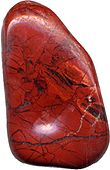
In the Revelation given to John, when he saw the the throne room of heaven, he saw the One seated upon the throne whose appearance was like Jasper and Carnelian (or Sardius, depending on your translation- Revelation 4:3)

So God is a deep red / brown color.  God's not white; that's for sure.


Carnelian 


Jasper


Tuesday, August 26, 2014

Biblical Limericks: Aquinas Confronts Moses at Horeb


God revealed his name, as we’ve been taught,
to Moses on the mount, but we ought
to recall: we can’t know
what God is, even though
he’s I AM, we know naught but what he’s not.

Exodus 3: 14

“…we cannot know what God is, but rather what he is not…” Thomas Aquinas 


Monday, July 28, 2014

He Can’t Hear Me


He has been told for so long that God hates him that he believes it.  Now he tells himself, over and over again, that God hates him.  That he is cursed. That God has cursed him from birth. 

And so he hates himself.  He’s tried suicide before.  Shot himself in the gut with a handgun.  Now he just drinks. 

And he hates God.  “F**k you, God!” he shouts. And then he hates himself even more because he knows he shouldn’t hate God.

He believes that his sins are unforgivable. “It’s in the Bible! I’ve read it!” He says this, but because he’s drunk he can’t remember where he read it, but he knows it’s in there.

What can I say to him except, “God loves you.  You are not cursed.”  Over and over again, I say it. “You are not cursed. God loves you.  Nothing you have done is unforgivable.  And again and again, “God loves you.”

But he can’t hear me.  Partly because he’s so drunk.  And partly because this message is so contrary to everything he’s ever been told, and everything that he continues to tell himself.

But I say it again, “God loves you.”

Sunday, June 8, 2014

Biblical Limericks: Can I or Can’t I?


Read Colossians one and you’ll conclude
that God’s invisible, can’t be viewed;
other scripture verses
appear to reverse this -
you can see him, but then you’re just screwed.

Colossians 1: 15 / Exodus 33: 20

Wednesday, June 4, 2014

Biblical Limericks: What Did He Know, and When Did He Know It?


We accept his masculinity,
but of Jesus’ infinity -
if we’re to be candid
we’ll have to ask, “When did
he realize his divinity?” 

Tuesday, May 6, 2014

Personal Names for the Trinity


We have a personal name for God the Father – though our Jewish brothers and sisters decline to use it, and though we can only make an educated guess as to what it might actually be:  Jehovah it probably is not- but Yahweh (based on the Tetragramaton, YHWH) is probably close.

We have a personal name for God the Son – Jesus or Yeshua – because he shall save his people.

But when we come to God the Spirit we have no personal name. We use a title “the Holy Spirit” to refer to this third person of the triune Godhead.  But that is so impersonal.  It sounds remote.  Estranged.   Makes the spirit sound like a thing, an it…

So I propose that we use the name Sophia – Greek for Wisdom.  Sophia is the Wise Spirit, the Holy Spirit of God who was there to measure out creation, who calls to anyone who will listen.

Yahweh, Jesus, Sophia…

What do you think?


More Anomalies: A – Z : the Host of Heaven


“The Lord Almighty is mustering  an army for war.” - Isaiah 13: 4

“I saw the Lord sitting on his throne with all the multitudes of heaven standing around him on his right and on his left…” the Prophet Micaiah -  1 Kings 22: 19


From across the vast expanse of the e’er
expanding universe, the stellar realm,
suns, moons, and stars, from their courses above
assemble around the great royal throne.

Gathering here for their Lord’s dread command,
row upon row, and now rank upon rank,
prepared to follow Yahweh Sabaoth
into fierce conflict with an ancient foe.

Cosmic forces arranged in their strength
with the fi’ry chariots of heaven.
Sanctus, Sanctus, Sanctus, Dominus Deus 
Sabaoth–Lord God of Angel Armies


(This is my third pass through the alphabet with these anomalies.  For more of the Anomalies click here.)
Jeff Carter's books on Goodreads
Muted Hosannas Muted Hosannas
reviews: 2
ratings: 3 (avg rating 4.33)

Related Posts with Thumbnails