Pages

google analytics

Showing posts with label Templars. Show all posts

Friday, July 18, 2014

Cold War Spies and Templar Treasures

In putting up my post earlier this morning about the book The Templar Legacy, I realized that I never got around to posting one of my favorite bits of writing about the Knights Templar.

Cold War Spies and Templar Treasures

Cold war spies and Templar treasures
are buried in my basement,
and I have scuttled through the secret tunnels
of mystic Agarttha to find them.

There is no sun to illuminate
the chasms and caverns beneath the surface
where rebellious angels are bound in chains
until the day when Jacques de Molay
returns, riding upon a haycart.

I have made the necessary preparations
as outlined by the John Birch Society.
Communists and Socialists have
conspired with Fascists and Jews
but I won’t be fooled;
            I won’t be seduced
by the lure of Russian mail-ordered brides
and Turkish coffee.


The moon landing was a fake,
the Lucifarians at NASA (Order of Phosphorus)
used left-handed magick to hide their real intent:
summoning Asmodeus and his reptilian hordes
in order to form a New World Ordo Templi Orientis.

Aleister Crowley was a spy for British Intelligence
but he was a double agent;
he never betrayed the Old Ones who live below.

(2009)

What I’m Reading: The Templar Legacy


I’ve written about the Templars before in this blog; they’re a very useful multipurpose set of characters. Need a villain?  Need mystery?  Need treasure and secrets?  Throw in some Templars.  They’ve got all that.  

And as in Ivanhoe, and The Da Vinci Code and National Treasure – the Poor Fellow-Soldiers of Christ and of the Temple of Solomon appear in Steve Berry’s book The Templar Legacy[i].   It is the first of his Cotton Malone series of international thrillers. (side note – throughout the whole novel I continued to misread his name as Cotton Mather  which made the whole thing more amusing, to me...)

“The lunatic is all idée fixe, and whatever he comes across confirms his lunacy. You can tell him by the liberties he takes with common sense, by his flashes of inspiration, and by the fact that sooner or later he brings up the Templars.” – Umberto Eco – Foucault’s Pendulum

The Templar Legacy is a lot like the more popular Da Vinci Code by Dan Brown.  It has ancient secrets, pursuit across international lines, puzzles and cryptograms, and potentially earth shattering revelations that must be kept secret (or must be brought to light, depending on who you’re rooting for…)  I won’t say anything about those revelations in this book until the end of this review, in case you’re one who doesn’t like spoilers.  Though – it shouldn’t be difficult to figure them out well before the half way point of the novel.  It’s not a particularly new or shocking revelation.

Like The Da Vinci Code Berry’s Templar Legacy also has a number of things to say about the New Testament and early Church history.  Most of it bogus. 

When one of his characters describes the process by which the New Testament gospels were developed she says this concerning the Gospel of Mark:   “It contains six hundred sixty-five verses, yet only eight are devoted to the resurrection.  This most remarkable of events only rated a brief mention.  Why?  The answer is simple.  When Mark’s Gospel was written, the story of the resurrection had yet to develop… (Berry, 337)

First the number of verses:  It’s difficult to say how many verses the gospel of Mark has because the answer depends on which translation you’re using, and whether or not you stop at the short (original?) ending at 16:8 or if you go on to one of the longer endings at 16: 9- 20.  And the usual short answer says that the count is six hundred and sixty six verses.  Berry is inaccurate. 

And then the more substantial snafu:  The story of the resurrection had yet to develop before the writing of Mark’s gospel?  What historical crack is Berry smoking?  He puts the writing of Mark at around AD 70 (Berry, 337) but the story of the resurrection was around long before that. Even if one is critical and suspicious of the early Christians and believes the story of the resurrection of Jesus to be a deliberately contrived fiction – one cannot get around the fact that the story was spreading much earlier than the written gospels.  Paul was writing about it in his letters in the 50s.  Berry is very inaccurate. 

“Elevating Christ to deity status was simply a way of elevating the importance of the message,’ Thorvaldsen said. ‘After organized religion took over in the third and fourth centuries so much was added to the tale that it’s impossible any longer to know its core. (Berry, 344)” 

Wow. So few words, so much wrong – but I’ll leave it alone except to say that Bart D. Ehrman (an historian critical of the Christian story) was somewhat surprised by his research, discovering that the elevation of Jesus to divine status happened much earlier than he was willing to admit. Certainly long before the third century.  See his book How Jesus Became God: The Exaltation of a Jewish Preacher from Galilee. 

“Unfortunately for you, there exists not one mention of Jesus Christ in any secular Greek, Roman, or Jewish historical account.  Not one reference in any piece of surviving literature.  Just the New Testament.  That’s the whole sum of his existence. (Berry, 405)”

Uh. ... Berry has certainly overstated his case here.  It is true that there is precious little about Jesus outside of the New Testament but Berry goes too far.  The Jewish historian, Flavius Josephus wrote about Jesus and his followers.  There is also a reference to him in the writing of Tacitus, the Roman historian.  And there are other, more debated, references to Jesus or his followers in Pliny the Elder, Lucian, Suetonius and etc…  Berry is very, very inaccurate.

I know that you don’t read international thriller novels about the Knights Templar and ancient secrets for accurate information; you read them for the whiz-bang golly gee!  Still, I would like them to be more accurate than this. 

And for that super-secret revelation that must be revealed to the world / kept hidden from prying eyes… (stop here if you don't want spoilers...) the shocking secret is that the Templar treasure is nothing less than the bones of Jesus and a letter from Simon Peter (yes, that Simon Peter) describing how he, along with James and John, collected Jesus’ remains and kept them.  The bones were later discovered by the Knights Templar in the caverns beneath the remains of the temple (how the remains got there is not explained).  The Templars recovered the bones and kept them as their powerful secret to manipulate the Catholic Church and gain a vast fortune of gold and estates across Europe.  -  But - how is it both a secret and a powerful way to manipulate the Church?  You can't have it both ways, Berry.

And, in the end, it’s hard to see why Berry thinks this a secret powerful enough to propel his story. The characters of the novel are untroubled by this supposed revelation.  They accept that one can still have faith and hope and do good for the world even if the resurrection of Jesus of Nazareth was not a historical-physical event.  There are many Christians who believe this.  Indeed, in the ‘Writer’s Note’ at the conclusion of the novel, Berry credits John Shelby Spong for the inspiration.  You’re going to have to do better than that, Berry.

Even if (and that's a big IF) Berry's scenario were to be played out - convincing the world that bones found in a cave in southern France, are the bones of Jesus of Nazareth would be problematic.


[i] Berry, Steve The Templar Legacy, Ballantine Books, New York, 2006 

Thursday, July 17, 2014

The Soldiers of Christ / Allah / Israel


But the Soldiers of [Christ / Allah / Israel] may safely fight their battles …, fearing neither sin if they smite the enemy, nor danger at their own death; since to inflict death or to die for [Chris / Allah / Israel] it is no sin, but rather, an abundant claim to glory. In the first case one gains for [Christ / Allah / Israel], and in the second one gains [Christ / Allah / Israel] himself. …

The soldier of [Christ / Allah /Israel], I say, may strike with confidence and die yet more confidently, for he serves [Christ / Allah / Israel] when he strikes, and serves himself when he falls. Neither does he bear the sword in vain, for he is God's minister, for the punishment of evildoers and for the praise of the good. If he kills an evildoer it is not homicide, but, if I may so put it, malicide. He is evidently the avenger of [Christ / Allah / Israel] towards evildoers and he is rightly considered a defender of [Christians / Muslims / Israel]. Should he be killed himself, we know that he has not perished, but has come safely into port. When he inflicts death it is to [Christ's / Allah’s / Israel’s] profit, and when he suffers death, it is for his own gain. The [Christian / Muslim / Israeli] glories in the death of the pagan, because [Christ / Allah / Israel] is glorified; while the death of the [Christian / Muslim / Israeli] gives occasion for the King to show his liberality in the rewarding of his soldier. In the one case the just shall rejoice when he sees justice done, and in the other man shall say, truly there is a reward for the just; truly it is God who judges the earth.

If you find any one of these more acceptable – or more loathsome than the other two variations, you are a hypocrite.


The words come from Bernard of Clairveaux’s work Liber ad Milites Templi: De Laude Novae Militae (Book to the Knights of the Temple: In Praise of the New Knighthood) written sometime between 1120 and 1136 CE in defense of the newly formed Poor Fellow-Soldiers of Christ and of the Temple of Solomon (the Knights Templar). I added the variations for comparison You can read most of the original (in English translation) here.

Tuesday, June 4, 2013

The Apostles in Tin Foil Hats


I will admit it.  It is no secret anyway.  Some of my friends dismiss it as a strange idiosyncrasy or as a forgivable peccadillo – but I really enjoy tales of the weird.  Especially when conspiracy theories and religion intersect.  I love it.  Give me the Knights Templar and Hiram Abiff and the Merovingian Dynasty, I'll  take it.

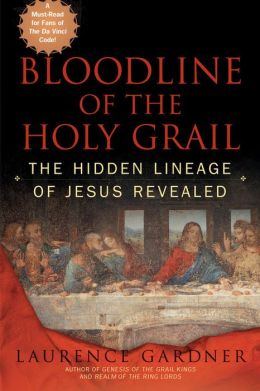
Currently I’m reading Bloodline of the Holy Grail: The Hidden Lineage of Jesus Revealed by Laurence Gardner.  And though I’m only about 40 pages into it, there have already been a number of howlers – bold statements of tin-foil-hat craziness.  Take for example these descriptions of Jesus’ apostles:

Simon Zelotes – “Simon Magnus (or Zebedee) was head of the West Manasseh Magi, a priestly cast of Samaritan philosophers who supported the legitimacy of Jesus.  It was their ambassadors (the Magi, or wise men) who honoured the baby Jesus at Bethlehem.  Simon was a master showman and manuscripts of his life deal with matters of cosmology, natural magnetism, levitation, and psychokinesis. … “

Judas Iscariot –  “Another well-born nationalist leader of renown was Judas, Chief of the Scribes.  The Dead Sea Scrolls were produced under his tutelage and that of his predecessor, the fierce Judas of Galilee, founder of the Zealot movement.  Apart from his academic scholarship, Judas the Apostle was the tribal head of East Manasseh and a warlord of Qumrân.  The Romans had a nickname for him: to them he was Judas Sicarius (a sica was a deadly, curved dagger).  …

Thomas, according to Gardner, was actually “Crown Prince Phillip” – born into the Herod family, but “lost his inheritance when his mother, Mariamne II was divorced by King Herod…

This is too much fun.


Saturday, June 11, 2011

Raymond Aco Gullado and his Ten Thousand Knights

Raymond Aco Gullado and his ten thousand knights
determined to conquer the Holy Land
with nothing more than their pilgrim prayers
or, failing that, with sharpened spears and swords.
Setting out astride a tall black steed with crimson livery,
with his monk’s cowled habit swept back by the wind,
he was an apocalyptic Templar followed by
an army of bishops and friars and priests
all singing the thunderous  Dies Irae.

He led an invasion of the sacred groves of Oberon,
burning the ancient oaks and sacking sacred shrines
in his pursuit of holy relics to guide him on his quest.
He sought the grâl, the fleece, and the stone from space,
the lapis ex coelis forever preserved, like the knuckle bones
of St. Anesthesia who performed numerous miracles
for the poor and the blind, preserved and set in purest Lucite.
With these talismans of power he thought he could win.

But bloodied and battered are the few that have returned
and of Raymond there is no word,

Tuesday, February 1, 2011

Tombs of the Blind Dead

“The lunatic is all idée fixe, and whatever he comes across confirms his lunacy. You can tell him by the liberties he takes with common sense, by his flashes of inspiration, and by the fact that sooner or later he brings up the Templars.”  — Umberto Eco Foucault's Pendulum

The Poor Fellow-Soldiers of Christ and of the Temple of Solomon – more commonly known as the Knights Templar – are great fun. Their connection to legends and ancient mysteries allow them to be brought into any story. They’re an all purpose sect of villains (or heroes, depending on your viewpoint, but usually villains). Do you need a mysterious and esoteric force? Summon the Templars! It worked for Umberto Eco. It worked for Dan Brown. It worked for Raymond Khoury. It even worked for Sir Walter Scott.

And it worked for Spanish film director Amando de Ossorio.

Tombs of the Blind Dead is a 1971 Spanish Horror film written and directed by Ossorio. (The Spanish title is La Noche del Terror Ciego, which means The Night of the Blind Terror) in which the zombie-like revenants of Templar Knights continue to live by feasting on the blood and flesh of their victims. They are blind as the result of their eyes being pecked out of their corpses by ravens and crows after thier deaths.  These blind revants hunt their victims by sound.

The film (first in a series of four in the Blind Dead series) is slow and creepy. It works by a gradual build up of terror. It creeps up on you, quite literally.  I liked this movie. But what really struck me was the irony.

The first victim of the film is a lone female backpacker who seeks shelter in the ruins of an abandoned village. The blind Knights (looking very much like Peter Jackson’s Ring Wraiths) descend upon her and leave her corpse masticated and bloodless.

After the first Crusade captured Jerusalem in 1099 many Christian pilgrims began traveling east to visit the so-called Holy Land. And although the city of Jerusalem was under Christian control, much of the land was not. Bandits and thieves abounded and killed and robbed pilgrims –sometimes by the hundreds- as they made their way towards Jerusalem. The Poor Fellow-Soldiers of Christ and of the Temple of Solomon were created as a monastic order of knights to protect these travelers.

But we rarely think of them in that capacity. They’ve become legendary for their military prowess, their acquisition of great wealth and power, and their connection to ancient and mysterious legends and artifacts like the Holy Grail and the Shroud of Turin – not for their protection of travelers.

And so watching these blind knights devour a helpless traveler affirms that very legend. They sought eternal life through strange blood sacrifices and they are doomed (according to the movie) to just that- an eternity sustained by blood.

The movie is violent and gruesome and does contain a bit of nudity so it won’t be everyone’s cup of tea. It’s also handicapped by a bit of stiff acting and a few “hunh?” moments. But it works well as an atmospheric creepshow.


Strange Note: Some distributors in the U.S. re-cut and released the movie with the title "Revenge from Planet Ape" in an effort to capitalize on the success of the Planet of the Apes (1968). A prologue was added in this cut version to make a dubious connection between the two films. The prologue explained that 3000 years ago a simian civilization of super intelligent apes struggled with man to gain control of the planet. In the end man conquered ape after a brutal battle. Afterwards the men tortured and killed the ape prisoners by piercing their eyes with red hot skewers. One of the prisoners vowed they would return from the dead to avenge man's brutality.

Wednesday, December 9, 2009

Sold Another Poem

I just checked my email and discovered a nice little letter waiting for me.  The editors at http://www.everydayweirdness.com/ have chosen my poem "Cold War Spies and Templar Treasures" for online publication tomorrow, December 10, 2009. 

This will be my fourth poem published by the fine folks at Everydayweirdness.
The previous three were :
"Gregor Samsa Slept Here"
"Vinegar Ants"
and
"Memorandum"

As the name of the site implies, they tend toward the weird, the strange, the dark and supernatural. 

This newest poem Cold War Spies and Templar Treasures has some similarities with the novel that I've just completed.  I hope to spend some time during January editing the novel, and if I can get it to a place where I feel happy with it, I'll try to get it published as well.

Here's hoping.


Jeff Carter's books on Goodreads
Muted Hosannas Muted Hosannas
reviews: 2
ratings: 3 (avg rating 4.33)

Related Posts with Thumbnails