Pages

google analytics

Showing posts with label Exodus. Show all posts

Wednesday, July 8, 2026

Some Random Thoughts from the Mental Junk Drawer


    - The only way to be 'richer than Midas' is to be as merciless as spiders. 

    - Only the rich can afford another war. And that's only because they have the rest of us pay for it. 

    - The so-called Christian Nationalist has the same complaints as the Egyptians in Exodus - "these foreigners are becoming too numerous and if we don't stop them, they're going to side with our enemies and take over the country..."  - Exodus 1:10

    - When it comes time to choose a theodicy to explain the existence of suffering - and there are many to choose from, some better, some worse - keep Vincent VanGogh in mind. "La tristesse durera toujours."


Sunday, September 3, 2017

Tell Me, What Is the Name of Your God?


Moses walked a few silent steps behind the large bearded man that was his father-in-law, Jethro. Jethro had come to him in the early morning, still before dawn, well before Moses would have risen to lead the family’s herds of sheep and goats out to the pasture land.

“Get up, Moses. Today you will come with me,” Jethro said in the stuffy darkness inside Moses’ tent.

“But the sh- sh- sh- sheep, father…” Moses objected.

“Nevermind the sheep.” Jethro told him. “Today I take you to the shrine of the Midianites.”

Jethro led him to the coastal city of Aqaba. “I come here four times each year to participate in the sacred rituals. I am a priest of Midian. This is my noble duty. While we are here I will instruct you in the proper way to worship.”

And, true to his word, Jethro shared the secrets with his son-in-law. “First, I will teach you to pray,” he said as they stood at the bottom of a flight of stairs that led up to a long narrow temple built of simple, unornamented, dressed stones.

“We kneel here,” he said and, placing his hands on Moses’ shoulders, gently pushed him to his knees. “And we pray this way: 

“To the god who is unknown, I pray.
To the goddess, the mother-goddess who is unknown, I pray.
To the god who is angry with me, I pray.
To the mother-goddess who is angry with me in this place, I pray.

My transgression is unknown to me.
The sin I have committed, I know not.

May the unknown god give me a good name.
May the mother-goddess I do not know pronounce for me a good name.

If I have eaten the food of my god unwittingly,
if I have drunk the waters of a cesspool without knowledge,
If I have done what is forbidden by the mother-goddess unwittingly,
I beg mercy.

God, known or unknown, my transgressions may be many.
Mother-goddess, known or unknown, many may be my sins.
I seek help. Where is the one who will take my hand?
I have wept. Where is the one who will come to my side?
I utter laments and shriek my grief. Where is the one who hears me?

Mankind is dumb and cannot speak. He knows nothing.
The sin I have sinned, turn it away.
The sin I have sinned, blow it away in the wind;
transgressions seven times seven, forgive.

And may my heart, like the heart of my mothers, be brought to the place of return.”

Moses listened carefully to this prayer and then said, “E- e- e-excuse me- me- me, father Jethro, bu- bu- bu- but there seem t- t- t- to b- b- be mu- much that you do not kn- kn- know. What is it you would te- te- te- teach me?

“Yes," said Jethro as he stood up from the steps.“I am ignorant of many things. But tell me, Moses, who came to my tents as a stranger, fleeing the wrath of the Egyptian Lord, and who has married the eldest of my seven daughters, tell me what you know.  Tell me, what is the name of your God?”

Moses did not answer.

“Go on, Moses, foundling and fugitive, tell me the name of your God,” Jethro pressed.

“I d- d- d- do not kn- kn- know.” Moses stammered in frustration.

“You do not know.” Jethro shook his head. “And can you recount for me the great things that your god has done? Tell me of his mighty deeds? What great things hath he done?”

“I d- d- d- do not kn- kn- know.”

Jethro scowled at his son-in-law. “Well then, maybe you should listen to me. I may have much to teach you yet.”


**

The religion of the Midianites is largely unknown. Jethro’s prayer is adapted from a Sumerian “Prayer to any God.” (Thomas, 111-117)

Thomas, D. Winton. Editor. Documents from Old Testament Times. New York: Harper Torchbooks. 1958. Print.


Tuesday, June 13, 2017

The Asshole of God


I went in search of the glory of the LORD. I went up the mountain to find the presence of the Creator of the Universe, the Father of Lights, the Holy and Eternal One. I climbed the hill, staggered up the steep and treacherous path. I sweated and I bled because I wanted to see my lord.

And there, at the top of that high, lonely mountain, sheltered in the cleft of a shattered, broken rock, I cried into to the cloudless sky: “If I have found favor with you, show me your presence. Let me see your glory.”

But I saw only God’s asshole, smug and superior in his suit, his hair and teeth gleaming in perfection. He farted in my face and told me that his words were pure, direct from God himself.

I suppose I should feel blessed.


(Exodus 33: 12 – 23)

Sunday, May 28, 2017

Let God Arise – Psalm 68


Psalm 68 is fascinating. I’m dubious of those people who say that they love the psalms because they are soooo comforting or soooo uplifting. I’m never quite sure which psalms those people are reading. The psalms are gritty, earthy, and dark; the psalms, even the ‘nice’ ones are often unpolished and unrefined. But, as I said, Psalm 68 is fascinating to me because it remains almost completely unintelligible.

Now this isn’t something that we’re supposed to say – especially from the pulpit. But if we read Psalm 68 carefully and honestly, without a filter of pious sentimentality, we will have to admit that it is difficult. Go ahead and read it in a couple of different translations and compare them. Most translations present their finished work without any indication of the difficulty, ambiguity, and oddity that rests just beneath the surface of their words.

But Psalm 68, as refined and polished as we might like it to be, resists our attempts to understand it. It is an “anarchic poem” (Dahood 133). It is “textually and exegetically, the most difficult and obscure of all the psalms” (Dahood 133). There is little agreement among scholars about the author, source, date of composition, or purpose of this melody (Poteat 354). Or perhaps of this medley. It is sometimes suggested that Psalm 68 should not be read a single unified work, but as a collection of songs and fragments of songs from various periods and authors arranged for us now as a haphazard hymnal (Taylor 353).

The meter of the stanzas of Psalm 68 shifts almost as frequently as the imagery, which is to say constantly. The psalm is a long sequence of non-sequiturs. Take for example verses 12 – 14: the kings of enemy armies flee from the presence of God, the women at home divide the spoil and booty of war – while they sit in the sheep pen. Then there’s something about doves with wings of silver and pinions of green-gold, and snow falling on Mount Zalmon - which might be something clever about white snow on a black mountain as “Zalmon” means “Dark One.” (Dahood 142).

But what does that mean? What’s going on here?

There are images of God in psalm 68 that will seem cruel and strange in our modern ears. In verses 21 – 22 he is seen smashing the skulls of his enemies, crushing their “hairy crowns.” The people of God are comforted and told that they will bathe their feet in the blood of their enemies and that their dogs will lap up the blood of their foes (23). And yet this violent, vindictive, warrior God is balanced in verse 31 where God is called upon to “scatter the peoples who delight in wars!” (JPS)

Now - as strange as Psalm 68 is (and it must be maintained that it is strange – at least to us so far removed from its composition) we can make some sense of it, at least a little. There are a few themes that reappear again and again amongst its ever shifting panoply of non-sequiturs and mixed metaphors.

The Psalm, over and over again, remembers the dramatic events of the Israelite exodus from slavery in Egypt.  The Egyptians are the stubborn rebels forever entombed in the barren wastelands (6). They are the “Beasts of the Reeds” (30) – think of them as vicious crocodiles lurking in the marshlands of Egypt waiting to snap at the passing Israelites.  And from Egypt (and her southern allies in Ethiopia) will come nobles stretching out their hands full of tribute for God (31).

As unwieldy and foreign as Psalm 68 is to us, we can understand it (somewhat) as a melodic celebration of the way God rescued the people of Israel from the hands and chains of their Egyptian oppressors. It is a jubilant expression of praise for a powerful and frightening God. (A God who is so frightening, by the way, that the sky itself breaks out in nervous sweat at the sight of him (8).)

It is a celebration of a God who is concerned for the poor and the lowly, a God who looks after the prisoners and gives the lonely a home (6), a God who is a father to the orphan and a defender of the widow (5). This is not a God of rich and powerful. This is not the God of the great and mighty. Those were gods of Egypt. The Egyptians were the people with wealth and power and prestige and honor. But the God celebrated in this psalm is not impressed or threatened by the greatness of Egypt or the strength of the Egyptian army or the number of Egyptian chariots. The Rider of the Heavens (32), the Rider of the Clouds (4) celebrated in Psalm 68 concerns himself with the poor and downtrodden; he is the God of losers and rejects, the God of the forgotten and the overlooked. 

Psalm 68 is fascinating - not because it is a polished piece of poetry to be read by the pious and sentimental, but because it is an outrageous, over the top, wild and exuberant expression of praise for a powerful and extravagant God. If Psalm 68 remains somewhat incomprehensible to us, perhaps that should be a reminder to us that the God of our faith is not one to be completely reduced, systematized, pragmatized; the God we follow is shocking, dangerous, untamed. Perhaps we should never become comfortable in our faith.

Let God arise. Let God lead us out of oppression. Let God lead us through deserts and wild places. Let the enemies of God (who may not be our enemies…) flee before him. Let them melt like wax, drift like smoke. Let the kingdoms of the earth bring their praise and their tribute to him. He is awesome in his holy place. He gives strength to his people. He gives victory and valor to his people (Dahood 132). Let God arise, and though we don't completely understand it, let us arise and say, “Blessed be God.”


Dahood, Mitchell. Psalm II 51 – 100.  Garden City, NY: Doubleday & Company, Inc. 1968. Print.

Hebrew – English Tanakh. Philadelphia, PA: The Jewish Publication Society. 1999. Print.

Poteat, Edwin McNeil “Psalms: Exposition” The Interpreter’s Bible Volume IV. Nashville, TN: Abingdon Press. 1955. Print.


Taylor, William R “Psalms: Exegesis” The Interpreter’s Bible Volume IV. Nashville, TN: Abingdon Press. 1955. Print. 

Sunday, March 19, 2017

God Stands before Us in the Wilderness (A Sermon)


Exodus 17: 1 – 7
Psalm 95

We said last week that Lent is a dangerous journey. It is a pilgrim’s journey through wild and wasted places (Psalm 121), across rugged terrain, up and down steep slopes, under the sweltering sun and the poisonous moon, through thirsty, arid lands where there is no water, surrounded by wild animals, thieves and demons and foul spirits of every kind. And yet the guardian of Israel is there for the pilgrim, to help and to protect, to preserve. “Yahweh guards your comings and goings henceforth and forever.” (Psalm 121: 8 New Jerusalem Bible)

In our text this week, we continue that dangerous journey theme.

The people of Israel, having left the slavery of Egypt, head into the wild and wasted place – three month journey from Egypt to Sinai, through the wilderness of Sin (location unknown.)

This is not “sin,” – the violation of God’s will or command, but the Wilderness of Sin, one of the seven wildernesses crossed by Moses and the Israelites (Shur – Exodus 15: 22 -23, Etham - Numbers 33:6-8, Sin – Exodus 16: 1, Sinai – Exodus 19: 1 - 2, Paran – Numbers 10: 12, Zin – Numbers 27:14, and Kadesh – Psalm 29:8) The name “Sin” here may refer to the Mesopotamian moon god “Sin,” or – perhaps more probably – to an Egyptian border fortress in the Nile Delta, Pelusium, also named “Sin” in Ezekiel 30:15 (KJV). (Seely 47)

In the course of this three month journey so far, the people of Israel have been pursued by the chariots and armies of Egypt and been protected from those foes. They’ve crossed parched, dry deserts where the only water they could find was bitter, brackish water – and the bitter water had been made sweet and fresh for them.  They’ve stared down the face of starvation – and been fed with quail and miraculous manna (just don’t ask ‘what is it?’ you might not like the answer). It has been a difficult journey, an arduous journey and they’ve not yet arrived at their destination.

Now at Rephidim (location unknown) they are thirsty again – they, their children, and their cattle with them are so very thirsty. And why not? The desert is a thirsty place. And so the people – the whole congregation of them – “find fault” with Moses, “took issue” with Moses (Exodus 17: 2 RSV and NJB).  “Why did you bring us out of Egypt – to kill us and our children and cattle with thirst?” (17:3)

Maybe that is a fair question. Moses was leading them, and one of the demands of leadership is demonstrable results. Moses had promised to lead them to a land of milk and honey (Exodus 3: 17), maybe that’s started to sound to the Israelites like so many empty political promises. They were thirsty and cried for water - ‘demonstrate the effectiveness of your plan or we’ll find a new leader,’ seems to be the unspoken subtext of this demand. But before we criticize the Israelite people too harshly we should remember 1- they were thirsty in the desert, a situation that if not remedied can quickly lead to death, and 2- our American system of government is pretty much based on this demand of leadership – prove your promises or we’ll elect someone else…

But, then again, maybe it is not a fair question. Moses has not failed them in this journey so far. They’ve faced several seemingly impossible obstacles and each time they have endured, they’ve survived. Maybe it is not fair that they quarrel with Moses here. Maybe his record so far should have earned him some trust.

And further, the way this story is presented by the author / editors of Exodus, a complaint against Moses is not merely a complaint against Moses the man, but also against Yahweh God who has appointed Moses (though this detail isn’t mentioned until the very final verse of the story). Their complaint isn’t just: ‘Hey! We’re thirsty!’ it is: ‘Hey!’ We’re thirsty! Is Yahweh with us or what?!’

And Moses cries out in fear, “they’re ready to stone me!” (17:4)

I wonder if his fear was legitimate or, perhaps, if it was over exaggerated somewhat, embellished in order to provoke God to action, if not for Israel’s benefit, then for his. (There were occasions also when Moses would have preferred to die than to lead the people of Israel any more – Numbers 11: 15).

And speaking of Moses’ fear that the Israelite people were ready to kill him, I make a slight wilderness wandering within this wilderness sermon. The Austrian neurologist and founder of psychoanalysis, Sigmund Freud wrote a book in 1939 entitled Moses and Monotheism, in which he described how the Israelite people rebelled against, and then killed Moses and replaced him with a new leader. Freud went on to say that the guilt for this vaticide (the killing of a prophet) caused them to long for the coming of “one like Moses,” a messiah to rescue them from their sin and guilt.

Very few (if any) take this theory seriously.

But in response to the people’s complaints (We’re thirsty!) and Moses’ fear (They’re going to kill me!) Yahweh God “stands before” Moses on rock at Rephidim and says ‘Swing away, boy. Hit that rock.’ Moses does, and water comes gushing out, sweet, fresh water to slake their thirst and stop their murmuring and complaints. Moses names the place “The Spring of Trial and Contention” or “The Spring of Testing and Strife” because of the people’s sour attitude and fault finding.

Now the author / editors of this story in Exodus seem to want us to understand that God (and God’s agent) cannot be, should not be doubted, that God is not to be tested, that God’s reliability is not something that needs to be proved or established. (Hamilton Handbook 185)

And maybe that’s true; the psalmist we read last week (Psalm 121) was equally confident that the Guardian of Israel neither slumbers nor sleeps (121:4) but remember the other psalms that we mentioned calling for God to wake up and do something: “Wake, Lord! Why are you asleep? Awake! Do not abandon us for good.” (Psalm 44: 23 NJB) “Up, awake, to my defense, my God and my Lord, to my cause!” (Psalm 35:23) There certainly are times when it feels like God is asleep and his anointed agents have lead us awry.

It is also interesting to see Yahweh God “standing before Moses” in this story. It’s a very anthropomorphic idea: God walking and talking and standing among the people (though a question arises here - could Moses and the elders of Israel present for this event actually see Yahweh God standing before them on the rock?)  And to “stand before” had a particular connotation in Hebrew thought, one that wasn’t always acceptable to the faithful when it was applied to God.

To “stand before” someone implies service, homage, a state of inferiority. It also indicates worship. (Hamilton Genesis 23) That is why the Masorites who copied and edited the Jewish scriptures between the 7th and 10th centuries altered a verse in Genesis.  Genesis 18: 22 in the Masoretic Text (which is widely used as the basis for the Old Testament in Protestant bibles) says that “the men turned from there, and went toward Sodom, while Abraham remained standing before the Lord.” (NRSV) but there is a footnote to explain that in an earlier scribal tradition the verse says that it was the LORD who remained standing before Abraham.

There are several of these scribal corrections, emendations made by the Masorites – to remove unseemly expressions, and to protect the dignity of God. Perhaps the Masorite scribes were uncomfortable with the idea of Yahweh God, the creator of the heavens and the earth “standing before” Abraham, and so made a change, reversing their positions, leaving Abraham to stand before God instead of the other way around. (Hamilton Genesis 24)

And yet the phrase remains here in Exodus 17. (Did the Masorites miss this one?) Yahweh God, creator of the heavens and the earth, the Guardian of Israel, “stands before” Moses and the assembled elders of Israel and makes himself vulnerable to them – risking physical injury if Moses’ swing goes wild, perhaps? (Hamilton Handbook 188) But even if we don’t go so far as to suggest that Moses could have clobbered God in the head with his staff, God still made himself vulnerable to his people. He heard their complaints, he heard their desperation and frustration and fear and anger and vexation and -

and he stood before them on the rock at Rephidim to give them what they needed, to give them water in a place of dryness, to give them life in a place of death, to give them peace in a place of anxiety and intimacy in a place of dissent.

You see, as a symbol the wilderness is an ambiguous, ambivalent place. It is not only a wild and wasted place, the haunt of jackals and demons, of fiery serpents and scorpions, underneath an oppressive sun and a baleful moon; the wilderness is also a place of enlightenment and vision and intimacy with God. The wilderness is a powerful place. To enter the desert, one must leave behind the security of settlement and venture into a region of physical and spiritual danger. The wilderness is a liminal place, the borderland between here and there, a “thin place” between the physical and the spiritual. (Blenkinsopp 161)

For the prophet Jeremiah, the wilderness was where Israel and Yahweh God shared their most intimate time together:

‘Yahweh says this:
“I remember your faithful love,
the affection of your bridal days,
when you followed me through the desert,
through a land unsown.”’ (Jeremiah 2: 2 NJB)

The Qumran community went out into the wilderness near the Dead Sea in order to find a renewed intimacy with God. Christian monks went into caves and wild places to experience that intimacy with God that comes with getting away from the rest of the world. Jesus himself was driven into the wilderness by the Holy Spirit and after his confrontation with the Tempter was comforted by the angels of God. (Mark 1:12 -13) The desert is a visionary place, a refining place, a place of innocence and intimacy with God.

And here, at the rock of Rephidim, in the Wilderness of Sin, Yahweh God – the creator of the heavens and the Earth, the Guardian of Israel, “stands before” Moses and the people – makes himself vulnerable to their distress and their anxiety. He makes himself vulnerable to their testing and strife. He condescends to their weakness.

This is the point of Jesus’ incarnation – that God is willing to come down and “stand before” us in our weakness. He lowers himself, humbles himself – even to the point of death (Philippians 2: 8) so that we might live.

We are in the middle of our Lenten journey, a journey through the wilderness of sin and death. We are in a dry and weary land, thirsting for comfort and relief. We are in the place of death, under an oppressive sun, beneath a malicious moon – but we are journeying towards the land of milk and honey, the promised land of life, and life to the fullest, life everlasting. And, what is more, we are not making this journey alone. The Guardian of Israel stands before us, stands with us, goes with us. He gives us our spiritual food and our spiritual drink from the spiritual rock that follows – which is Christ himself (1 Corinthians 10:4)

We are in the desert place, making a dangerous journey through life, surrounded by death, but we are not dismayed, for God is with us. We will not give in to our fears and our desperation. We will not let our thirst overwhelm us. We will not harden our hearts as at Meribah. We will listen to his voice. (Psalm 95: 8 – 9) We will follow him through the wild place of death to the land of rest and resurrection.

 ***


Blenkinsopp, Joseph. The Pentateuch: An Introduction to the First Five Books of the Bible. New York, NY: Doubleday. 1992. Print.

Freud, Sigmund. Moses and Monotheism. Knopf. 1939. Print.

Hamilton Victor P. The Book of Genesis Chapter 18 – 50.Grand Rapids, MI: William B. Eerdmans Publishing Company. 1995. Print. 

Hamilton Victor P. Handbook on the Pentateuch. Grand Rapids, MI: Baker Book House. 1982. Print.


Seely, David R. “Sin, Wilderness of.” The Anchor Bible Dictionary Volume VI. New York, NY: Doubleday. 1992. Print.

Tuesday, March 14, 2017

Biblical Limericks: Like a Rolling Stone


Rephidim’s rock, so it is written,
followed Israel like a lost kitten -
the rock, as would behove
did pursue out of love
for by Moses it had been smitten.


This one is a little complicated to explain but here goes:

In Exodus 17: 1 – 7 the Israelites are somewhere near Rephidim which is near Mt. Horeb.  They’re thirsty, they complain, God tells Moses to strike the rock there with his staff, and they have water. And Moses names the place, “Meribah.”

Later, after receiving the torah, they leave that place and head to Kadesh (Numbers 20:1–14) where again they are thirsty and complain that they need water. Moses strikes the rock again (a no-no this time) and they have water. And again Moses names the place “Meribah”

This might be an example of one traditional story being told in two different ways, but the Jewish rabbis had a legend that since the rock is named “Meribah” in both places, that it was the same rock and that the rock actually followed the people of Israel from Rephidim to Kadesh.

“And so the well, which was with Israel in the desert, looked like a rock with the size of a sieve, surging and gurgling upward, as from the mouth of this flask, rising with them up on to the mountains and going down with them into the valleys.

“Wherever the Israelites would encamp, it made camp opposite to them, opposite to the Tent of Meeting.”
 Tosefta  Sukkah 3:11


The Apostle Paul apparently knew of this legendary tradition. He draws from the story of the “rolling stone” in his letter to the church at Corinth: “and all drank the same spiritual drink. For they drank from the spiritual rock that followed them, and the rock was Christ.” (1 Corinthians 10: 4 NRSV)

Monday, March 13, 2017

Biblical Limericks: That’s What You Call an Anachronism


Israel in Sin was hungry, you bet.
So God fed them with manna, no sweat.
This event they did mark,
putting some in the Ark;
only problem: there weren’t no Ark yet.

Exodus 16: 33 – 34 / Exodus 37

Biblical Limericks: Moses the Dowser


Moses was a bit of a wowzer,
and before you object, note how sir:
he swung his wooden rod,
as instructed by God,
and struck the rock just like a dowser.

Exodus 17: 6

Monday, February 1, 2016

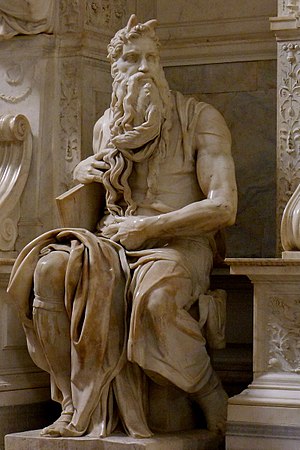
Biblical Limericks: By the Horns of Moses!


Though Jerome was a sage not to be scorned,
if you read his translation, be warned:
he made a small mistake
(but that is all it takes).
In his version Moses comes down horned.

Exodus 34:29

Biblical Limericks: The Veil of Moses


As Moses came down the mountain trail
God’s glory on his face did prevail.
The people, filled with fear,
were afraid to draw near
so they screamed, “Moses, put on a veil!”

Exodus 34: 29-35

Saturday, July 18, 2015

Biblical Limericks: God Loves Artists Best (or at least first...)


Of course we know that our God imparts
his spirit to fill up human hearts,
but the first to be filled
was a man who was skilled
in creating great works of fine art.

Exodus 31: 1 - 6

Tuesday, October 14, 2014

Biblical Limericks: Stop Fishing for Compliments


“Moses, my patience is about spent,
I am the Lord; I said what I meant,
so when I did aver
that you have found favor,
it’s true! Stop fishing for compliments!”

Exodus 33: 12 - 13

Monday, October 6, 2014

Biblical Limericks: It’s Your Fault


The LORD was angry, just about flipped!
“Moses, why’d you lead them from Egypt?
I’ll kill them before long!”
Moses said, “God, you’re wrong;
it’s you that brought them out of Egypt.”


Exodus 32: 7, 11

Friday, October 3, 2014

Biblical Limericks: The First Command with a Threat


Honor father and mother to get
a blessing – it’s the first in the set
to offer this to you -
but worship no statue
is the first commandment with a threat.

Exodus 20: 4, 12, Ephesians 6: 2 - 3

Thursday, September 25, 2014

The Wilderness is Wide


Between the burning, blinding sun
and the cold, changeable moon
I wander;
Between the mountains
the wilderness is wide.


Strike the rock
so that the people may drink;
Strike the rock
and be condemned.

The wilderness is wide
and you are unseen.


Note:  The name of the mountain where the people of Israel received the Torah is given alternately as Mount Sinai or Mount Horeb.  Sinai is derived from “moon” and Horeb from “sun”)

Tuesday, September 23, 2014

Biblical Limericks: The People Quarreled with Moses


Moses, you are such a goddamn putz!
Did you lead us out here to kill us
with hunger and with thirst?
Good grief! You are the worst!
If we grouse it’s ‘cause we hate your guts!

Exodus 17: 2 - 4

Monday, September 22, 2014

Biblical Limericks: Strike the Rock, Don’t Strike the Rock…


In Ex’dus seventeen it’s okay
for Moses to strike the rock, but hey,
in Numbers twenty when
Moses does it again
he’s barred from the Promised Land, oy vey!

Exodus 17: 6 / Numbers 20: 8 - 12

Wednesday, September 17, 2014

Biblical Limericks: Flesh Pots


Their flight to the desert was complete
but the Hebrews had nothing to eat,
so they wept and they cried,
“If only we had died
in Egypt where we had potted meat!”

Exodus 16:3


Tuesday, September 16, 2014

Biblical Limericks: Maybe It’s Better not to Know


Manna came at night, but what was it?
No one really knows, I must admit,
but some scholars suggest
that what they did ingest
was the residue of insect spit.

Exodus 16:14 - 15

Sunday, September 14, 2014

No Schadenfreude in our Salvation


After 400 years in Egypt, after years of slavery and oppression, after bitter rigor and slave labor and tears, the people of Israel were ready to leave, were ready for freedom.  They were oppressed.  They were burdened and beaten. 

Imagine them sitting huddled in their homes during that Passover night – hearing the screams and the shrieks in the dark.  Imagine the moans and sobbing and weeping as the angel of death passed through the country killing the first born sons of Egypt.

Then came their flight towards freedom, but first they had to cross the Sea of Reeds. So the angel, the cloud, the Lord moved to a place behind them to shield them from the pursuing Egyptians, as sort of smoke screen as they passed between the towering walls of water on either side.  And then, on the opposite shore, they watched as the Egyptian army followed them into the sea-bed.  Imagine the horror as those liquid walls came crashing down upon the Egyptians.  It must have been a horrible sight – to the Egyptian horses and riders and crumpled chariots washed upon the shore (Exodus 14: 30). 

Rabbi Johanan  taught that as the Egyptians were drowning the angels of heaven began to sing and to rejoice, chanting their hymns– but God rebuked them saying, “The work ofmy hands is being drowned in the sea, and shall you chant hymns?”


I imagine that it would have been tempting for the Israelites to cheer when they saw those bruised and battered and bloated bodies on the shore.  We want the bad guys to get what they deserve.  We want justice to be done.  We need justice to be done. But the line between the desire for justice and the desire for revenge is thin.  The desire for revenge and justice is natural and normal.  But dangerous.   Like fire that can cook food, heat homes, and disinfect can also burn, and destroy and kill. The need for justice or the desire for revenge can help or hurt us.

We want justice.  We want the oppressors to be punished, indeed we need for them to be punished.  But we should not let ourselves be so filled with hatred for our enemies, for our oppressors, for those who would hurt us – that we begin to enjoy and celebrate their pain and death.

Proverbs 24:17 says, “Do not gloat when your enemy falls, when they stumble do not let your heart rejoice.”

The German language has a word for this, it is schadenfreude - literally that is: “harm joy.”  A somewhat silly example of this is the slapstick humor of the Three Stooges.  We laugh when they take a prat fall, or get smacked upside the head with a shovel, hit with a frying pan.  But it becomes a matter of hatred and even sin when we begin to celebrate the pain and ruination of our enemies. 

Jesus said that we should “Love our enemies” (Matthew 5:44 / Luke 6:27).  This is a difficult thing to do.

A number of years ago I received word that a fellow Salvation Army officer – an officer who had been … less than kind to me, had been injured in a car accident.  I remember that my first thought upon hearing of his injuries was, “well good!”  I, for that brief moment, took some perverse pleasure in the fact that he’d been hurt.  And I did not like myself very much in that moment. 

We must somehow learn to love our enemies – to pray for and even bless those who would do us harm.  Even as we celebrate justice and the punishment of evil men and women, we must somehow learn to love them.  We must be people of love, not people of hate.

There is no room for schadenfreude in our salvation.  
Jeff Carter's books on Goodreads
Muted Hosannas Muted Hosannas
reviews: 2
ratings: 3 (avg rating 4.33)

Related Posts with Thumbnails