Pages

google analytics

Showing posts with label Noah. Show all posts

Wednesday, June 3, 2026

If and Even If – Some Random Arguments

    Here I am, just cleaning out the mental junk drawer. 

    If, as the King James Only crowd will argue, the words of God are pure and uncorrupted, pure words, as silver tried in a furnace of earth, purified seven times and God has kept them, preserved them from this generation forever (Psalm 12: 6-7), then why was the King James translation necessary? Shouldn’t the Tyndale translation, which preceded the KJV, have been sufficient? Or if the Tyndale was corrupted, shouldn’t the Latin Vulgate translation have been preserved uncorrupted? Or again, why did the Jews in Alexandria in the 3rd and 2nd centuries BCE feel the need translate the scriptures into Greek? Shouldn’t the Hebrew originals have been preserved uncorrupted?

    And never mind the fact that the KJV translators themselves rejected the idea that their work was perfect. They explicitly denied it in 1611 in their preface to the completed work.

    Even if we were to accept the historicity of Noah’s ark and the worldwide flood (and that’s a big if…), God’s promise to never again flood the earth (Genesis 9:11) cannot be used as an argument against global warming. God may have promised not to flood the world, but that is not the same as a guarantee of protection from our own climate-changing acts of self-destruction. God’s covenant of mercy does not absolve us of our ecological stewardship.


Wednesday, May 18, 2016

What Canaan Found


Go aboard, you, you with your household, you and all the animals.

The long languid rolling of the ark did less to unsettle his stomach than the rapid lurching they’d endured during the worst of the storm. Then, as the sky collapsed above them and waves lashed at them from both sides, it was all Japheth could do to lie screaming on the floor without vomiting. This isn’t to say that he hadn’t vomited (he had, over and again until he was empty and then continued violently retching) or that all was calm, or that the rains had ceased, but things were better now. He could stand upright – provided he remembered to stand loose at the knees and the ankles, and he could eat a little food. Or would eat a little food, if there were any to eat. The provisions that hadn’t been lost during the storm and hadn’t spoiled, wet and rotted in the weeks after, were carefully preserved for the animals. “We must ensure their survival, son,” Father Noe had told him – his syllables slurred by the rocking motion of the ship. (It had to be that, right? They’d brought no wine aboard, had they?)

“But what of our survival?” Japheth had asked.

His father blanched green, burped a vile smelling belch, and moving his hand lightly, waved the stench away, “the LORD will provide. The Lord will…”

Japheth watched Father Noe stagger (unsteady feet because the ship rocked on the waves, or because he was guttered on wine?) towards the avian compartment. The cooing of the doves and the squawks of hawks and ospreys quieted as Noe closed the door behind him.

“What has the LORD already provided for us?” Japheth asked the wolves in the cages to his left. The wolves only snarled and whimpered in response. They disliked the ship’s motion even more than Japheth.

The dreams won’t cease until the rains stop falling. The rains won’t stop falling until heaven’s cisterns are empty. Crows fly away but return, cackling and cawing. Likewise the dreams. Let heaven disappear and let the rains desist, so that the dreams will fade. The horses are saggy, plow worn nags. Couldn’t Father Noe find a worthy, healthy representative of the species? And why the flies, to buzz about the horse shit? And the maggots in the rotted meat? Why are we set on preserving the future, father? Can you explain? What better world will it be if we bring these pests into it with us?

The ark drifted in sun sparkled waters. The sky was empty, not a cloud anywhere, 360° to the horizon, and if not for the water upon which they floated the rain could have been a retreating memory. A fading dream. Fetid warm air hung heavy below deck. No breeze. No circulation. Just the stench and squawk of animals in close fitted cates. Shem shoveled the dung, down the trough, toward the window, pushed it out over the side. It splashed into the water below. Shem thought briefly about throwing himself over the edge as well. His splash would be indistinguishable from the shit. And he could sink as quickly as the shit. Could sink into the sink. Settle to the bottom. Just settle. Just…

Naamah, old Mother Noe, never went up on the deck, into the outer air. The expanse of water terrified her. In the open infinitude she felt shrunken, shrunk down into nothingness. She came up once, the day after the rain stopped, took one look out and shrieked. She turned and tumbled back down the ladder and refused to come up again. Not until the ark came to rest.

***

And he called his name Noe, saying, this same shall comfort us in our work and in our toil, because of the ground that the LORD hath cursed. But Noe found grace in the eyes of the LORD. And G-d spake unto Noe (why not us?). And Noe builded an altar unto the LORD and a vineyard for himself. Was this what the angels taught him-the art and way of healing? To make wine for our sorrow that we might overcome the offspring of the Watchers? Did Uriel (the reflection, the effulgence, the light like a molten god, like softened silver silk) come from the presence of the One to demonstrate fermentation? As if we needed another demonstration of rot and decay.

Canaan on the shore of the vast but receding lake squints, looking for the opposite shore (for the apostate score). Was that smoke? Was that the sound of drums? Music in the distance? The far-off calls to him but his mother and grandmother refuse to let him go further than the thin woods at the edge of Grandfather Noe’s vineyard. “Don’t wander!” they’d shout whenever he’d approach the wild blasted woods. “Come close! Come back!”

One day, instead of foraging for firewood (nothing was dry enough to burn) he wanders further than the field, into the wooden copse over the ridge. There he discovers the putrefying corpse of one of the elder giants, grotesque in its size and smell. It was drowned in the flood. Now its corpse lies rotting in a wretched place under an unforgiving sun. Were those deformities the result of decomposition or birth? Canaan pokes at it with a stick, prodding its bloated belly–when, suddenly, it ruptures, belching foul gas and coagulated blood. Bloat-flies swarm out of the open cavity, flying into Canaan’s face, into his eyes, his nose, in his mouth. The smell is overpowering, worse than the hot, fusty smell of the ark, worse than the noisome stench of the combination of various animal manures, worse even than the mephitic exhalations of drunken Grandfather Noe. Canaan spits and slaps at his face before tripping and falling backwards He lands on a rotted log–crashing through the soggy bark, disturbing grubs and worms and many-legged crustaceans in grey shells. Flailing and thrashing, the boy runs back towards the ridge and the secure confines of the family plot at the foot of the mountain.

Then sleep for his eyes, he dreams of Gilgamesh’s garden under the sea. Angels of the deep and the monsters of sleep pursue him. He mounts the air like a strong wind, and flies like strong eagles and leaves the inhabited world behind; he escapes the great wasteland, the wilderness, the Desolation like a bird. But the monster in his dreams buzzes and hums, thrumming fingers crawl over his skin, lick his eyes as he sleeps. He feels the throb of his heart, the pound of his pulse, the blood in his veins. Then the creeping fingers disappear and the buzzing ceases. The silence is perfect but brief. His pulse slows, returns to something like a normal rate. But sleeping within his dream is another horror that will not be quieted. The roar of the rain and the screams of the drowning wake him. Canaan starts and falls from his simple pallet to the floor, slicked with reeking terror-sweat.

***

Few of the animals lingered, as the family had at the foot of the mountain, at the edge of the retreating lake. Even those creatures that would have, in antediluvian times, made their homes at the water’s edge in the shadow of the mountain – herons, cranes, foxes, mink, deer – had scattered. Far. Without hesitation. Freed from their cages and pens inside the floating zoo, they’d run like escaped convicts. The shore was barren, the woods uninhabited, even the waters of the lake were formless and void.

Grandfather Noe would not allow them to make tents of goat skin. “The animalsh must be preserved,” he says, “else, why were we shpared through the fl… through the flood?” The family showed him how rapidly the goats had reproduced after their disembarkment from the ark, but Grandfather Noe was adamant. They would build their rickety shelters from the rotted trees and fallen branches gathered around the lake, from mud and from stone, but not with the shedding of animal blood.

“Why must we stay here, Father?”
“No more questions, Canaan.”
“Why?”
“No NO.”

Through the woods, over the ridge, past the bleached bones of the giant, Canaan follows a magnificent bird-a low flying pelican in the wilderness, leading him further and further on. He packed a bag with food and a bedroll and left the family. Left Grandfather Noe’s vines. Now he leaves, steps out into the unknown and unpredictable world. He leaves Grandfather Noe snoring in his drunken stupor, sleeping naked in the shade of his grape arbors

And after a time he begins to find proof of life. Canaan finds animal tracks, paw prints and scat-the first he’s ever seen. He sees bird nests and bee hives, fox dens and snake holes. The world is alive, fully, really, living, breathing, dying, living. The grass is eaten by the rabbit. The rabbit is taken by a snake. The snake by a hawk. And when the pinnacle hawk dies it, too, is eaten by vultures, by fungus, and by bacteria too small for Canaan to see. But he knows that they’re there.

Then he discovers something wonderful and frightening. Something more than the hoof print of deer or paw prints of rock-badgers. Canaan sees a human foot print in the dirt – five toed and round heeled, arched. Perfect in every aspect. Perfect because it was recognizable. Perfect because it was like is own – but it is not his own. It is smaller than his.

He stops and stares at that print for the rest of the day, considering what it means, and what he should do. ‘Do I go home with the news that we are not alone,’ he blinks, once, twice, and again, as he works through his options. ‘Do I track the person who left this print, follow them to their home?’ The sun slides down and he still hasn’t thought of an answer.

‘The sorrows of death encompass me, and the floods of ungodly men make me afraid,’ he thinks. ‘But what men are these? There are no others, no people but Grandfather Noe and timid, sleeping grandmother, my calloused uncles – Shem and Japheth, laboring in the sun, my skulking father, Ham, their wives, my brothers, my sisters, my cousins. Ungodly men, maybe, but this is no flood. Why then am I afraid? Why am I afraid of a single lonely footprint in the dirt? With the blast of His nostrils the waters were gathered together, the floods stood upright as a heap, and the depths were congealed in the heart of the sea, but here I am alone and not alone.’

Canaan follows the prints, scrabbling in the dirt, up the hill toward the highlands. The path leads over rocks and stones, disturbing moss and lichens, through fields bending stems, past trees breaking small branches. Canaan follows where the impossible prints lead.

Grandfather Noe said the waters covered everything, waters smothered everything and everyone. Every living creature under the sun. Every father, mother, daughter, son under the moon. The rains came down and the waters of the deep broke loose and flooded the entire world. There should be no prints here. There could be no prints here. It is impossible. But here the print in the dirt was scuffed, as if the one who left it were skipping. Skipping? Who could be skipping through this field? Grandfather Noe said everyone but the family had been killed.

He hears something ahead, laughter, but not laughter like the taunting, teasing laughter of his sisters and cousins; this is a bright musical laughter, sparkling. And he hears singing. But he doesn’t recognize the song or its melody. It’s not one sung by his sisters and cousins or his mother and grandmother. Come to think of it, he’s never heard his grandmother sing. She rarely speaks and never sings. This song is charming and sweet even in its melancholy.

He listens to the voice and the song:

The goat and flower,
the bee and the fish,
the sky above and
a lonely maiden.

Wind over mountains,
rain in the forest,
and the sky above
the lonely maiden.

The bird flies away,
the deer will startle;
everyone will leave
the lonely maiden.


Canaan sees her–sitting on a stone watching a flock of goats. She braids lengths of flowers into her hair as she sings. “Don’t stop.” Canaan speaks. The girl startles and turns toward whim with a small blade in her hand. Canaan raises his empty hands and stands motionless. He is not a threat. “Don’t stop, please. It’s such a strange song.”

She smiles a pleasant toothy grin, “It is my song,” she says.

“Did you learn it from your mother? My mother sings sometimes. But not like this. My mother sings dirges.”

“No.” she says. “It is my song. Not my mother’s.”

***

“We saw the flood,” she says to the boy. “We saw the waters. But we went further up the mountain with our goats to escape. The rains made a mess of our village and our homes. My cousin’s house slid down the side of the mountain when the dirt beneath it washed away. When the rains stopped we came back down, cleaned the mud and the mold from the walls, repaired the roofs that had collapsed, rebuilt the goat pens. We started over. But not everyone in the village survived. Old Lazal and his wife died during the climb; they fell into the water below. Monal was crushed by boulders in the mudslide. Several others drowned. And we’ve heard the same from other villages and tribes as well.”

“But Grandfather Noe said the waters covered everything, that it killed everyone, to pour out G-d’s fury on the wickedness of the world.”

“The what?”

“The sons of G-d, angels, apostate angels knew the secrets of the Templars and their sin was great in the Earth and they taught men how to sin and to do wicked things. And they killed many, and they begat giants. So G-d regretted ever having made humans.”

“Seems to me that humans didn’t need angels to teach them cruelty. I’ve never even seen an angel or any of the Nephilim and my cousin Leannet was beaten to death by a man from our village when she refused to marry him. ”

“But how could she refuse?” Canaan stops mid-sentence, his eyes wide. “It doesn’t matter. The flood was G-d’s wrath. It covered everything. It killed everyone.” Canaan’s voice grows louder and higher pitched with each word.

“The flood didn’t kill you…,” the girl says gently.

“Because Noe found favor with Yah. And our family was spared, told to build a vessel to escape, and to preserve animals. But he told us everything else, everyone else was gone. You shouldn’t be here! You should have drowned with everyone else!”

She points, “Look there. You can see the shipwrecked hulls of our fishing-boats. But your family was safe inside a vessel built to withstand the storm. You were warned. Did you rescue anyone? Did you save anyone else?”

“No.”

“Did you try?”

“No. The LORD told Noe it was for us. The rest were too wicked, their violence too bloody.”

“But you liked my song.”

“A song is not enough.” A silence grew between them as deep and as daunting as the flood.
“I have to take the goats home soon...,” she says but Canaan does not respond; he is still staring and the broken ships on the rocks. “I have to take the goats home now. Will I see you again?”

Canaan looks up. “Sing for me once more before you go.”

“I should sing?” the girl asks, “I should sing my song for you, a song that not even my mother has heard, I should sing my song for you who would have me drowned?”

“Please?”

“No. I must take the goats home now.” She stands and begins calling the animals, counting them.

“Don’t go,” Canaan pleads with her. “Don’t leave me.”

“Why don’t you come with me?” She invites him with her words and with her eyes.

“To your family? But they’re… they’re…”

“Wicked?” she finishes for him. “Then stay here, or go back to your blessed, drunken Grandfather Noe.”

“I can’t go back there,” he shrieks. The girl sighs. “Stay, just a little longer. Stay and sing, please.”

“I can’t,” she begins to lead the goats away.

Canaan grabs up a stone from the ground, raises it over his head and crashes it down upon her skull. A flood of blood sprays up from the wound, spattering him across the face, a violent red rain. Again and again he brings the stone down on her head until she is dead.

“You shouldn’t be here! You shouldn’t be here! You shouldn’t be here! You should have drowned!”

***

When Canaan finally looks up from the bloodied corpse beneath him, already cooling, blood forming thick dark mud in the dust, the goats have scattered. He hears their bleating far off down the mountain somewhere. He drops the stone, tries to wipe some of the blood from his face, but only smears it around his eyes in gruesome streaks.

He flees back down the hill, toward the dark valley, towards the empty woods and the lifeless lake, back toward Grandfather Noe’s vineyard. “We’re not alone. There are others,” he shouts as he runs back to the cluster of family shacks. “Others. There are others on the mountain. The flood didn’t get them all.”

The family gathers around him, asking questions: “What are you talking about? Where did you go? Why did you leave?” His mother grasps him with both arms, “You are bleeding son; what happened?”

“It’s not my blood, mother. It’s hers, a girl. One of the others.”

“This is her blood?” asks his father, Ham.

“Ye…ye…yes,” he stammers, out of breath and afraid. “I killed her, but … she should have drowned, right? That’s what Grandfather Noe said. She should have been killed in the flood. She shouldn’t have been there.”

“You killed her,” Ham says again, less a question this time.

“Yes.”

“Then they will be coming, blood for blood, life for life. That is the way of it. They will be coming. Fear and dread are upon us. We are the horror of the earth.”

Then Noe cursed his son, “Cursed be Canaan; he will be the lowest of slaves to his brothers.”


The weeping eye of heaven is watching.

Monday, May 2, 2016

Call Me Deucalion


Call me Deucalion. Some years ago – never mind how long exactly – before Utnapishtim, before Noe, I was alone, having little or no money in my pocket and nothing left of my home, that city of the air – and driven on by hunger and by whales, by deluge and assault, driven by misery and loneliness, I set sail upon the impetuous waters.

I stand on the deck, spyglass in hand, a fleet of shipwrecked vessels to the left and to the right of me. The earth shakes with aqueous weapons; trembling waves crashed over me. The air vibrates with strange motions. The sea made red with the blood of my enemies and my friends, the perturbed waters shall over run, spoiling the world. Blood flows and a flood of blows bringing great destruction and unholy enjoyment. Bringing murder and a damnable legend. 

No one can swim. I am alone. In the ark with me, this chest, this coffin, there is lightning and gold.

The solitude of my cabin is too much for me to endure so I follow the migration charts of the great sea monsters, guided by some infallible urge. This is the monster, the stuff of nightmares in the deep and the fear of blood. All human connection is severed. All human connection is death, flood waters and love, heartache and longing upon the surface of the waters. A brooding loner. The blue divide between water and sky. Everything is horizon, the vast, unending circle surrounding me.

I was born and killed by water. Now surrounded by water, waves, alone without a shore. Leviathan maketh a path to my door, but I will not answer his call.

 Call me Deucalion, but I was a lover once, when the world was sweet wine and gentle wind. I was a gentle lover with stars and fire and magic melodies for a maiden. I sang love songs and danced the round for her and we two dreamed of a world that we could make our own. But that was long ago – never mind how many years exactly – too long for the remembering. The moon was mine, once, mine to give to her. But the moon is fleeting and she, like the moon, is drowned in the terrible sea. Never trust the moon. Never trust the sea. The moon doesn’t speak any more and the sea says too much.

Wednesday, June 3, 2015

#KenHam, Take a Word from General William Booth


Ken Ham has a huge expensive dream – to build a life size replica of Noah’s Ark and theme park in Kentucky.  And he needs to raise 29.5 million dollars to do it. 

Yesterday Dan Arel, at the blog Danthropology, called out Ham and his project:  Ken Ham Says Building His Ark Is More Important than Feeding the Homeless


Ken Ham takes on a wearied tone when he writes to rebut these sort of claims:

Nearly every time I post an update on the exciting Ark Encounter project, there seem to be those habitual complainers who claim the money should be spent on the poor instead and not be “wasted” this way. …

I think it’s a simple as this—it’s the message! The Ark project (like the Creation Museum) will in a professional, powerful, and gracious way present the truth of God’s Word and the gospel. Sadly, even some people claiming to be Christians complain about the Ark project and that the money should be given to the poor instead. Such people either don’t understand or don’t seem to care about the millions who will be reached with the most important food in the universe—the spiritual food of the saving gospel—the very message that their eternal life depends on. …

So while it is important to help the poor and needy meet their physical needs (which we do), it is even more important to help meet their spiritual need—the need to come to know Jesus Christ, the Savior of the world—because lives—and eternity—hang in the balance….

But all this pious sounding talk about “spreading the gospel” is just window dressing.  The Ark Encounter Park is less about spreading the gospel, than it is about Ham and his fellow creationists doubling down on their insistence that their idiosyncratic young earth creationism interpretation of the biblical stories is the gospel.

Even if we were to concede that the Ark Park was, in fact, about spreading the gospel, it is still an expensively misguided project. As the founder and first General of the Salvation Army, William Booth said, “You can't tell a man about the love of God if he has an empty stomach.” 

That $29.5 million would be better spent feeding, clothing, sheltering, and educating the poor-and that would be a better proclamation of the gospel than any amusement park.


Thursday, June 26, 2014

Biblical Limericks: Seven Days? Same Day? Same Difference…


Noah went into the ark seven
full days before rain fell from heaven -
no, wait, it says right here,
in the next verse, quite clear,
the rains began the day he went in.

Genesis 7: 7-10 / 7: 11 - 13

Tuesday, May 13, 2014

Biblical Limericks: Noah Was a Jerk


Peter called him a preacher righteous,
but Noah, he seems rather lifeless.
Abram, at least, argued,
would Sodom have rescued;
Noah left the world as detritus.

2 Peter 2: 5


I’m not overly fond of Noah.  God says, “Hey, I’m going to destroy the world.”  And Noah says, “I’m cool with that.”  What a jerk… 

Friday, April 4, 2014

If You Don't Like Aronofky's Noah, You'll Hate the Epistle of Jude

If you are upset and/or outraged by Darren Aronofsky’s film Noah because he “changed the story,” because he added stuff that isn't in the original story, then you should be equally upset and/or outraged with the epistle of Jude.  Yeah, that whole 'Archangel Michael arguing with the Devil over the body of Moses' and the 'prophecy of Enoch' thing - those aren't in the original story.  Just sayin'...

Wednesday, April 2, 2014

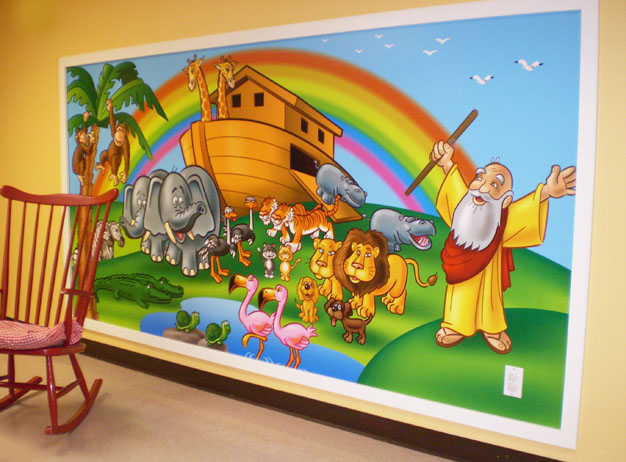
This Is Not the "Biblical" Noah


If you are upset and/or outraged by Darren Aronofsky’s film Noah because he “changed the story,” then you should be equally upset and/or outraged with every children’s story book version of Noah’s Ark as well.    Just sayin…

This is not the "Biblical" Noah.

Monday, March 31, 2014

Biblical Limericks: Noah’s Wife


It’s an old joke and very well known,
I think it’s funny, it gets a groan -
tell me now, without strife
the name of Noah’s wife.
Here’s the punch line: his wife’s name was Joan.


Joan … Joan of Arc… get it?  Joan…
Genesis 6: 18

Saturday, March 29, 2014

Aronofsky’s Noah – Part of the Biblical Conversation


Though I plan to see it, I haven’t gone to the theater for Darren Aronofsky’s new film Noah yet.  But several of my friends and comrades and compatriots have and their reviews and comments posted on Facebook or Twitter have been disappointing to me.

Do not...DO NOT go see Noah. It was HORRIBLE!!!! Aside from the fact that there was a flood, and the main character's name was Noah, I cannot account Biblically for anything in that movie. Really awful. Very disappointed indeed. Well...sigh... we saw Noah this afternoon. What can I say about it? I wanted to find something in it that was spiritually elevating or inspiring, giving me hope that the director would not be creating something that would only be making him $$. I was sadly (and I'm sorry for this) disappointed.


From my friends comments it seems that they are unfamiliar with the way that the story of Noah and the worldwide flood (and all of scripture in general) has come to us.  My friends are disappointed with Aronofsky’s Noah because of the way he’s changed the story; they seem to want an unchanged, unadapted, uninterpreted version of the story as told in the book of Genesis (or as  the story of Noah was told to them in Sunday School). 

But stories – especially biblical stories – don’t work that way.  They don’t just lie there, frozen in space and time.  They continually inspire new tellings, new versions, new interpretations – as evidenced by the Noah stories found in ancient books like 1 Enoch and the Book of Jubilees. These books are part of a collection of writings sometimes known as the  pseudepigraha - written between c.300 BCE and c.300 CE. They are distinct from the Apocryphal or Deuterocanonical books, in that they are not accepted as Scripture by any Christian or Jewish groups.  But even though they’re not considered part of the ‘word of God’ they still contribute to the way that we understand and interpret the scriptures.  They are part of the biblical conversation.

One story inspires another which affects the way that another is told.  One story branches out and influences many more that follow.  

Even the story of Noah and the flood as we have it in the book of Genesis seems to be the result of various tellings of some earlier original story.  What we have in our bible is the combination of two separate stories about Noah and the ark and animals and the flood that have been combined into one new story.

The threads of these two separate stories can be teased out somewhat from the story as we have it today:  Two different reasons are given for why the flood occurs (angel-human intercourse / Violence) Noah is given two different sets of instructions about what types of and how many animals to bring aboard the ark (7 pair of the clean / 2 of each kind) Two different sources for the flood waters (Rain / Fountains of the Deep ).Two different accounts of the duration of the flood (40 days & nights / 150 days)  Two different birds were sent out (Dove / Raven)   See the two accounts laid side by side here. 

Now these differences are not necessarily contradictory – which may be why the ancient editor felt he could combine them into this new version of the story - but what we have is a changing of the way the story was told – which in turn changed the way the story was told – which affects the way the story is retold still today.  The story changes – and, if it’s a good story it changes us.

Whether you like Aronofsky’s Noah or not, whether you agree with the way he has interpreted the story or not, it is unfair to say that it is “unbiblical” – it is very much in the biblical tradition of storytelling.   His movie is part of the larger biblical conversation that has gone on for millennia and will continue into the future. 


(And I think that it is strange to look for something “spiritually uplifting” in a story about divine genocide… but that’s just me.)

Friday, March 28, 2014

Biblical Limericks: The Origins of the Nephilim


Now the Sons of God were observing
Earth women whose figures were curving;
they decided to mate,
an act which sealed their fate,
God said, “of wrath they are deserving.”

Genesis 6: 1 - 4

Wednesday, February 5, 2014

Biblical Limericks: He’s Got 99 Problems but Pitch aint One…


If Noah’s ark is more than just kitsch
then Ken Ham should consider this hitch:
it takes ages of time
for bituminous slime
to be made from plants, and turned to pitch.

Genesis 6: 14

Friday, August 23, 2013

Biblical Limericks: Noah Was an Angry Drunk


Now may a curse be upon Canaan
for what his father, my son, has done;
he saw me passed out drunk,
naked and in a funk,
let him be a slave to everyone.

Genesis 9: 20 - 25


Tuesday, May 7, 2013

How Long Was Moses Aboard the Ark?


 photo MosesontheArk_zpsb5488e81.jpg


"Trick question!" you answer (if you're quick...)  "Moses wasn't aboard the ark.  That was Noah!"

"Ahhh" I reply.  "You are quick... but not quick enough, for Moses was indeed aboard an ark.  The word translated "basket" in Exodus 2: 3 is tebah - the same word used for Noah's ark in Genesis.


Tuesday, February 19, 2013

Biblical Limericks: Noah’s Ark


I wonder how Noah did build it,
that ark, and how the animals fit,
and who fed them each day
with those great bales of hay,
and who shoveled the elephant shit?


Ohhhhhh get over it.  Limericks are supposed to be rude.

Thursday, December 13, 2012

Questing For Faith


Hebrews 11 is often called the "faith" chapter… and you can readily see why; the phrase "by faith" is repeated some twenty times, and the role and necessity of faith is described repeatedly throughout the chapter.  Hebrews 11 is also sometimes described as a 'hall of heroes.'  It enumerates those from the past who lived exemplary lives of faith.

We read about Abel – who offered a better sacrifice than his brother, not because of the contents of the offering, but because of the faith that accompanied it.  We read about Enoch – who, because of his faith, was taken up by God; bypassing the normal death experience that is common to man.  We read about Noah and Abraham, Isaac and Jacob, Moses and Rahab.  The author says that he (or she) doesn't have time to talk about a number of others such as Gideon, Barak, Samson, Jephthah, David, Samuel, and the prophets "who through faith conquered kingdoms, administered justice, and gained what was promised; who shut the mouths of lions, quenched the fury of the flames, and escaped the edge of the sword; whose weakness was turned into strength; and who became powerful in battle and routed foreign armies.  Women received back their dead, raised to life again.  Others were tortured and refused to be released so that they might gain a better resurrection.  Some faced jeers and flogging, while still others were chained and put in prison.  They were stoned; they were put to death by the sword.  They went about in sheepskins and goatskins, destitute, persecuted and mistreated – the world was not worthy of them.  They wandered in deserts and mountains, and in caves and holes in the ground…."

I'd like to give a couple of quotes from two of my favorite theologians:
"Faith is to believe what you do not see; the reward of faith is to see what you believe." – St. Augustine. 

And

"Most people will never know anything beyond what they see with their own two eyes."  Nightcrawler – from X-men 2

Faith is an awkward thing.  Christians sometimes talk about it as if it were a quantifiable commodity – a consumable, measurable product.   Some segments of Christianity are especially focused on this kind of idea – you can find a lot of them on television, talking about how with faith and with the right amount of faith you can have that new car, you can have that new house, you can be rid of that cancer, or your son will be freed of that drug addiction etc…   This isn't faith… this is a magic wand; and it's not at all what is meant by "By faith" in Hebrews 11.

In the same kind of way, the lives of faith described in Hebrews 11 are difficult and awkward. In this chapter the lives of these various heroes are described – but only the positives, only the good and godly.  And in our imaginations, and in our minds, and in our stories and remembering and in thinking about these men and women we can sometimes forget that in their lives they were not consistent paragons of godliness and virtue; that they stumbled and fell, and crashed and burned, and doubted –that they tried and sometimes failed…. Just like the rest of us.

A few years ago I participated in an on-line discussion about the life of Samson- one of the heroes listed in chapter 11.  Some of the other participants were raving about the need for such a godly sort of man today, someone to lead the people, to take a righteous stand against such things as terrorism, liberalism, abortion, homosexuality, etc… and etc…  And into this I inserted a voice of doubt.  I wondered whether Samson really was such a great guy.  If you go back to the book of Judges and you read his stories, really read them – not just skimming them and remembering the Sunday School lessons we absorbed as children – Samson doesn't come off well… in fact he comes off as a jerk, a womanizer, a selfish, spoiled juvenile delinquent who died in a manner suspiciously similar to today's suicide bombers. 

The other participants in this discussion were horrified (and even angered) that I would suggest that Samson wasn't all that they thought he was.  I was expelled from said discussion and from the group.

My complaints about Samson could be repeated for many of the other heroes described in this chapter: King David lived a murderous life – anyone who opposed or contradicted him ended up dead; Jephthah sacrificed his daughter because of a foolishly made vow; Abraham pimped out his wife on two occasions and abandoned his son Ishmael…. Etc... Etc… etc…

My point isn't so much to drag our heroes of the faith through the mud and slime and shit, but rather to perhaps lower the pedestals they've been placed on.  By focusing narrowly on their glorious exploits and their holy achievements – we've come dangerously close to forgetting that these were ordinary men and women and not gods or angels.  They lived lives of risk – lives of faith – and while they often achieved wonderful things for God, they also sometimes failed….

I think that it's very important to remember that they sometimes failed.  By Faith they lived lives of risk and danger and turmoil… and sometimes they didn't do so well.

We sometimes treat faith like something to be found and captured and contained.  I saw a bumper sticker recently asking "Got Faith?"  Do you have it or not?  I'm sure the driver of that particular car would say that they have faith.  Me – most of the time I feel like the man who came to Jesus with his demon possessed son and said, "I believe. Help my unbelief." 

I have questions.  Always questions.  And like the Hydra of Greek mythology, whenever one question is answered, two more rise up to take its place.  I have questions.  Always questions.  I believe. Help my unbelief.

Questions – for me – are quests… a question is a journey; something to be explored, new terrain to be mapped out, and dark forests in which to occasionally get lost.  Questions are quests –ions… rather than con-quests.   And I think that this fits well with the life of faith described in Hebrews 11 which says, "All these people were still living by faith when they died.  They did not receive the things promised; they only saw them and welcomed them from a distance."  The heroes of chapter 11 struggled, wrestled, and suffered towards the goal of their faith.  They were on a quest – "looking for a country of their own," rather than having made a conquest of their faith. 

As St. Augustine said, "Faith is to believe what you cannot see; the reward of faith is to see what you believe."  These heroes of the faith were rewarded – but not during their lifetimes on this earth.  They were on a quest; a journey.

And here I'd like to quote another of my favorite theologians, Gonzo, who in the Muppet Movie sang an amazing song of faith, "I've never been there, but I know the way.  I'm going to go back there some day."  By faith, we travel towards something we know, something we can't see, something we can't always express with certainty – but always with confidence.

Faith is a challenge.  Faith is a risk.  Faith is never unaccompanied by its constant doppelganger-Doubt.  The life of faith is not the Sunday school lesson of heroes untainted.  The life of faith is an adventure, infinite possibility coupled with hazard and challenge.  "Most people will never know anything beyond what they see with their own two eyes." But there is more.  Much much more. Infinitely more. 

Our heroes of faith quested for it; went searching for it.  Christians frequently call unbelievers "seekers" with the implication that believers have of course "found it."  Hebrews 11 assures us that all our heroes were seekers constantly moving toward the promise of their faith, never – in this life – realizing it completely.  Mike Yaconelli (founder of The Door Magazine) wrote in his book Dangerous Wonder, "The church should be full of Christians who seek questions rather than answers, mystery instead of solutions, wonder instead of explanations."  We are all seekers, explorers venturing into uncharted territories.

Like our heroes, we will occasionally stumble. We will miss the mark.  We will fail and fall. But all is not lost. By Faith we can stand up and start again. Singer and Songwriter Leonard Cohen's song Hallelujah expresses this "by faith" lesson well:

I did my best.  It wasn't much
I couldn't feel so I tried to touch
I've told the truth, I didn't come to fool you.
And even though it all went wrong
I'll stand before the Lord of Song
With nothing on my tongue but Hallelujah.

 Another line from that song is equally encouraging, "It doesn't matter which you heard / the holy or the broken hallelujah."  

Even though it all may go wrong, even if we fail and falter and stumble along the way we can "stand before the Lord of Song" and say "Hallelujah"  It doesn't matter if it's a holy or a broken Hallelujah.  The lives of our heroes of the faith illustrate that we'll all be there with our holy and our broken hallelujahs. 

Faith is a journey.  Faith is an adventure.  It's sometimes dangerous.  Sometimes it will be rough.  We may step out and see wonderful extraordinary things in our life.  We may fall short.  We may fail.  But by faith we can say with confidence that our reward is sure. 

Sunday, December 9, 2012

The Other Noah

I wrote this short story a few years ago.  It's a sort of sideways bible story - the story of the "other" Noah.


The Other Noah
Jeff Carter's books on Goodreads
Muted Hosannas Muted Hosannas
reviews: 2
ratings: 3 (avg rating 4.33)

Related Posts with Thumbnails