Pages

google analytics

Showing posts with label MLK. Show all posts

Saturday, February 7, 2026

I Contain Multitudes – I Am Legion

     Here it is – Like Whitman, I contain multitudes. I am Legion.

    “That’s not funny, Carter. I’ve always said you were Satanic.

    Yeah, yeah, yeah. Give me my influences. Give me my heroes. Le t me name them:

    Archibald MacLeish – librarian poet
    Madeline L’Engle – universalist author, Christian author
    Burroughs – both Edgar Rice and William
    William Booth – the only General I would follow

    Howard Zinn – historian
    
Marc Chagall – dreamer, poet, painter, fool

    “You’re a fool, Carter. Everything you say only confirms it the more…”

    Gustavo Gutiérrez – Dominican liberationist
        and
    Roger Corman – the king of cult

    “You go too far.”

    Give me scream queens. Give me Elvira,
    Give me Neil Young and Nick Cave.
    Give me Camus and Kierkegaard
    Give me the blessed Saint Francis and Sister Death

    “Stop. Stop. You’re only embarrassing yourself with this… contortion. This confession.”

    Kropotkin. Cash. Dylan.
    Brian Wilson. John Coltrane and John Yoder (though, I acknowledge the danger)
    Umberto Eco, and Echo and the Bunnymen

    “I don’t even know these names. No one cares.”

    Poe, and King, and Dick
    Sartre, Beauvoir, Silverstein
    Give me Black Francis screaming into the void

    “You need to stop. This is unhealthy.”

    Give me Martin Luther King Junior

    “He was an adulterer”

    I know, but give me Tillich.

    “Pornographer.”

    I know, but give me…

    “No. I will give you nothing.”

    Give me Jesus.

    “Jesus! The Blasphemy you breathe…”


Sunday, January 22, 2017

Of Inaugural Addresses and Enthronement Oracles (A Sermon)

Isaiah 9: 1 - 4
Matthew 4: 12 - 23
Psalm 27

It is highly unlikely, altogether improbable that those individuals who compiled and organized the three year cycle of lectionary readings for the Church were aware that today’s reading from Isaiah 9: 1 – 4 would coincide with the very recent inauguration of the 45th president of the United States of America. So it is a fortuitous – a serendipitous – a providential text, fitting for today even if by nothing more than coincidence. Many biblical scholars believe Isaiah 9 to be part of an enthronement event, a “dynastic oracle uttered on the occasion of the anointing of a new king or at the anniversary of the event” (Scott 231) and, as such, is a fitting text to read as we reflect upon the recent transition of power in the government of the United States of America.

Speeches and songs are part of the pageantry of government – for better or worse. They can be used to inspire and encourage. They can be used to frighten and intimidate. They can be used to uplift and ennoble. They can be used to blame and harass. In his inauguration speech on Friday (January 20, 2017) President Donald Trump described a bleak picture of the way things are as he takes office – of “rusted out factories scattered like tombstones across the landscape of our nation; an education system flush with cash, but which leaves our young and beautiful students deprived of all knowledge; and the crime and the gangs and the drugs that have stolen too many lives and robbed our country of so much unrealized potential.” He described it as an “American carnage” (Trump “Inaugural Address”). 

Now whether or not he painted an accurate word picture of way things are or not (I’d say not; his description is either wildly hyperbolic or grossly dishonest), it is not uncommon for new government leaders to describe differences between the outgoing and the incoming administrations in the starkest and most dramatic terms possible. All that is behind was darkness and destruction, and all ahead will be light and glory.  For better or for worse, this is the way that propaganda works.

And it is the way that our passage from Isaiah works as well.  Although historians and biblical scholars cannot say with certainty whether this passage describes the rule of a particular King of Judah or if it is intended to describe the rule and reign of an idealized king of the future, and Christians have interpreted the passage to speak of Jesus Christ, it seems likely that the “oracle was composed to celebrate the ascension of an actual Judean king” in the 8th century B.C.E. (Scott 232). Isaiah describes the way things were as gloomy and filled with anguish. The people were walking in darkness and living in the land of the shadow of death. (Isaiah 9: 1- 2) They were under the heavy yoke of an oppressive foreign invader – the Assyrians. (Isaiah 9: 4) But the new king would bring light, would bring glory; he would change contempt into joy and rejoicing. The new king would be a magnificent figure, a messiah on the throne of David.

Now, please note that I am not equating President Donald J. Trump with the messianic figure of Isaiah 9 – Trump is not a messianic figure. And neither is he the Antichrist. And, let me continue, the same is true of his predecessor: President Barak H. Obama was neither the Antichrist nor a messiah. We read this text today without praising or demonizing either of those men, but to reflect on the ways that we can understand our world today. What makes this passage from Isaiah something more than persuasive political propaganda? What can our president do, and –more importantly- what can we do to make this reading something more than the inflated rhetoric and empty promises of political propaganda?

We can’t say everything that might be said this morning so we will limit our thoughts to two points – a two part plan for bringing light to a once darkened land.

First: We must lift off the burdensome weight of the oppressor. In Isaiah’s case the oppressor was obvious – it was the Assyrians led by Tiglath-Pileser III. The Assyrians were the evil empire of the day, the forces of darkness. In our own day the oppressor may not be the army of a foreign invader, but still threat, still a danger.

In recent days I have been struck by the prescient words of Reverend Martin Luther King Jr. He described the oppressors of our day by saying:

I am convinced that if we are to get on the right side of the world revolution, we as a nation must undergo a radical revolution of values. We must rapidly begin...we must rapidly begin the shift from a thing-oriented society to a person-oriented society. When machines and computers, profit motives and property rights, are considered more important than people, the giant triplets of racism, extreme materialism, and militarism are incapable of being conquered. (King “Beyond Vietnam”)

Any political or economic system that favors profits over people and products over persons is an oppressive system. Any law, or practice, or tradition that favors one ethnic or gender or sexual identity over another is part of that oppressive weight that must be lifted, part of the burden that must be removed if we are going to live in light and glory instead of dark gloom and anguish.

Theologian James Cone wrote, “Yahweh is known and worshiped as the Lord who brought Israel out of Egypt, and who raised Jesus from the dead. He is the political God, the Protector of the poor and the Establisher of the right for those who are oppressed. To know him is to experience his acts in the concrete affairs and relationship of people, liberating the weak and the helpless from pain and humiliation. For theologians to speak of this God, they too must become interested in politics and economics, recognizing that there is no truth about Yahweh unless it is the truth of freedom as that event is revealed in the oppressed people’s struggle for justice in this world” (Cone 62).

The weight of the oppressors must be lifted from the shoulders of the poor and the afflicted.

Second: We must put away our reliance on military force. We must be prepared to burn all the clanking footgear and the blood-rolled clothing; the signs and symbols of that darkness of death are ritually burned as the new king comes to power.

Again from Martin Luther King Jr:

A true revolution of values will lay hand on the world order and say of war, "This way of settling differences is not just." This business of burning human beings with napalm, of filling our nation's homes with orphans and widows, of injecting poisonous drugs of hate into the veins of peoples normally humane, of sending men home from dark and bloody battlefields physically handicapped and psychologically deranged, cannot be reconciled with wisdom, justice, and love. A nation that continues year after year to spend more money on military defense than on programs of social uplift is approaching spiritual death. (King “Beyond Vietnam”)
   
We have been at war for a long time, for far too long. We have been at war for my teen-aged son's entire life. I cannot wrap my mind around that fact. And more warfare will not make an end to our warring. We must make the hard choice to give up our reliance on military might. It has not made us safe. It has not brought prosperity to our nation. It has not brought light to the world, only more darkness. “Darkness cannot drive out darkness; only light can do that” (King “Strength to Love”). We must put an end to our warring. We must burn away our weaponry.

But I should stop here and be very clear to note that it was not king who did these things. Whoever the historical king in view in Isaiah’s text may have been, he did not do these things and bring light and glory to the people living in the land as dark as death. God did. “This is God’s own action. It is God who is the cause of the rejoicing, God who has given bountifully, and God who has broken the oppressor’s rod” (Lang). The king was God’s representative, his adopted son (Psalm 2:7), but it was God himself who brought about the redemption and deliverance of the people.

We "praise the One who breaks the darkness with a liberating light" (Edwards) for he is our light and our salvation. (Psalm 27:1)

And this is still true today; President Donald J. Trump will not - cannot - save us; he will not deliver us. Our hopes cannot be in individual who occupies the presidential office. We cannot put our trust in princes or presidents who cannot save us. (Psalm 146: 3)

But if we would like to live in that kingdom of light and glory instead of the land as dark as the shadow of death, this must be our plan and program – to lift the away the weights of the oppressors so that everyone is free to share in the good gifts that God has given us, and to burn away our reliance on violence and military force. If we cannot do these two things then we will continue to live in the gloom and anguish of that land of death. Jesus began his ministry in Galilee of the Gentiles by saying "Repent for the Kingdom of Heaven is at hand." Today we repent of all our oppressive systems and structures; we repent of our militancy and violence. We repent for the Kingdom of Heaven is at hand, the dawning of that great light is near even now.


Cone, James H. God of the Oppressed. San Francisco, CA: Harper San Francisco. 1975. Print.

Edwards, Rusty. "Praise the One Who Breaks the Darkness" 


King jr. Martin Luther. “Beyond Vietnam: A Time To Break Silence” April 4, 1967. Riverside Church, New York, NY.

King jr. Martin Luther. Strength To Love. New York, NY: Harper & Row. 1963. Print.

Lang, Dirk G. “Commentary on Isaiah 9: 2 – 7.” December 4, 2012 Workingpreacher.org

Scott, R. B. Y. “Isaiah: Exegesis” The Interpreter’s Bible Volume V.  Nashville, TN: Abingdon Press. 1956. Print.

Trump, Donald. “Inaugural Address” January 20, 2017, Washington D.C.   


Monday, January 16, 2017

The Tired Servant (A Sermon)

John 1: 29 – 42
Isaiah 49: 1 – 7
Psalm 40

Last week we read of Jesus’ baptism in the Jordan River by John the Baptizer, and of his visionary experience – seeing the sky ripped open and the glories of the kingdom of heaven exposed and all the demands of righteousness. Jesus rose up from those embryonic and chthonic waters, waters symbolizing both a new birth and a coming death, full of anticipation of the work he was called to do, ready to go and to do the will of God. Ready to be the servant of God. Ready to meet all the demands of righteousness, to bring the Kingdom of Heaven to the low and the poor and the lost. 

Our texts for that day combined Matthew’s description of Jesus’ baptism (Matthew 3: 13 – 17) with a reading from the first of Isaiah’s “Servant Songs.”(Isaiah 42: 1 – 7)  In that reading we saw Jesus / the servant as a passionate spirit, endowed and emboldened by the Spirit of God to do a great work – confident that he would not grow weary, would not be exhausted until he had been successful in bringing the Kingdom of Heaven to all the world.

This week the lectionary moves forward only slightly to combine the beginnings of Jesus’ mission – his movement away from John the Baptizer and the calling of his first disciples – with a reading from the second of Isaiah’s “Servant Songs.”

We might have expected the same victorious spirit, the same eagerness to dare and to do – that same bold confidence  to grab the world, the sort of exuberant (though perhaps naïve) confidence expressed by high school graduates who believe that they will go out and challenge and change the world.  There is no challenge too great, no obstacle too large, no enemy or opponent too powerful…

Like “God’s Soldier”:

God's soldier marches as to war,
A soldier on an alien shore,
A soldier true, a soldier who
Will keep the highest aims in view.
God's soldier goes where sin is found;
Where evil reigns, his battleground;
A cunning foe to overthrow
And strike for truth a telling blow.

We’re going to fill, fill, fill the world with glory
we’re going to smile, smile, smile and not frown
we’re going to sing, sing, sing the gospel story
we’re going to turn the world upside down.
(Read)

So it may come as a bit of shock to find this particular combination of texts this morning. Instead of the courageous and undaunted servant, ready to do battle against the world, we instead have a broken and tired servant, a cynical and despairing servant who is almost resigned to failure and his inability to complete his mission.

“My toil has been futile.” He says.
“I have exhausted myself for nothing, to no purpose.” (Isaiah 49: 4 New Jerusalem Bible)

What happened? Why the despair? Shouldn’t the good and faithful servant always be happy? (Smile, smile, smile and not frown…) Shouldn’t the good servant move from victory to new victory, and from glory to ever-increasing-glory? We’ve been taught that the good follower of God, the good Christian will always be positive, and never entertain feelings of dejection or worry. The good servant of God will succeed, will be victorious and more than a conqueror. Right? These are the marks and signs of doubt – and doubt is bad. Failure is bad.

Perhaps this attitude is naïve, and this expectation unrealistic.

We are not Hollywood movie action heroes. We are not plaster saints. We are fragile. We are we fallible. We get tired. We grow weary. We despair.

I think of Martin Luther King Jr, who we celebrate and remember tomorrow who was no plaster saint to set upon a pedestal. As inspirational and heroic his work was, he suffered the same despair we all feel at times, the same despair as Isaiah’s suffering servant. During the Montgomery Bus Boycott, facing stiff opposition and 30 – 40 threatening phone calls and letter a day, he reached his “saturation point” (King.)  

“I got out of bed and began to walk the floor. I had heard these things before, but for some reason that night it got to me. I turned over and I tried to go to sleep, but I couldn't sleep. I was frustrated, bewildered, and then I got up. Finally I went to the kitchen and heated a pot of coffee. I was ready to give up. With my cup of coffee sitting untouched before me I tried to think of a way to move out of the picture without appearing a coward. I sat there and thought about a beautiful little daughter who had just been born. I'd come in night after night and see that little gentle smile. I started thinking about a dedicated and loyal wife, who was over there asleep. And she could be taken from me, or I could be taken from her. And I got to the point that I couldn't take it any longer. I was weak. Something said to me, "You can't call on Daddy now, you can't even call on Mama. You've got to call on that something in that person that your Daddy used to tell you about, that power that can make a way out of no way." With my head in my hands, I bowed over the kitchen table and prayed aloud. The words I spoke to God that midnight are still vivid in my memory: "Lord, I'm down here trying to do what's right. I think I'm right. I am here taking a stand for what I believe is right. But Lord, I must confess that I'm weak now, I'm faltering. I'm losing my courage. Now, I am afraid. And I can't let the people see me like this because if they see me weak and losing my courage, they will begin to get weak. The people are looking to me for leadership, and if I stand before them without strength and courage, they too will falter. I am at the end of my powers. I have nothing left. I've come to the point where I can't face it alone" (King).

But neither Martin Luther King jr. nor Isaiah’s suffering servant were allowed to give up. They suffered. They hurt. They failed. They faltered. They despaired. But they were not allowed to give up. They were not allowed to resign from the fight.

As he prayed that night the faltering Martin Luther King jr. seemed to hear the voice of God saying to him, "Martin Luther, stand up for righteousness. Stand up for justice. Stand up for truth. And lo, I will be with you. Even until the end of the world” (King).

And so too Isaiah’s suffering servant. In his moment of despair when everything seemed like failure and lost, the voice of God said to him, ‘It’s not enough for you to be my servant, to restore the tribes of Jacob and the survivors of Israel – I shall make you a light to all the nations of the world.’ (Isaiah 49: 6 – 7)

"If you have raced with men on foot and they have worn you out, how can you compete with horses? If you stumble in safe country, how will you manage in the thickets by the Jordan?” (Jeremiah 12: 5)

Not only were they not allowed to give up – but they were challenged to do more, their mission was enlarged.

“A monk was once asked: What do you do there in the monastery? He replied: we fall and get up, fall and get up, fall and get up again” (Ware 129).

We all struggle. And we all fail. We all wrestle with doubt and disappointment. It is naïve to expect otherwise. It is unrealistic to demand a perpetual victory march. But disappointment and doubt, faltering and failure are not stop us. We fall down and we get up. We fall down and we get up. We fall down and we get up again and again with the strength of the spirit that leads us forward. He lifts us up from the miry clay of our failure and despair and puts our feet on a solid rock again.

The challenges loom large, and the obstacles seem insurmountable. Our enemies are strong and our failures are real. But when we are knocked down by life, by trial, by opponents and enemies, we get up, dust ourselves off, and try again.


“My brethren, do all that is in your power not to fall, for the strong athlete should not fall, but, if you do fall, get up again at once, and continue the contest. Even if you fall a thousand times, because of the withdrawal of God’s grace, rise up again at each time, and keep on doing so until the day of your death. For it is written: ‘If a righteous man falls seven times,’ that is, repeatedly throughout his life, ‘seven times shall he rise again’ [Proverbs 24:16].”

St. John of Karpathos, from the collection of letters to monks in India


King jr., Martin Luther. The Autobiography of Martin Luther King jr. Ed. Clayborn Carson. New York, NY: IPM / Warner Books. 2001. Print.

Read, Harry. “God’s Soldier” The Salvation Army Songbook. London. The Salvation Army. 2015. Print.

Ware, Kallistos. The Orthodox Way.  Crestwood, NY: St. Vladimir’s Seminary Press. 1979. Print. 

Sunday, January 8, 2017

What Did He See? (Sermon - Matthew 3: 16)


Then Jesus appeared – coming from the soft, green hills of Galilee down to the Jordan River valley, to the river – which was not much of a river, not more than a stream in many places. He came to be baptized by John. But John objected, “I should be baptized by you.” Jesus insisted, “Let this be done to fulfill all the demands of righteousness.”

So he was passed through the baptismal waters and God was with him (Isaiah 43:2). He went down into the waters that were at the same time embryonic and chthonic - a symbol of both his new life as a prophet and his coming death. As Jesus was immersed in the swirling, muddy waters of that narrow stream, he closed his eyes and held his breath. He felt the firm press of John’s hand, holding him under for a timeless fraction of a second, then raising him up again. The water streamed from his hair, down his face and beard. Jesus sputtered for air, wiped his eyes and looked up toward the sky. And suddenly the heavens were opened.

“Oh that you would tear the heavens open and come down
- in your presence the mountains would quake…” (Isaiah 64:1)

And what, besides the Holy Spirit descending like a dove, did he see when the sky was ripped open? What did Jesus see when the One “who created the heavens and spread them out” (Isaiah 42: 5) now ripped them open? What visions did he see? Matthew’s gospel does not say – not specifically. But I would like to hazard a guess.

In that moment, as he stood up from the river with the water pouring from his face as the heavens were opened for him, I think he saw the brilliant, blinding light of billion dimly burning wicks. (Isaiah 42:3) I think that he saw the Kingdom of Heaven in all its righteousness, in all its varied splendor and in its many forms of suffering.

He saw “the masses of men live[ing] with their backs constantly against the wall…the poor, the disinherited, the dispossessed” (Thurman 3). He saw the tired, the poor huddled masses yearning to breathe free, the wretched refuse of a thousand teeming shores, and the homeless who are tempest-tossed from one place to another, never able to settle or find a home.  (Lazarus)

He saw the widows and orphans of every unjust war. He saw the massacred innocents, the displaced refugees, the frightened and the terrorized. He saw the helpless and the powerless and the desperate.
He saw women weeping and little children going hungry. He saw men going to prison, in and out, in and out. He saw drunkards and poor lost girls upon the streets and dark souls lost without the light of God. (Booth) He saw walking lepers and lurching bravoes from the ditch. He saw the dribs and drabs of drug fiends with pale faces and minds still ridden with corrupted passions, and soul-powers frail. He saw vermin-eaten saints with mouldy breath, and the unwashed legions of the ways of death. (Lindsay)

He saw people lingering in, and dying from illnesses that could easily be treated and cured if not for the greed of powerful and wealthy men. He saw hungry children. He saw mothers and fathers out of work. He saw the illiterate struggling to fit in with the rest of society. He saw the immigrant struggling to speak a second (or third) language along with the people of their new country. He saw the mentally ill and the learning disabled. He saw the lonely elders in nursing homes and sterile hospital rooms.

He saw the “wretched of the earth,” all the disreputable people piled on top of one another in crowded slums and barrios and ghettos, living in shacks squeezed tightly together in a world with no space, famished and hungry for bread, meat, shoes, coal, and light, crouching and cowering on their knees. (Fanon 4 – 5)

He saw all of the people, in every part of the world, who are “tired of being trampled over by the iron feet of oppression,” who are “tired of being flung across the abyss of humiliation” and tired of experiencing the "bleakness of nagging despair” (King “MIA Mass Meeting”)

He saw “the slow, the suffering, the quick, the dead” (Rice) He saw nuns and priests assassinated in South America, and black American prophets gunned down in Harlem and in Memphis. He saw husbands and wives struggling to keep their love for each other alive. He saw children used and abused and pushed into prostitution.

He saw the poor and the poor in spirit. He saw the gentle. He saw those in mourning. He saw the hungry and those who hunger and thirst for righteousness. He saw the merciful and the pure in heart. He saw all the struggling peacemakers living in a world of war. He saw the persecuted and the oppressed, the abused and maligned. (Matthew 5: 3 – 12)

He saw the gentle ones – the crushed reeds and faltering wicks – struggling to keep the flame of faith alight. He saw the blind and captives in prison and the ones living in dark dungeons without light (Isaiah 42: 3, 7)

He saw them in the east and the west, the rich and the poor, the despised, the distressed (Gowans #1011) a huge number of them, impossible for anyone to count, of people from every nation, race, tribe and language, standing in front of the throne and in front of the Lamb (Revelation 7: 9). He saw the serried ranks of countless millions - billions of children, women, and men unknown and unnamed by history – but known, and named, and loved by his father in heaven. And he saw the against-the-evidence hope for triumph over evil (West 35) in each of their lives.

He saw all of this but did not balk at the pressure, he did not recoil from the demand, or hesitate at the thought of countless, inevitable failures along the way, or the long, long delay before full and final glory. He did not grow faint and would not be crushed until he had established justice and righteousness on the earth (Isaiah 42: 4)““Oh it is hard continuing believing, continuing loving, continuing resisting all that opposeth! We are subject to be weary of well doing” (Bunyan 193). He knew that “the time may be long, the obstacles great, and the chance of success dim,” but he knew that, “the servant continues to perform his mission, conscious of his election and calling and endowment” (Coffin 466).

Coming up out of the waters of the River Jordan, Jesus saw all of this and he knew what he had to do. He knew what he would do: he would be the Servant of the Lord. He would give his life in service to all of these, and in this way fulfill all the demands of righteousness.


Booth, William “While Women Weep – I’ll Fight” - this may be one of the apocryphal quotes, something the founder of The Salvation Army never actually said, but is very much in line with all that he did and said in his life. 

Bunyan, John. “Christian Behavior.” The Practical Works of John Bunyan Vol. VI.

Coffin, Henry Sloane “Isaiah: Exposition” The Interpreter’s Bible Volume V.  Nashville, TN: Abingdon Press. 1956. Print.

Fanon, Frantz. “On Violence” The Wretched of the Earth. Trans. Richard Philcox. New York, NY: Grove Press. 1963. Print

Gowans, John and John Larsson. “They Shall Come from the East” The Salvation Army Songbook. London. The Salvation Army. Print.

King, Martin Luther. “MIA Mass Meeting” Holt Street Baptist Church, Montgomery, Alabama: 5 December, 1955. Speech. 

Lazarus, Emma. “The New Colossus” 1883. 

Lindsay, Vachel. “General William Booth Enters into Heaven” General William Booth Enters into Heaven and Other Poems. Doylestown: Wildside Press. 1913. Print. 

Rice, Tim and Andrew Lloyd Webber. ”Hosanna” Jesus Christ Superstar. 1970. 

Thurman, Howard. Jesus and the Disinherited. New York: Abingdon – Cokesbury Press. 1949. Reprint Boston, MA: Beacon Press. 1996. Print

West, Cornel. Prophesy Deliverance! Louisville, KY: Westminster John Knox Press. 1982. Print.

Wednesday, January 4, 2017

Comparing Martin Luther King Jr and Jeremiah Wright


Consider -

The distance of time, and his death by assassination has all but made a saint of Reverend Martin Luther King Jr. – in the same way that President Abraham Lincoln is revered now as a ‘founding father’ but was divisively hated in his own time…  But Martin Luther King Jr. was despised in his day.

Compare -
Martin Luther King Jr. has been made tame, made safe. Where he was once a burr and a bone of contention and challenge, he’s now respectable and honored. Perhaps we’ve lost something in his elevation. Read through his sermon “Standing by the Best in a Time of Evil” (August 6, 1967 – Ebenezer Baptist Church, Atlanta, Georgia).

Notice that he says, “The judgment of God is on America now.”

“Oh I weep for my nation. And I must think about the fact that I live in a country that is the greatest purveyor of violence in the world. … And I’ll tell you my friends I’m going to stand by my convictions. I’m going to stand by the principle that the Spirit is mightier than the sword. The judgement of God is on America now. “(page 6 of 9) 

In the relatively recent past, The Reverend Jeremiah Wright was vilified by white Christians in America for his “God damn, America” sermon.  But read the full text (and not just the out-of-context inflammatory sound bite…).


“Governments fail. The government in this text comprised of Caesar, Cornelius, Pontius Pilot – Pontius Pilate – the Roman government failed. The British government used to rule from east to west. The British government had a Union Jack. She colonized Kenya, Guyana, Nigeria, Jamaica, Barbados, Trinidad and Hong Kong. Her navies ruled the seven seas all the way down to the tip of Argentina in the Falklands, but the British failed. The Russian government failed. The Japanese government failed. The German government failed. And the United States of America government, when it came to treating her citizens of Indian decent fairly, she failed. She put them on reservations. When it came to treating her citizens of Japanese descent fairly, she failed. She put them in internment prison camps. When it came to treating her citizens of African descent fairly, America failed. She put them in chains. The government put them in slave quarters, put them on auction blocks, put them in cotton fields, put them in inferior schools, put them in substandard housing, put them in scientific experiments, put them in the lowest paying jobs, put them outside the equal protection of the law, kept them out of their racist bastions of higher education and locked them into position of hopelessness and helplessness. The government gives them the drugs, builds bigger prisons, passes a three-strike law, and then wants us to sing “God Bless America.” No, no, no. Not “God Bless America”; God damn America! That’s in the Bible, for killing innocent people. God Damn America for treating her citizen as less than human. God damn America as long as she keeps trying to act like she is God and she is supreme!”


Is there a significant difference between what Martin Luther King jr (now safe, and respectably in his grave) said and what Jeremiah Wright said? No. Not really. So… should Wright have been treated with more respect – with a larger measure of the respect we now give to Martin Luther King Jr.? Probably.

But, then again, perhaps we shouldn’t have allowed Martin Luther King Jr to have been tamed, to have been made safe. 

Thursday, April 21, 2016

The Sermon on Mount Shangri-La


I recently read (re-read, actually) James Hitlon’s 1933 novel Lost Horizon.  The novel describes an ancient utopian community known as “Shangri-La.” It’s a reclusive community, hidden deep in the mountains of Tibet, devoted to the task of safeguarding human wisdom and beauty from the approaching storm of holocaust and apocalyptic war. Hilton proved to be a bit prescient, envisioning the horrors of World War II.

I like the book, even if it’s not aged especially well. The writing feels a little dated, and somewhat stilted. The characters are a little flat.  But it’s the idea-the idea that’s important here. Shangri-La is the antithesis of the modern world - all frenetic motion with no peace. If you’ve ever wanted to get away from the tyranny of the hurry-faster-more capitalistic, militaristic frenzy, you might feel at home at Shangri-La.

“We have reason. It is the entire meaning and purpose of Shangri-La. It came to me in a vision long, long ago. I foresaw a time when man exalting in the technique of murder, would rage so hotly over the world, that every book, every treasure would be doomed to destruction. This vision was so vivid and so moving that I determined to gather together all things of beauty and culture that I could and preserve them here against the doom toward which the world is rushing. Look at the world today. Is there anything more pitiful? What madness there is! What blindness! A scurrying mass of bewildered humanity crashing headlong against each other. The time must come, my friend, when brutality and the lust for power must perish by its own sword. For when that day comes, the world must begin to look for a new life. And it is our hope that they may find it here"(Hilton).

As in other books about fictional utopian communities, the climax of the story involves the protagonist’s choice: will he give up the world he knows in order to risk living in Shangri-La?

I think that I would rather enjoy living in that hidden mountain city-a sort of melancholy utopia, like an oriental work of art, all the more appreciated because of its imperfections. The retreat from passion, machinery, ambition, destruction, and war, a place where it’s safe to be meek and unassuming. I could definitely see myself living there.

I believe in utopias. Or rather, I want to believe in them. The word “utopia” was coined by Sir Thomas More for his 1516 book Utopia. The word comes from the Greek: οὐ ("not") and τόπος ("place") and means "no-place.” But alternately, Utopia can be derived from the Greek εὖ ("good" or "well") and τόπος ("place"), meaning: "good place.” It’s a homophonic pun: no-place /good-place. I want to believe in utopian communities that are good places, able to devoid themselves of all the rot and filth of this world, able to devote themselves to learning, wisdom, justice, and health for all.

But I have been told – and repeatedly – that it’s naïve to hold any such utopian fantasies because they are, by their very name, “no-place” nowhere. I should, I am told, understand that such communities cannot and will not exist. Not in this world.

But why is it naïve to believe, or to want to believe that something better is possible in this world?  Why must we “be realistic” or “practical”? Why should we believe that the “good place” utopia can only exist in fictional literature and in a far removed heaven of the future? 

I find these questions especially perplexing in light of Jesus’ teaching in the Sermon on the Mount. Possibly the best known portion of Jesus’ teaching, it may be, at the same time the least applied portion of his instruction. Jesus’ teaching in the Sermon on the Mount has inspired the lives and work of many influential people throughout history. Martin Luther King Jr.’s work in the 1960s was grounded in the revolutionary nature of Jesus’ words. Count Leo Tolstoy, the famous Russian author, was motivated by this sermon to a radically new lifestyle; he gave away his land holdings and copyrights, freed his serfs, and began to practice a life based on the Sermon on the Mount as he understood it. Even non-Christians have been challenged by the Sermon on the Mount. Mahatma Gandhi, though a devout Hindu, said that the words of the Sermon on the Mount went straight to his heart, and he read from them as part of his daily meditation. (Dear)

But here’s where you can take out your scissors and cut up the bible. There are some Christians that don’t believe that these passages apply to us today, that we are not obliged to live by these standards. The Sermon on the Mount, they say, belongs not to Christians living in the here and now, but to a yet future remnant of Jews who will someday believe in Jesus as the Messiah.

The “study” notes of the 1917 Scofield Bible said, “The Sermon on the Mount, in its primary application, gives neither the privilege no the duty of the church” (Scofield). [i] This was the bible that popularized the pre-millennial dispensationalism understanding of eschatology, with all of that Left Behind and Late Great Planet Earth crap. Another influential dispensationalist author, Clarence Larkin, wrote: “The ‘Sermon on the Mount’ was spoken by Christ before His rejection, and was the Constitution of the then offered Kingdom; now that the Kingdom has been withdrawn it is not in force, but will be in the Millennial Kingdom. So we see that we must discriminate between the Dispensations and not dislocate scripture” (Larkin).

More recently, Thomas Ice and Timothy Demy in their Fast Fact on Bible Prophecy wrote, “The sermon was not given directly to the church-age believers since, in context, Christ is addressing entrance to the kingdom…The kingdom will be brought to earth at the second coming of Christ. Many of the specific statements in this sermon will be fulfilled during the millennium" (Ice, Demy 188).

Setting aside the crazy nutbaggery that is Pre-millennial Dispensational eschatology, even some respected Christian leaders argue that we’re not really expected to live up to the standards set in the Sermon on the Mount. Reinhold Niebuhr taught that Jesus’ cross set up an unrealizable goal – “a state of perfection which no individual or group in society could ever fully hope to achieve.” The most, he said, we could achieve would be “proximate justice.” (Cone 71) Niebuhr is another of those voices telling us to "be realistic."

According to these teachers, we could be justified in taking scissors to the pages of our bibles. We could safely remove the Sermon of the Mount because it’s either not for us or unrealistic and unachievable. But I don’t believe this.

The beatitudes and the gospel of the Kingdom of God have often been described as a “great reversal," The kingdoms of this world live by fierce struggle, survival of the ruthless, he-who-dies-with-the-most-toys-wins kind of mentality. But Jesus didn’t teach “blessed are the fortunate and well provisioned;” he said, “blessed are the desperate.” Jesus didn’t teach “happy are the religious” but “Happy are those who are hunger and thirsty for righteousness.” Jesus didn’t preach, “blessed are the warriors” but “blessed are the peacemakers.”

This is the great reversal. It turned the world on its ear when he said it to his disciples and followers in that Sermon on the Mount, and it shattered the forces of darkness when he lived it out on the mountain top where he was crucified. And it continues to upset and overturn the world wherever and whenever it is put into practice in the lives of his followers.

Utopias don’t have to be “no-place,” idealistic retreats from the so-called “real-world.” Jesus gave instructions that, if followed, could create that radical utopian “good-place” in the here and now. Is it really impossible or unrealistic to live in a Sermon on the Mount kind of community, or are we just unwilling to try?

I’ve often quoted the founder of the Salvation Army, William Booth, who said, “Making heaven on earth is our business." It’s not Shangri-La, tucked away on a remote mountain, retreating from the horrors of the world, but rather the glorious eternal Kingdom of God being made in the here and now world around us.


Cone, James H. The Cross and the Lynching Tree. Maryknoll, NY: Orbis Books. 2011. Print.

Dear, John. ”Gandhi’s Daily Scripture Readings for Peace.” National Catholic Reporter. Aug. 20, 2013.

Hilton, James. Lost Horizon.

Ice, Thomas, Timothy Demy. Fast Facts on Bible Prophecy. Eugene, OR: Harvest House Publishers. 1997. Print.

Larkin, Clarence. Dispensational Truth.
Scofield, Cyrus. Scofield Reference Bible.  1917.


[i] That note, along with many others, was eliminated and or softened in the 1967 revision. 

Sunday, March 20, 2016

Not “Palm Sunday” but a Certain Inevitability


We call it Palm Sunday and in Christian churches around the world the faithful are celebrating Jesus’ ‘triumphal entry’ into the city of Jerusalem by waving palm branches and shouting “hosanna!” Palm branches were considered a symbol of victory and triumph. When Simon Maccabeus defeated the Jewish people’s Gentile enemies and recaptured the city of Jerusalem, “the Jews entered the city amid a chorus of praise and the waving of palm branches, with lutes, cymbals, and zithers, with hymns and songs, to celebrate Israel’s final riddance of a formidable enemy.” (1 Maccabees 13:51 Revised English Bible) In the Revelation given to John on the Island of Patmos he saw: “a vast throng, which no one could count, from all races and tribes, nations and languages, standing before the throne and the Lamb. They were robed in white and had palm branches in their hands, and they shouted aloud: ‘Victory to our God who sits on the throne, and to the Lamb!’” (Revelation 7: 9 -10 Revised English Bible)

But in Luke’s telling of this story, there are no palm branches.

The word Hosanna is “a liturgical word used in Judaism and Christianity that means ‘save, we pray’” (Cameron). It was usually shouted by the Jewish people as part of the autumnal Sukkot celebration – the Feast of Tabernacles. Once a day the worshippers would walk around the altar and shout, “Save us now, we beseech thee, O Lord, send prosperity!”(Psalm 118:25) On the seventh day of the festival, this shout was repeated seven times-known as the Hoshana Rabbah-the Great Hosanna. This Hosanna ritual “combines the idea of praising realized victories over nations and sympathetic prayers for salvation” (Avery-Peck qtd. in Cameron).[i]

It also makes a nice connection to Jesus himself as his name in Hebrew is Yeshua meaning “Yahweh is Salvation,” because “he is the one who is to save his people from their sins.” (Matthew 1:21 New Jerusalem Bible) Hosanna! Save us! Jesus! Our salvation!

But, again, In Luke’s telling of this story, there are no shouts of “Hosanna!” [ii] Suddenly our “Palm Sunday” begins to feel a little empty-no waving palms, no “Hosannas!”

Compared to the other gospel accounts of Jesus’ entry into the city of Jerusalem, Luke’s version seems relatively restrained, almost (but not quite) subdued. Luke may have quieted the noise and hubbub of Jesus’ entrance somewhat, but he has not entirely softened or quieted the story, not by any means.

In fact, we find the pilgrim crowds following Jesus that morning joyfully praising God at the top of their voices, praising him for all the miracles and works of power that they’d seen and experienced in Jesus of Nazareth. They are shouting in full voice:

“Blessed is who is coming as King in the name of the Lord,
peace in heaven and glory in the highest heavens!”


Luke may have eliminated the waving palms and the shouts of Hosanna but there’s still a lot of excitement here. But not everyone in the crowd was quite so thrilled. There were some Pharisees in the crowd who seemed to be a little irritated by Jesus and his crowd of followers. They urged Jesus to restrain, reprove, and rebuke them.

Luke doesn’t describe their motivation for us.  It could be that they were fearful of a Roman backlash. The crowds were hailing Jesus as a King, something that the Roman occupiers could have interpreted as the beginnings of political uprising. Perhaps the Pharisees feared a violent Roman response to the excited crowd.

It could also be that the Pharisees were concerned for Jesus’ health and safety. I know that we’re somewhat conditioned to thinking of the Pharisees as the bad guys; that’s the way their usually depicted in the gospels, as the enemies and opponents of Jesus. But earlier in Luke’s gospel (13:31) we read of the Pharisees warning Jesus of Herod’s threats against his life. It could be that the Pharisees were warning Jesu for his own safety.

And, of course, it could be that the Pharisees here are expressing their own personal disagreement, disgust, and disbelief. As I said, Luke doesn’t describe their motives for us. So take your pick. It could be any of these or maybe something else altogether.  Whatever their motivations might have been, Jesus ignores their demand that he silence his followers. He tells them that if his followers are silenced, then the very stones would begin to sing and shout the praises of God.

There is a certain inevitability here. “Attention must be paid,” (Miller Act 1, Part 8). Praises must be sung. “Somethings simply must be said; the disciples are expressing what is ultimately and finally true. God will provide a witness though every mouth be stopped; opposition to Christian witness cannot succeed, and the truth will come out. It cannot be silenced” (Craddock).

The Reverend Martin Luther King Jr. said that “the arc of the moral universe bends towards justice,” (King) and, I would add, towards praise. The two are linked. With justice will come praise for the just and holy God. Blessed the one who comes in the name of the King, bringing peace in heaven and on earth for those who he favors. (Luke 2:14)

In Luke’s retelling of the “triumphal entry” there may be neither waving palms nor shouts of Hosanna- save us now- but we have an intimation of the inevitable and glorious end: Praise and peace and justice in the Kingdom of God.

Palm Sunday (with or without the palms) is a ray of bright sun before the dark, tenebrous gloom of Good Friday and the silence of Holy Saturday. There is an awkwardness to our praise today because we know we still must go through the passion-that is, pain- the suffering, and blood, and death.

Ride on, ride on in majesty
in lowly pomp ride on to die
. (Milman)

But this is not the end. The arc of the moral universe is long, but it bends, not toward suffering and death but towards justice and praise. And the universe is bent towards these wonderful ends because of Jesus’ death and resurrection.

O Christ the triumphs now begin
o’er captive death and conquered sin.
(Milman)

So today, instead of the traditional palm waving and “Hosanna” shouting, we will shout with the crowds:

“Blessed is he who is coming
as King in the name of the Lord.
Peace in heaven
and glory in the highest heaven
Glory to God in the highest heaven
and on earth, peace for those he favors.”

We move inevitably towards justice and peace and praise because of Jesus’ triumph over sin and death.


Cameron, Daniel J. “Hosanna” The Lexham Bible Dictionary. Bellingham, WA: Lexham Press, 2015. Print.

Craddock, Fred. Interpretation: Luke. Louisville, KY: Westminster John Knox Press, 1990. Print.

Crossan, John Dominick. Jesus: A Revolutionary Biography. San Francisco, CA: Harper Collins, 1995. Print.
Gilmore, S. MacLean. “Luke: Introduction” The Interpreter’s Bible.  Volume VIII. Nashville, TN: Abingdon Press. 1952. Print

King jr., Martin Luther. "Keep Moving from this Mountain” – sermon at Temple Israel of Hollywood. 1965. 

Arthur Miller, Death of a Salesman. 1949.

Milman, Henry H. “Ride On, Ride On, in Majesty” The Salvation Army Songbook, The Salvation Army, London.


[i] Because of the odd combination of details from the autumnal Sukkot celebration with Jesus’ springtime entrance into the city of Jerusalem just before Passover, some scholars have suggested that his triumphal entry occurred during Sukkot and that that story has been combined with the events of Holy Week. 

John Dominic Crossan doesn’t believe the triumphal entry (or, as he calls it, the “antitriumphal” entry) “ever actually happend, except as later symbolic retrojection. (Crossan 128-9)

[ii] In fact, Luke has eliminated almost all Semitic “barbarisms” from his gentile oriented gospel. (Gilmour 3-4) 

Saturday, February 14, 2015

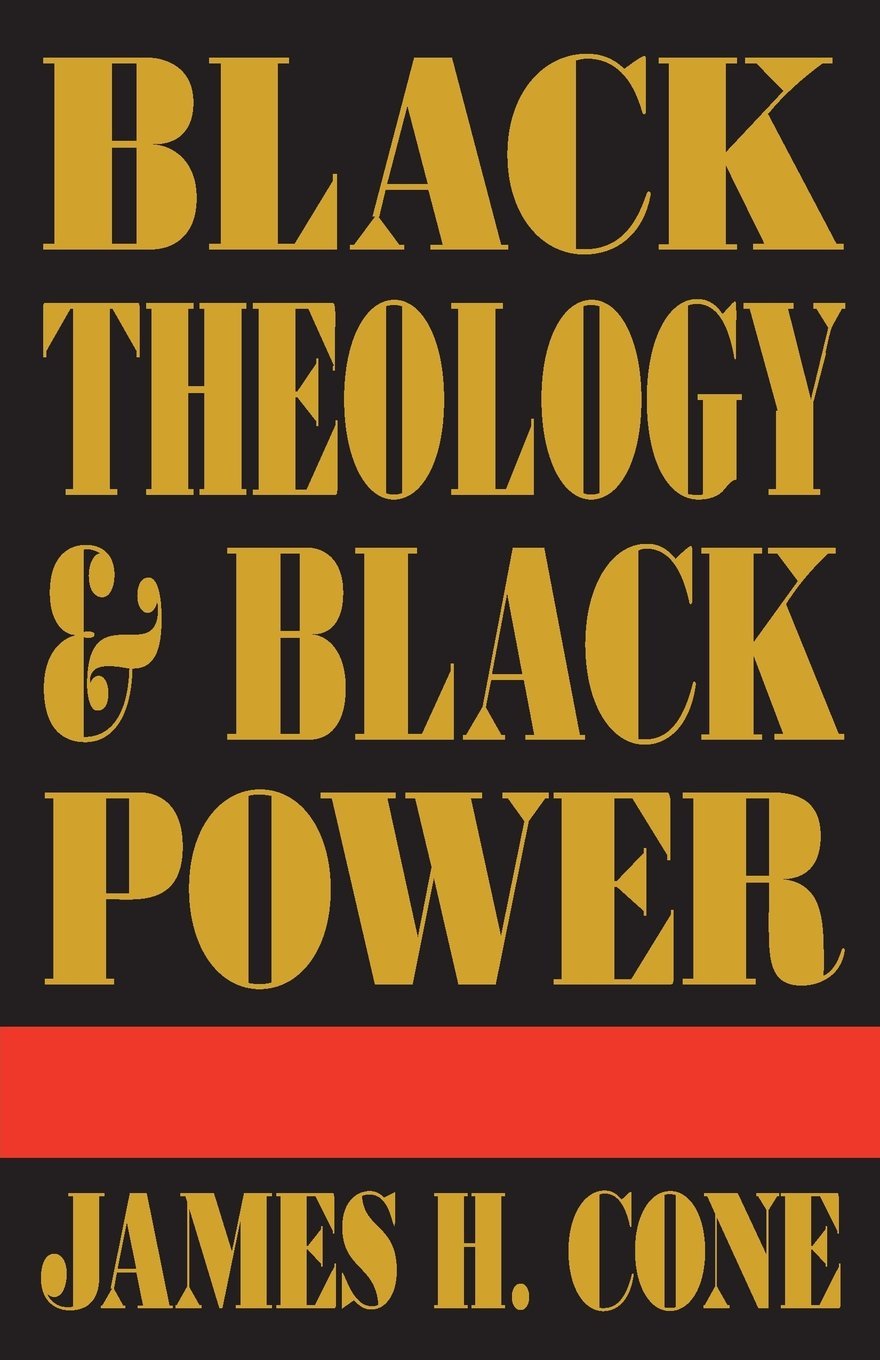
Black Theology, Black Power, and My Complicity


I have just begun reading James H. Cone’s book Black Theology and Black Power written in 1969, or 1989, or last week, I can’t tell.[i] When he writes about the “rebellion in the cities” (7), I know that he’s writing about the race riots in New York City, or Philadelphia, or Watts, or Detroit, Chicago during the 1960s, but I read it in terms of Fergusson, Missouri. When Cone writes that “blacks are beaten at will by policemen as a means of protecting the latter’s ego superiority as well as that of the larger white middle class” (25) I know he’s referring to what happened to Michael Brown, and Eric Garner and etc…

To read Cone in 2015 is to know that we are not yet living in a post-racial society. The evil of racism is still a part of us. We may have made some progress towards an equal and egalitarian society (though that may be debated), America is still racist.

It does no good to say that we’re not as racist as we used to be – we fought the Civil War to end slavery[ii], we’ve had Martin Luther King Jr and the Civil Rights Movement, we even have a black president. It does no good because “Racism … biologically is analogous to pregnancy, either she is or she is not, or like the Christian doctrine of sin, one is or is not in sin. There are no meaningful ‘in betweens’ to the fact itself.  And it should be said that racism is so embedded in the heart of American society that few, if any, whites can free themselves from it” (Cone, 23). 

That was a provocative – aggressively so – statement in 1969 and it so it remains in 2015. But Cone doesn’t stop there.  He pushes harder:  “all white men are responsible for white oppression” (24).  All. 

In most branches of the Christian faith there is a doctrine of human depravity – sinfulness; while it takes many forms and expressions, the general sense of the thing is that humans, as a whole, are twisted, bent toward sinful behavior. In my denomination we express it this way: “We believe that our first parents were created in a state of innocence, but by their disobedience, they lost their purity and happiness and that, in consequence of their fall, all men have become sinners, totally depraved, and as such are justly exposed to the wrath of God.”[iii] 

And we tend to believe that (or some variation thereof) until we’re pressed on those words “all” and “totally” – especially when it comes to the matter of race. Then we back pedal furiously. 

“While it true that some Americans” we say, “perhaps even some of my ancestors,” (see how honest and forthcoming we’re being?) “were slaveholders or members of the KKK, but that was the past and, besides, neither I nor anyone I know, participated in those kinds of things.  I’m only responsible for my own actions.”

But Cone counters that objection saying, “racism is possible because whites are indifferent to suffering and patient with cruelty” (24). 

And I think that for the most part white Christians in America have become less indifferent to people who are suffering – if we have made any progress since 1969 it may be here, but we are still very patient with their suffering. We are, by and large, willing to be patient in the face of the continued presence of racism. We’re willing to excuse and justify white on black violence; we throw up black on black violence as a smokescreen, a dodge so that we can continue being patient with the presence of cruelty and violence. “Look at how far we’ve come,” we might say. “Be patient. Be calm,” we might say. But while we are keeping calm and exercising this patience, institutionalized racism continues to oppress many millions in our country.  We can be patient because we’re not the ones who are hurting.

Cone quotes the German psychiatrist / philosopher, Karl Jaspers:

There exists among men, because they are men, a solidarity through which each shares responsibility for every injustice and every wrong committed in the world, and especially for crimes that are committed in his presence or of which he cannot be ignorant. If I do not do whatever I can to prevent them, I am an accomplice in them. If I have not risked my life in order to prevent the murder of other men, if I have stood silent, I feel guilty in a sense that cannot in any adequate fashion be understood juridically, or politically, or morally … That I am still alive after such things have been done weighs on me as a guilt that cannot be expiated.[iv]

I am reminded of a song by the band Dime Store Prophets  which included the lines:

I’m not myself
till you are you
if I close my eyes
I’m killing you.[v]


[i] Cone, James H.  Black Theology and Black Power New York: Seabury Press. 1969. 
The paperback version of the book that I have is the 20th anniversary edition published in 1989 with a new preface. 
[ii] That’s not really true.  Slavery ended as a consequence of the American Civil War, but the war was not fought with that goal in mind…
[iv] Karl Jaspers La Culpabilité Allemande (German Guilt) 1948.
[v] The song was inspired by words from Martin Luther King Jr's speech "The American Dream" - June 6, 1961:

"All I’m saying is simply this, that all life is interrelated. And we are caught in an inescapable network of mutuality, tied in a single garment of destiny -- whatever affects one directly, affects all indirectly. For some strange reason I can never be what I ought to be until you are what you ought to be, and you can never be what you ought to be until I am what I ought to be. This is the interrelated structure of reality."


Tuesday, November 11, 2014

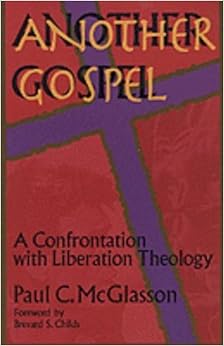
What I’m Reading: Another Gospel – A Confrontation with Liberation Theology


I’ve just finished reading the short little book Another Gospel: A Confrontation with Liberation Theology by Paul C. McGlasson.  It’s a scant 94 pages – which includes the preface and the select bibliography and index.  But I didn’t need to read very much of it before I realized how very flawed it is. McGlason makes it very clear that the argument of his book is that “liberation theology is a lie” (Another Gospel 17). He argues this point with passion and ferocity. But as I said, the argument is very flawed – in several ways.


1)McGlasson is arguing against an unnuanced caricature of Liberation Theology.  He deals only in generalizations and unproven assertions about liberation theology and its adherents.   Very early on in the book he acknowledges that there are varieties and differences among the those who stand under the umbrella term “liberation theology” but he refuses to distinguish among them. They’re all to be condemned.  “Can one cast one’s net so broadly?  Must one not distinguish the various movements, and voices, and assess each case by case?  Perhaps for a time; but now is not that time” (Another Gospel 16).

McGlasson also fails to cite or quote any actual liberation theologian’s writings.  He makes assertions about what “they say” but never – not a once – quotes their words.  As such, anything McGlasson declares that “they say” is an allegation without evidence.He won’t even engage with liberationists’ defense against his claims.  “Liberation theologians will of course deny this [allegation that I’ve just made]; but the rule of faith to determine the truth of their claim is clear and dependable in Holy Scripture” (Another Gospel 26).

2) And he says something like this quite often.  Several times throughout the short little book, McGlasson asserts that “…here Scripture speaks with clarity” (Another Gospel 28). And it’s always –scripture clearly endorses my point of view… But if this argument were actually true, there would be no arguments, there would be no need for this book.  McGlasson fails (or refuses) to accept that the bible is not clear on most issues.  There are disagreements on just about everything. 

3) He has no use for the Wesleyan (or Methodist) Quadrilateral (that is – interpreting through the lens of a) scripture, b) reason, c) tradition and d) experience).   He insists that his interpretation (though I doubt he would recognize it as an interpretation) of scripture is based solely on scripture itself.  Coming from the Reformed tradition, he insists on Sola Scriptura.

Which leads to 4) he accuses liberationists of creating their own version of Jesus (who he asserts is not at all the Jesus of the gospels (Another Gospel25)) but cannot seem to recognize that he does this as well.  We all do it.  It’s impossible to not do it. 

5) His tone is belligerent. He variously describes liberationists as heretical, blasphemous (64), profaners (64), idolaters (63), fascists (80), false prophets and ravenous wolves (80). He even invokes the inevitable Hitler comparison (45). I realize that “tone” is a difficult metric. But McGlasson has no interest in reasoned, polite discourse or dialogue (Another Gospel 17).  He wants a decision and he wants it now! When you’ve already written your opponent off as a diabolical and unredeemable heretic, I guess there’s no reason to be polite or to engage in dialogue.

6) He, without anything in the way of proof or evidence, describes Martin Luther King jr. as a “self-attested Messiah (Another Gospel 46).” In fact, he frequently sneers at MLKjr and the civil rights movement as whole.

7) He blames Barth.  If not on every page, then at least in every chapter, McGlasson lays the blame for the rise and spread of Liberation Theology at the feet of Karl Barth.  I don’t know enough about Barth to evaluate his claim, but the ire he directs toward Barth is unmistakable.


This “Confrontation with Liberation Theology” is just that: Confrontational.  The argument is loud and petulant. It is not civil.  Neither is it particularly well argued. He sets up straw-man generalizations about evil Liberation Theologians and then proceeds to beat them down with a whirlwind of angry rhetoric – but never actually engages with any liberation writings.  


McGlasson, Paul C. Another Gospel: A Confrontation with Liberation Theology. Grand Rapids, MI: Baker Books, 1994.

Wednesday, April 9, 2014

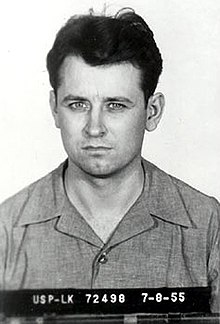
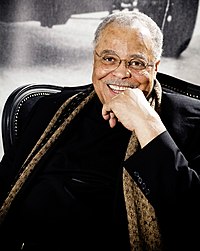
Pro Tip: Don't Confuse These Two

Pro Tip #27: Though they have similar names, James Earl Jones and James Earl Ray are not the same and should not be confused. One is the voice of Darth Vader, the other was convicted of assassinating Martin Luther King Jr.


Sunday, January 19, 2014

A Servant's Song


I spoke from this same text[i] on Friday morning during the funeral / Promoted to Glory service for our friend Donna.  I asked Jim to read it during the service, and afterward he came up to me to say that he had been quite unsure why I had picked that particular passage of scripture for the funeral sermon.  I admit; it’s not a text that usually selected for funeral sermons.  It is one of the passages selected for the lectionary readings for this particular Sunday (Epiphany 2A).  But as I was preparing both for today’s sermon and for the sermon for Donna’s funeral, I found that I liked the idea of describing Donna’s life as a life of service.

That the identity of the servant in this passage – which is the second of Isaiah’s four Servant Songs – is not specifically identified certainly allows me a bit of fluidity to apply it to Donna, at least in broad strokes and in application. Some biblical scholars and theologians have suggested that the Servant in question was Isaiah himself.  Others suggest other individuals besides Isaiah with various degrees of probability.  Another common interpretation is that the Servant represents the whole people of Israel.  And later, as Christian authors began to re-read these songs, they found in them a description of Jesus’ life and career.

Listen to me, O coastlands,
pay attention, you peoples from far away!
The Lord called me before I was born,
while I was in my mother’s womb he named me.
He made my mouth like a sharp sword,
in the shadow of his hand he hid me;
he made me a polished arrow,
in his quiver he hid me away.
And he said to me, “You are my servant,
Israel, in whom I will be glorified.”
But I said, “I have labored in vain,
I have spent my strength for nothing and vanity;
yet surely my cause is with the Lord,
and my reward with my God. (Isaiah 49: 1 – 4 NRSV)

The Servant was chosen by God, named before birth, called to a holy mission, made to be Yahweh’s sharpened sword, his swift arrow. The servant was to restore the people of Israel and to bring glory to God. But in the end, the Servant felt like a failure. “I have spent my strength for nothing and vanity,” he says.  The sword is chipped and blunted.  The arrows are broken and spent.  And with what result?

We think of our friend, Donna, whose mind and memories had faded away by the end.  All the good she’d done, all the people she’d loved, all the joy she’d shared had been forgotten – lost in the fog of her illness. 

I think of Doctor Martin Luther King Jr. who we honor and celebrate tomorrow, and who in his last sermon   - the day before his assassination said:

Like anybody, I would like to live a long life. Longevity has its place. But I'm not concerned about that now. I just want to do God's will. And He's allowed me to go up to the mountain. And I've looked over. And I've seen the Promised Land. I may not get there with you. But I want you to know tonight, that we, as a people, will get to the Promised Land![ii]

He saw into the Promised Land.  He saw the good on the horizon – but he was gunned down before he could get there.  We might be tempted to say, “nothing and vanity.”

And Jesus, how woeful, how dreadful these words sound in his mouth, “I have labored in vain.  I have spent my strength for nothing and vanity.”  The promising young messiah who amazed the crowds with his teaching was arrested and quickly executed.  His friends betrayed him.  His followers fled from him.  He was killed and his body discarded.  Nothing and Vanity.

The servant’s life is a hard life, filled with struggle and disappointment, and failure even.  But this is not the end of the servant’s song. Yahweh picks up the song and continues.

And now the Lord says,
who formed me in the womb to be his servant,
to bring Jacob back to him,
and that Israel might be gathered to him,
for I am honored in the sight of the Lord,
and my God has become my strength—
 he says, “It is too light a thing that you should be my servant
to raise up the tribes of Jacob
and to restore the survivors of Israel;
I will give you as a light to the nations,
that my salvation may reach to the end of the earth.”
Thus says the Lord,
the Redeemer of Israel and his Holy One,
to one deeply despised, abhorred by the nations,
the slave of rulers,
“Kings shall see and stand up,
princes, and they shall prostrate themselves,
because of the Lord, who is faithful,
the Holy One of Israel, who has chosen you.” (Isaiah 49: 5 -11 NRSV)

Just when the servant (whoever he /she was /is) is feeling bitter disappointment, just when the servant is feeling like an abject failure, God says, “you know what?  The mission I’ve given you so far has been too small.  I should have given you do even more.”  It’s so backwards.  It’s so unexpected.  The servant is looking for comfort, for strength, for help, for rescue.  And God gives more work – and greater glory.

The servant hasn’t failed.  The work just got bigger.

Donna’s mind and memory may have faded away from her at the end, but she remains with us.  The memory of her love moves within us to love and serve others as she did.  Martin Luther King jr’s life may have ended with the assassin’s bullet – but his legacy continues to inspire and motivate millions – bringing light and salvation to the world.  Jesus was crucified and left with the dead, but the servant song didn’t end there.  He was raised up to be a light to the world, to bring salvation to the ends of the earth, and to bring glory to God.    The Servant’s Song does not end in failure.

I waited patiently for the Lord
He inclined and heard my cry
He lifted me up out of the pit
Out of the miry clay

I will sing, sing a new song

How long to sing this song?

He set my feet upon a rock
And made my footsteps firm
Many will see
Many will see and fear

I will sing, sing a new song.
How long, to sing this song?[iii]

How long to sing this song? As long as we live, and then some.  The Servant’s Song does not end in failure, but in the salvation of the world, and in the glory of God.  Amen. 

- Also - A Servant's Hymn (based on Isaiah 49 / Psalm 40)


Jeff Carter's books on Goodreads
Muted Hosannas Muted Hosannas
reviews: 2
ratings: 3 (avg rating 4.33)

Related Posts with Thumbnails