Pages

google analytics

Showing posts with label King Herod. Show all posts

Thursday, January 1, 2026

Myrrh for the Dead

     This is how Jesus the Christ came to be born; it rambles a bit and anachronisms abound, nevertheless it remains something like the true story. At least I believe it to be so. It is the story as I heard it told. It begins – not, as others have told it, in the northern hillside village of Nazareth, but in small, little Bethlehem, a city of fog and shadow, a city in the shadow of death. A tenebrous city with rubbled streets below your feet and the sound of military helicopters over your head. The doctors were dead, the hospital bombed out. The schools were closed – burned down. It begins with hunger and deprivation. It begins with Joseph living and working in Bethlehem.

    Every morning Joe put on his work clothes – heavy denim pants, steel toed boots, and a plain t-shirt. Over these he put on his protective equipment – durable work gloves, a hard hat, and a bright orange and reflective orange and silver safety vest. He worked as part of crew clearing the streets of bombed out buildings. He filled wheelbarrows with chunks of broken concrete and twisted bands of rebar and hauled them to a municipal dump truck which would haul it all out of the city to a dump site at the outskirts of town. The work continued despite the occasional burst of nearby gunfire. The bombed out buildings were slowly cleared even as violent revolutionary groups clashed with government forces, bringing down another building in explosions of dust and smoke and fire.

    Grinning death head gunships flew through the air with their spectral shadows trailing below. Blackwater gunmen, backed by free-market robber barons and commercial advertising agents in the United States, prowled the smoldering rubble in search of misguided martyrs whose pursuit of apocalyptic ecstasy by way of explosive detonation, had chained the weight of nightmare around the neck of the whole world. It was new technology for the same old conflicts. People die the way they always have – screaming in pools of blood and gore, suffocating under the ruble – dehydrated or starved to death. It’s a new war; it’s the same war. Death is death.

    He wore a mask and a scarf tied around his face to keep the dust and ash from his nose and mouth but smoke burned his eyes as he worked to clear the streets. Blinded and lost in the chaos created by the grasping militants with their demands for vengeance and honor; the shadow of death stretched long across the land. There were days when he worked from daybreak to midnight, excavating the ruins and the rubble by bright klieg lights powered by portable generators.

    Joe moved heaps of concrete and brick, sorting through the detritus of a dying city. Amongst the debris he found the cast off trash of a displaced society – plastic coke bottles, chips of china, a shattered Nokia cell phone, sandwich wrappers, and the like. Also among the debris and rubble were the more gruesome remains of cast off members of society, human remains – sometimes just teeth or perhaps the bones of a severed hand. Sometimes he found crushed corpses that were taken to the medical facility to be identified. If they could be identified. Some of those bodies were so mangled they hardly looked human any more.

    As gruesome and noisome as it was, Joseph appreciated the work. So many were unemployed and desperate. He knew he was fortunate. But he was concerned with his excavating role. The daily destruction was dangerous and people were dying all around. Bethlehem, like all cities, had been built on heaps of ruins. Digging down through the rubble he and his coworkers discovered Arab ruins heaped atop the ruins of Christian Crusaders, Turks, Mongols, Greeks, Egyptians, further and further back the deeper they delved. Winding alleys horizontally through the city, and vertically down through history, down to the Bronze Age foundations of abandoned and forgotten structures.

    He’d grown up with the stories his grandfather Bartolo told him of ancient cities swallowed overnight by the sands of the desert. Those fabulous tales fascinated and amused him as a boy but they seemed less fantastic these days. He’d seen enough instant destruction to know the truth. He’d seen military helicopters dropping sulfuric acid on populated areas. He’d taken shelter as missiles exploded overhead. He’d carried his gas mask with him everywhere in case of attack. And he’d heard the shouts and screams of fathers and mothers, children crying, cursing Herod’s administration. Cursing King Herod. Cursing the far away Romans, and the Americans too – selling their weapons and munitions to anyone with cash enough to buy. Cursing the suicidal, mad-bomber Zealots. Cursing and abusing God, even, in their anger and their despair.

    But even in that land of death and struggle, life went on as it always had. Their children continued to go to school – though the school house had been abandoned after a tank had driven through the wall and exploded. They met in the basement of the Orthodox church. People continued to eat and drink, enjoying meager festival feasts and humble birthday parties, eating and drinking together when and where they could. Weddings were celebrated and divorces were mourned. Life went on. Though surrounded on all sides by the looming shadow of death, life went on. And Joe was engaged to marry a girl from the neighborhood. Mary.

    But rumors began to circulate that Mary was already pregnant. People talk; stories spread but Joe refused to believe the gossip. He trusted his fiancée. He believed her to be as honest and true as himself. But as the rumors persisted his confidence wavered and he confronted her directly. “Is it true, Mary? Are you pregnant?” And with a simple, silent nod she confirmed the worst of his fears. Chilled the warmth of his heart. Still, whatever disgrace he felt, he was a young man of mature character and didn’t want her to be subjected to any further shame or public humiliation. Life was hard enough here. He intended to break off the engagement quietly. Secretly without the whole neighborhood being up in her business. Or his.

    Joe was awakened in the night by the sound of gunfire and explosions – not far off in the distance, but somewhere nearby. There were coordinated rebel attacks on the munitions factory and the state owned pig farm. Because he couldn’t get back to sleep, he got up from his bed and opened the window above his bed to look into the street.

    But he closed it almost immediately. He could hear the shouts of rebel commanders and the screams of wounded soldiers. The acrid smoke choked him before he could get it closed and he coughed for several minutes. He stood at the window observing the thick clouds of billowing smoke illuminated by illuminati search lights sweeping back and forth across the sky in long, lugubrious arcs.

    One of the search lights swept across the face of Joe’s apartment complex and the light through the window blinded him. He flinched and stumbled backwards, throwing his arms in front of his face to block out the blinding light. When he blinked back from the darkness he saw a stranger in his room standing among the illuminated floating dust particles. He was tall and thin, nearly gaunt, but his face still held an ethereal fascination as if he were glowing with an inward radiation.

    “This is a dream,” Joe said. “This is a dream. A strange and terrible dream.”

    “Think of it as a dream if you like,” the stranger said, “but you must remember all of what I am about to tell you when you awaken in the morning.”

    “I will remember,” Joe said. “I will remember what you tell me.”

    “It is very important,” the stranger said.

    “I understand,” Joe affirmed. “I will remember. Every word.”

    “Good. Now Joseph, you must not be afraid to take Mary as your wife. It is true that she is pregnant, but it is no ordinary conception. This is a virginal conception through the Holy Spirit of God. Definite or indefinite, it is the same spirit. And the spirit is sent and life is created.”

    “But that’s…”

    “This is what the ancient prophet promised: Behold the virgin shall conceive and bear a son…”

    “But that’s not…”

    “Do not interrupt me, Joseph. This is a theological truth – by the gift and grace of God she shall conceive and bear a son called Emmanuel.”

    “God with us,” Joe sighed.

    “God with us,” the messenger affirmed. “But you will call him Yeshu, for he will be the one to save his people from the sickness of their sins”

    There was another shout from the streets below as the rebels pressed their advantage and surged into the streets pushing the faceless forces of the Herodian riot strike teams back. Another furious round of gunfire erupted and the Illuminati searchlights were extinguished and the night was dark once more. He knew there would be more work tomorrow clearing the streets around the munitions plant and hauling away the unclean carcasses of dead hogs from the state pig farm. Joe awoke on the floor, naked and shivering in the cold. The heat was off again. The power was out. He rose up from the floor and looked out the window. It was nearly dawn but no birds were singing.

    And when the time was fulfilled, the boy was born in the normal way of things. Even in the midst of death there was life. The Lord, most mighty, holy and most merciful, delivered him to them through the bitter pains of death into newborn life. Life went on.

    Some time after this, King Herod was on the balcony of his bed chambers in the palace within the City of Lights and Murder, snorting Adderall and shouting about the vermin that were infecting and polluting the blood of the country when the strangers from the east arrived. “The blood is the life!” he shouted through his electronically amplified bull horn. “But they are destroying the purity of our lives by diluting the purity of our blood. Rapists and murderers. Drug fiends and half breed witches.”

    The people in the street knew that he wasn’t really a Jew himself; they knew him for the Edomite outsider that he was. Half-Jew at best. He was a shifty man, a querulous alienator of fathers and sons. He never began a single confession, only multiplied confrontations, projecting himself and his woes upon the world around him. “This is our profession of faith: the libtards are out to destroy our history and culture. Illegal immigrant are crossing the borders to get public welfare and the Parthians and the Nabataens are threatening to invade again.” His ancestors may have converted to Judaism, but the people had no illusions of his own personal piety. And they accepted him as their king in name only, only because they were forced to do so by their far-distant, Roman overlords. Few spoke out against him. To do so was death.

    He was still on the balcony raving into his bullhorn when the astrologers arrived.

    Herod the multivalent opportunist put on a mask to receive them. He was obsequious with Caesar and preening with dignitaries of the surrounding nations. He was reverent and pious when dealing with the temple priests and threatening with the members of his family. With the foreign magi – from some shithole country to the east – he was smarmy and smooth talking.

    “We are humble astrologers, my lord,” they said as they introduced themselves to the King. “Practitioners of Chaldean wisdom, scholars and researchers from the Oriental Institute for Full Brain Potential and the appointed envoys of our respective nations. We have traveled, at great risk and great expense, across the sands, following for these many months, a newly observed star. Consulting the ancient texts and lore, we have determined that this novel star is the star of a newly born king of the Jews, and we have come to give him due homage and awe. We know that this is strange and difficult to believe, but we are amiable and honest and trust that you can tell us where he has been born.”

    “I agree that what you’ve told me is strange,” King Herod said to the members of the OIFBP, gripping the arms of his throne until his knuckles turned white. “But the question I have is this: Is it strange enough to be true?” he grinned and waved nonchalantly. The wise men began to speak all at once filling the chamber with their overlapping foreign languages. “No. No. No,” he interrupted them. “Let me consult with my own advisors and religious experts. They will know what to tell me. And then I will know what to tell you.”

    There was argument among the scribes. You know the expression: Two Jews – Three Opinions. They read from their scrolls and consulted the elders – each of which provided a variety of voice and explanations. Multiple version of every position and more answers than participants. But after the arguments flared and died and flared and died again, they returned to the king with an answer.

    “The durations of life are dependent upon the constellations, my Lord, and anyone who knows how to calculate the astronomical movement of constellations and does not do so, does not take notice of the work of God...”

    “Get to the point!” he shouted at them through his bullhorn.

    “But tell them this,” stammered the representative of the scribal union, “from the words of the prophet: ‘And you, Beit-Lechem in the land of Y’hudah are by no means the least among the rulers of Y’hudah for from you will come a Ruler who will shepherd my people, Israel.’ That is the answer you required.

    But King Herod had other plans. “Only I can fix the problems that plague our country. Not some newborn nobody from some little town in nowhere,” he mused. So he told the emissaries from the OIFBP, “Go and find this child in Bethlehem,” he told the astrologers, “but come back after and tell me where, so that I can give him my respects and gifts as well.”

    All of Jerusalem trembled as the Magi departed. They knew enough of Herod’s raging.

    The traveling members of the OIFBP parked their dusty VW van on the street outside the two story brick house where Joseph’s family lived in Bethlehem. Joseph lived there with his brother Sava, his cousin Tavish, Tavish’s wife and their three children, as well as his grandmother Shera. There had been others in the house with them before, all of them crowded into the small building. His grandfather Bartolo had died a little more than a year before of pneumonia and his father and mother, Jacob and Lissa had been killed in an explosion three months ago. They were gone, but the house felt even more crowded now, with the memories of their laughter and songs still lingering heavily in every room.

    The visiting magi knocked on the door of house. Sava opened the door cautiously and, after a brief and somewhat confused explanation of their presence, ushered them in. He scanned up and down the darkened street for police patrols and overhead for Herod’s surveillance drones.

    “This is the child of whom we have read,” said the astrologers when they saw the infant lying in a makeshift crib – Joseph’s tool chest, emptied of hammers and sockets and filled with blankets and a somewhat ragged stuffed rabbit. “This is the one.”

    “I have brought him gold,” The first of the visitors said, handing Joseph two small coins. “It is not much, I am sorry. We are humble scholars, not aristocracy. Not kings. But may this be the first tokens of his increasing kingdom.”

    “I have brought him frankincense from Ubar” said the second, “the ‘Atlantis of the sands,’ the City of towers, lofty porcelain and gold towers – one of those legendary lost cities of the Arabian deserts. This bottle of perfume has been preserved since before that fabled city’s disappearance.” He placed the vial into Mary’s hands.

    Then the third and eldest of the visitors stepped forward, slowly. He haltingly lowered himself to his knees and laid his fragile body prone on the floor and placed a small wooden box before the boy. “And I have brought myrrh. Myrrh for the dead.”

    Joseph, Mary, and the extended family gathered around gasped but said nothing.

    Joseph’s family insisted that their guests stay the night and to share a meal. Shera cooked up some rice and a bit of goat. Tavish’s wife brought out the last of the baklava she’d made a week ago. A desperate and rare dessert made with honey she’d taken from a bee hive she found in the remains of the burned out school building. The travelers themselves shared what they had, some dried figs and almonds. After securing the blackout curtains over the windows, they lit a kerosene lantern and sang the Hallel as a blessing for the food, the family, and their joyful fellowship.

    The next day, early, well before dawn, the astrologers loaded back into their van. “We must go now,” they insisted. Shera began to insist that they stay as their guests for another day, but Joseph interrupted. “No,” he said. “They have to go. And Mary and I must go too. We must flee.”

    “You have had the dream too?” one of the astounded magi said to him. Joseph looked at the faces of his family, lingering long with Mary’s eyes, and then said to the astrologer. “Yes. Warned in a dream.”

    Later, after the scholars were gone, Tavish brought out a locked metal box and showed it to Joseph. He took a key from his pocket and unlocked it. Inside was a .38 snub-nosed revolver. He handed the gun to Joseph. “Take it, Joe. You’re going to need it,” Tavish said. Joseph considered the weapon Tavish had extended to him. He took it, rolled the empty chamber, and snapped the revolver closed. Then looked from the gun to his wife. She said nothing, only looked away. Joseph turned back to his cousin and returned the gun. “What if I’m caught with it?” he asked. “Besides, I wouldn’t know what to do with it anyway.”

    “It’s easy,” his cousin said shoving the gun back to him again. “Just point and shoot. Bang. The bad guy falls down dead. Simple.”

    “It’s never simple. Nothing ever is.” Joe said. “No. I don’t want the gun.” He turned then to his wife.

    “Mary, we’ve gotta’ go. Tonight. We can’t take my motorcycle, not with the baby. But I can sell it for cash. I won’t get much for it. Not nearly what I paid for it. Tavish offered me eight hundred. It’s a loss, but it’s enough to get us a couple of bus tickets for Egypt. We can be there by tomorrow morning. Our ancestors wouldn’t hesitate to pick up and go. They were nomads. Bedouins, wandering with their flocks and herds, landless and homeless. We can be like them. We’ll make a home on the road. Wherever we are, you, me, and the boy, that’s home.”

    “Oh, Joseph, Joseph,” Mary whispered. “There should have been a life for us here. You should have been the one to build us a house, a home. Now there is nothing, and we’re about to leave it all.”

    “We’ll be like our fathers in the desert, Mare, living in tents and not houses. Taking shelter where we can, always on the move. This is how they lived. This is how we can live again. But you are my champion, Mary. My leader. I can’t do it, I can’t go without you and the boy. And we have to go. Tonight. Now.” She nodded and gathered up the child.

    Joseph threw on his leather, motorcycle jacket. A patch on the shoulder of the jacket displayed a screaming skull and the words, “Terror of Demons.” He kept their passports and travel permits in a purse inside his jacket, ready to display them for the demanding Roman authorities. Mary wrapped the baby in a wool blanket and put on her own coat.

    “I’m not okay with this,” Tavish said again. “I don’t like you going. And I don’t like you going unarmed.”

    “We’ve been over this,” Joseph said. “Acquire the spirit of peace and thousands around you will be saved.”

    “But I’m definitely not at peace about this.”

    “That’s fine,” Joseph said. “We’re going.”

    “That’s fine! That’s fine!” Tavish huffed. “Fine. Save your wife and your boy. You’re saving the world.” Joseph grinned. “Go on. Get out of here,” Tavish said as he walked them to the door.

    Behind them as they fled was smoke on the city like a funeral shroud, the moon indistinguishable through the smoke. Heat waves rippled the cool night air. The smell of burning rubble, and plastic followed them – along with the stench of burning flesh. Innocent bodies dissolving like fat in the sun. Clouds of dust rising and the roar of converging military vehicles. They could hear the screams as they stepped up into the bus.

    “We are abandoned. We are destroyed,” Joseph thought. But he pushed away those thoughts and prayed. A helicopter roared overhead.


Sunday, December 28, 2025

Joseph in Elephantine


    He was singing when Miriam found him, though his words were severely slurred and the melody had been reduced to mostly monotone. He was drunk. Again.

    “At the gates of heaven,” he mumbled. “At the gates of heaven
    apple trees white are blooming
    for their dearest love.”

    “Joseph, please. Come home my love.”

    He gulped down the last of the wine in his bowl and sang another verse. “At the gates of heaven
    the mother, the mother is sitting
    with her dearest love.”

    Miriam put her shoulder under his left arm and lifted him from the stool where he sat and together they staggered for the door of the tavern. The Bowl of Amun served mostly Egyptians. Joseph drank there to avoid the eye of his fellow Jews.

    They were in Elephantine, an island community on the Nile. There had been a Jewish community there for a few hundred years. Established originally by Jewish mercenaries. At one point the Jews there even had their own functioning temple, with priests and sacrifices – though it had been destroyed over four hundred years prior. There had been some conflict over a missing precious stone. The Egyptian residents of the island believed the Jews had stolen it and had reduced the temple to ruins.

    Miriam managed to get him home again and tucked to sleep on the straw pallet they shared. He snored and grunted as she pulled their thin blanket over him.

    “The baby is sleeping,” came a voice behind her. Miriam turned and saw Rahel, the eight year girl, a resident of the island community, who helped Miriam. She helped with the cleaning and with watching the boy, Yeshu.”

    “Thank you, Rahel,” Miriam said and kissed her on the forehead.


***

    It was dark. As dark as the valley and the shadow of death. Burning. Smoke and fire into the night. Smoke and screaming. Swords drawn and flashing. Clanking footgear over the ground and clothing rolled in blood. So much blood. On the ground. On the walls. Blood sprayed up over the ceiling. Then screaming.

***

    Joseph screaming and thrashing. “My love. My love,” Miriam soothed him. “Joseph, my love. I’m here. Be calm.” She wiped his face with a cool, wet rag and he drifted into a deeper, quieter sleep. Miriam sighed. “My love…”

    He woke before dawn and dressed in silence. There were no angels in his dreams these nights. Only smoke. Only screams. When he could sleep at all. Many nights it didn’t. Sleep came easier after several of Amun’s bowls. Miriam and the boy slept on. He stared at the boy and grunted.

    He’d been a farmer at home in Bethlehem before they’d fled, working a small plot of ancestral land. Here in Egypt he’d found work as part of a crew cutting and shaping stones for construction. It wasn’t the work he was used to, but he was strong and his hands were already calloused from hard labor. “The bricks have fallen; we rebuild with dressed stone,” he whispered as he smoothed a lock of hair on the boy’s head and went to work.

***

    From Bethlehem they’d fled to Gaza and the Zaraneeq reserve and into Egypt through Al-Farma. They stopped briefly near Zagazig, but the people there were unwelcoming and mistreated them. They’d sheltered under a sycamore tree at Matariya and drank from the well at Dir Al-Janous. They rested in a cave at Jabal Al-Tair but never settled. Always on the move. They were driven out again by the people of Qusqam. Restless. Fearful. They fled again and again finally finding some quiet on the Elephantine island. Egypt was a part of the Roman Empire and beyond the reach of Herod the half Jew king of Israel. But still, Joseph feared.

    “Get up,” the angel had said to him. “Take the child and his mother and escape to Egypt. Stay there until I tell you, for Herod will search for the child in order to destroy him.” A godless and evil kng, for all his religious posturing among the priestly families – families that were loyal to Herod. Everything he said was madness. After all this time, would his anger be spent? Would his hand still be raised in anger? There was no angel to reassure Joseph. No dream, no vision. Only nightmares.

***

    “You’re late,” the foreman said to Joseph as he unrolled the leather pouch of his tools. “I’ve warned you once already. If it happens again, I’ll dock you half the day’s pay.”

    Joseph nodded but said nothing.

    “You know, I tolerate you Hebrews on my work crew, but…” Joseph withdrew his hammer and chisel and turned toward the foreman. “But. But,” the foreman stammered. “But I won’t tolerate laborers who can’t be punctual.”

    Joseph scowled. “Can I get to work now?”

    “You do that,” the foreman nodded. “Just watch yourself. I’ll be watching you too.”

    Joseph began shaping the stone before him with the chisel, hammering and chipping away to create the required shape. He spent the day pounding stone, carefully shaping the rock. He sweated in the sun. Every hammer blow rung in his ears.

    Thud. Thud. Thud. The sound of heavy boots and slammed doors. The sound of collapsing walls. The sound of bodies falling to the floor. Thud. Thud. Thud. He heard the screams again and again.

    And then it was evening. He looked up from the stone and saw the sun low in the sky. The rest of the crew had already wiped down their tools, packed them away and were lined up at the paymaster’s table to receive their wages.

    “Joseph! What the hell are you doing?” the foreman yelled. “Get out of there!”

***

    She found him again deep into the bowl. “Joseph, please,” she whispered. “You cannot continue this…”

    “Leave me alone, Miriam.”

    “My husband. I cannot. I love you.”

    “You love a worthless man. You love a coward. A failure.”

    “Yeshu needs his father.”

    “Father!” he spat. “I am not his father. I am… I am… I am nothing.”

    Miriam’s eyes were wet with tears. “Yeshu is our child, our son. Whatever else may be said, this is the truth: A son has been given to us. To you and to me. Please, my love. Come home.”

    Joseph nodded and took her hand. “Miriam, I… I… All those children died and I did nothing. I did nothing to…”

    She stroked his face and smiled. “You did what needed to be done. You saved us. You saved our son.”

    “Is that enough?” He wept now. “Oh God! Is it enough?”

    She looked into his eyes. “Whoever saves a single life saves an entire world. You did that, Joseph. You saved us. And that is everything.”


How Shall I Rise in Brightness? A Christmas Sermon

     At long last and with great joy, we say, Merry Christmas! Joy to the world, the Lord is come and we celebrate and rejoice. After the long and cold weeks of waiting through the season of Advent, where we focused on the small but potent image of the seeds of promise – the seeds of Hope, and Peace, and Joy and Love – we’ve come to the season of Christmas.

He is born the holy child
Play the oboe and the bagpipes merrily!
He is born the holy child
Sing we all of the Savior mild.
    (French 18th century)

    With lights and songs, with gifts and feasting, with laughter and family, we’ve come together, in our own homes and in our own ways, to celebrate the joy and wonder of this day, to celebrate the gift of God, redemption and salvation from heaven. The word became flesh and lived among us. And we have seen his glory – the light that shines into every darkness. Praise God and celebrate, amen!

    I want to say more about the festivities and the celebration. I want us to linger in the light and laughter, and love of this day but we cannot. I’m sorry. Our scripture reading for this morning sends us wham and whiplash into terror and screaming and slaughter. We are dragged from delight into danger. We are dragged from the light back into the darkness.

    After the departure of the magi, who’d come to give homage to infant prophesied to be the King of the Jews, King Herod realized that he had been fooled. The wise men did not return to him to tell him what they had found and where. And he furious, full of wrath. He sent his soldiers to kill all the youngling boys in Bethlehem.

    In some Byzantine liturgies, we are told that Herod’s soldiers slaughtered some 14,000 of Israel’s sons. In a Syrian text the number is 64,000. In some medieval texts the number is expanded to 144,000 to match those martyrs of Israel described in the book of Revelation, sealed and preserved by God. But these are unnecessary embellishments. Bethlehem in the first century was little more than a hamlet, a few miles south of Jerusalem. The number of slaughtered innocents could scarcely have been more than 20 at most. (Raymond Brown, The Birth of the Messiah, 204) But even twenty is an incalculable tragedy. One slaughtered innocent is too many to endure.

    Saint Augustine called these murdered children “the Church’s first blossoms, matured by the frost of persecution during the cold winter of unbelief.”

    We have no historical evidence of this cruelty. Josephus, the Jewish historian of those times, doesn’t mention it. There is no other contemporary account of the slaughter outside of the book of Matthew. But it certainly fits within what we know from other historical records of King Herod’s character. He was a murderous and vengeful king, who was fearful and paranoid and willing to have even members of his own family killed in order to keep his grasp on the throne of Israel. He ordered the deaths of chief priests and scribes and members of the Sanhedrin, as well as his own brother, his own sister and her husband, three of his sons, and his beloved wife Mariam. And years later, when he was ill and knew that he was about to die he ordered that several prominent Jewish leaders be rounded up and executed at the moment of his death, so that the people of Jerusalem would have reason to mourn his passing.

    It’s a story that leaves us uncomfortable – and it should. There’s no historical record of the slaughter of the boys in and around Bethlehem. And we certainly don’t sing about it. Not often anyway. We have hundreds – even thousands of Christmas carols, songs, and hymns but how many of them are about this part of the Christmas story? The Coventry Carol is somewhat familiar

    Herod the King, in his raging,
    Charged he hath this day,
    his men of might
    in his own sight
    all young children to slay.

    Then woe is me, poor child for thee
    and ever mourn and say
    for thy parting
    neither say nor sing
    by, by, lully, lullay.
        (English 16th century)

    But that might be the only one that most people know. After a bit of digging around I found a Catalan carol entitled El Rei Herodes.

    One day Joseph resting, the Child by his side
    heard shouting and tumult that evil betide;
    The wicked King Herod has made a decree
    for soldiers to kill ev’ry infant they see.
        (Catalan Traditional)

    There are a few others, but not many – and none that are a part of our usual Christmas festivities. We are reluctant to sing of this cruelty. We rarely bring it to mind. We sing of the angels, and the shepherds, and the star, and the magi. We sing of Joseph and Mary. We sing of wassail and figgy pudding. We sing of holly and ivy. We sing about partridges and pear trees and the whole assorted list. But the slaughter of innocent children by a mad bastard of a king – no. We rarely sing of that.

    The Slaughter of the Innocents

    When the solders came with sharpened swords
    obeying orders from a paranoid and murderous king
    the holy family fled across the sands to a pagan land.
    Mothers screamed into the silent starry night
    as their tiny infants bled out and died.
    Rachel weeping for her children would not be comforted.

    When heavy booted soldiers come again with rifles and grenades
    obeying orders as patriotic soldiers always do,
    when refugees flee across barb-wire borders
    when innocents are crushed beneath the rubble
    when mothers scream into satellite skies
    how will they be comforted?

    Matthew connects the story of Herod’s slaughter with a text from the prophet Jeremiah

    “A voice was heard in Rama,
    weeping and much grieving.
    Rachel weeping for her children,
    and she did not want to be comforted
    because they were no more.”

    How dare we sing of Santa in the face of that grief? How dare we sing of flying reindeer, and magic snowmen and all the other innocuous traditions of the holiday when Mother Rachel is crying out for her dead children?

    And she is still crying even today. Still refusing to be comforted for her dead children. Her weeping has not been stilled; her grief has not be silenced. She is weeping in the face of war in the Ukraine. She is screaming against the genocide in Gaza. She is keening in Cambodia and Thailand after another explosion. She is shrieking after every mass shooting in the United States. In the gospel story, Mary and Joseph take the infant Jesus and flee into the safety of Egypt. The immigrant family, refugees from horror and death. But immigrants and refugees still face that horror here and now.

    How shall I rise in brightness while Mother Rachel weeps?

    There is no magic escape here. There is no hallmark happy ending. The children are slaughtered. Mary, Joseph and Jesus flee into the night, barely escaping the violence themselves. They traverse across desert terrain to the relative safety of a foreign land until they hear that Herod the King has finally died himself.

    But take comfort there. Tyrants die. Their power is not forever. Their empires crumble. Their thrones are pulled down in disgrace.

    And we sing the songs of despair. Lament is not faithlessness. Lament is resistance to tyranny. We refuse to normalize the slaughter. We refuse to accept the violence. We refuse to turn a blind eye and deaf ear to Mother Rachel still weeping today in every land, across every border.

    This mystery of glory
    that joy and pain come mixed
    is like frankincense perfume,
    a bittersweet fragrance.
    O Lord of light and glory
    bright shining star of dawn
    the myrrh that anoints in death
    gives way to heaven’s gold.

    Jesus, the word of God become flesh and living among us, inhabits the lowly plains of this dark world with us. God with us. God with the mothers of Ukraine. God with the mothers in Gaza and Thailand and Cambodia and in a hundred other places. God inhabits our tragedy with us. God is here, the light that shines into every darkness.

    We will sing another couple of hymns this morning. We will pray our prayers and go back to our lives. Back to our homes. And we will go back to the joy and celebration of Christmas. And we should. This is indeed a time to celebrate and merry – even if that delight is mixed with pain and grief. Sing the songs of joy. Sing the songs of woe. God hears them all.

    How Shall I Rise in Brightness

    How shall I rise in brightness
    while mother Rachel weeps?
    And how accept the gifts
    of magi from the east?
    O Lord of light and glory,
    bright shining star of dawn,
    bring light to those in darkness,
    bring light to all our hearts.

    This mystery of glory
    that joy and pain come mixed
    is like frankincense perfume,
    a bittersweet fragrance.
    O Lord of light and glory
    bright shining star of dawn
    the myrrh that anoints in death
    gives way to heaven’s gold.

Sunday, December 22, 2024

One Moment of Rage


It was one moment of rage like a fire in a life spent burning. It was a moment of blazing heat when the learned Orientals came into his royal chamber. One moment of panic. But the grey faced librarians had found the information that had sent the magi on their way to the slumbering Bethlehem suburb. One more moment of uncontrollable passion. Now he was wide awake in his darkened hideaway. Safe in his private recluse.

“Find the woman,” he told them. “Find the child.” And he’d sent them on their way. One moment of rage, the next was extinguished and quiet. Silent. Jaws clenched, shoulders tense. Fists balled into tightly curled fists. Nervous and fearful. Angry. But now he was relaxed. He could breathe.

The moment was broken by a knock on the door as he sat in his rocking chair drinking gin and mulled wine by the fireplace. Self-satisfied as any king should be. A king of courage by Roman appointment. Captured culture and captured loyalty were his by right, by rule. A knock on the door and all the hurt and horror rushed back. Memories of all the murdered. He looked stunned and confused towards Bethlehem and saw the flames in the distance. He smiled when he smelled the smoke. Visible vapors and heavy smoke and the smell of burning wood and tar and plastic. He could feel the heat from his balcony. And the screams. He could hear the screams. His men of might would handle the rest.

Another knock at the door and his face puckered. Soured with fear. He preferred his own company. Others were unfailingly irksome. Out there in the rural canyons and crowded urban streets were people who deserved nothing better than the lash and the wire. They deserved what they would get. Mortify the flesh of everyone, he thought. Everyone.

The knock came again, more insistent now. One of the fools hammering on the boards. Incompetent irritation. A voice came through the panels. “Sir, they have not returned. They have gone another way.” Herod pulled his privacy curtain closed and pulled at his beard. One moment of renewed rage like fire anew.

Sunday, April 29, 2018

Distinguishing Between the Biblical Philips


There are, in the Bible, four different individuals named Philip, and keeping them distinct can be tricky. While the name Philip means “Horse-lover,” we never read of any of the four of them actually riding horses. But here is some simple advice for distinguishing between them.

Philip I and Philip II (mentioned in the gospels of Matthew and Luke) were the sons of Herod the Great – by two different wives. These Philips both died within a year of each other. Don’t worry about them though; no one is very good at keeping them straight. Even their father, Herod the Great, got them mixed up.

Then there are the important Philips – Philip the Disciple or the Apostle, and Philip the Evangelist. The easiest way to tell them apart is that Philip the Evangelist was bald. The angel of the Lord snatched him up from the road to Gaza by the hair of his head, and carried him away with the speed of the wind. This rapturous event left his pate permanently depilated. *


*This is the same way that the angel of the Lord carried the prophet Habakkuk to Babylon in order to deliver some stew to Daniel.

Sunday, February 14, 2016

Biblical Limericks: Give that Fox a Message


In Luke 9 Jesus gets his kicks in,
insults Herod, calls him a vixen,
a second rate scion-
not great like a lion.
He was nearly as bad as Nixon.

Luke 9: 31 – 32

Herod as a vixen 


Monday, December 28, 2015

That’s Not How the Christmas Story Goes…


“We must hurry,” said Melchior. “I wouldn’t have thought it possible but the weather is getting worse.” The magi could hear distant, metallic thuds of strange thunder, and the wind that swept around them blew gales of cold, dry snow. “It can’t be much further. We must make no more delay!”

And with that the three men urged their camels forward through the blowing snow. Bethlehem lay just beyond one final hill. They’d travelled the hard roads from the far corner of the eastern table-lands of Di’ningoom. And now, after so many long days and worrisome nights, they’d almost reached their destination. They’d come so close, but…

“What is that?” shouted Gaspar! “I hear something in the wind.”

“More thunder?” asked Belshazzar. “This storm is strange beyond all accounting; never have I seen atmospheric conditions such as these.”

But it was not thunder. “No!” Gaspar exclaimed. “Dogs! The king has loosed his hounds upon us. We’re doomed. If the storm does not kill us, Herod’s dogs will. We are doomed, ill fated. This is a disaster.”

“Nonsense!” bellowed Melchior. “The star has not failed us, and even now its light pierces the raging storm. Look.” He pointed and, indeed, a shaft a glorious light illuminated the sleeping village of Bethlehem. “Fly faster now, my brothers. Ride! Ride on to find the king!” He thumped his camel in the side with his heels. The camel grunted and took off at a long-legged trot. The other magi pulled their scarves tighter around their faces to protect themselves from the wind and followed after him.

They arrived in Bethlehem, breathless and joyous but not yet fully relieved. They’d found the place where the newborn king of the Jews lay sleeping in a manger, but the danger had not yet passed. The barking dogs were closer, and the astrologers could hear the screams of little girls.

“It’s too late!” moaned Gaspar. “The king has found us, has found the child. We’re doomed. Doomed!”

Just then an angel swooped down from the sky and landed in front of them. He shook the snow from his wings, tossed back his curly, golden hair and said, “Fear not; a way has been prepared for you. Your flight to Egypt is now boarding. Please have your boarding passes ready.” 

A smiling stewardess guided Melchior, Belshazzar, Gaspar, and Mary and Joseph and Baby Jesus (still sleeping unaware in the manger), along with two shepherds and a handful of sheep into a jumbo jetliner. Clearance for departure came to the pilot from the control tower, and they were off, escaping just ahead of the dogs sent by the murderous king. They were safe – all of them except for one sheep who fell out the window as the plane ascended into the night sky.

They fled from the dangerous king, but the winter storm had continued its pursuit. The wind blew stronger now. The snow obscured the skies.  “I can’t see anything through this storm,” gasped the pilot.

“We’re doomed!” wailed Gaspar from his seat in coach as he fumbled to fasten his seat belt and pulled down the overhead oxygen mask.

“Fear not” said the angel. “I will guide you through the storm.”

But angel flew too fast, and the pilot could not follow. The plane was buffeted by turbulence. Engine number one caught on fire and the plane began to spiral down towards the sands of Egypt.

“This is a disaster! We’re doomed!” screamed Gaspar. “Doooooooooooooooooooomed!”

***

“Cut it out, Jeff,” came a voice from the kitchen. “That’s not how the Christmas story goes.”

“It is when you’re playing on the floor with your nephew and his toys,” I said and picked up another figurine. “But not to worry; three Jedi knights were there in the desert with their lightsabers…”

Sunday, January 4, 2015

A Ghazal for a King


When those strange and exotically clad kings
came with naïve questions to great Herod king

asking, “Where is the newly born
bright star heralded young lad king?”

they shook and frightened the dark city
that feared and despised the old mad king,

but the soldiers did exactly as they were told -
following orders, even those of a bad king.

Now I ask you, Carter, tell me:
how does this serve Heaven’s glad king?


I'm trying out a new poetic form here (I think i'm growing tired of limericks, at least for awhile).  The Ghazal is an ancient form of poem from Persia / Iran /India.  It is marked by five to fifteen couplets, the first establishing a pattern and refrain which the following couplets echo in the second line.  The final couplet also usually includes a reference to the poet's name either in the first or third person.  The Ghazal usually deals with love and loss and melancholy and theological and metaphysical questions.  This is my first attempt at a Ghazal.   

Tuesday, December 23, 2014

Christmas Carol Limericks: It’s the Most Wonderful Time of the Year


The carol merely inventories
all the various Christmas glories;
a wonderful mood quickens,
but, other than Dickens,
who is telling Christmas ghost stories?


Who’s telling Christmas ghost stories? Me.  – Haunting Herod

Wednesday, December 17, 2014

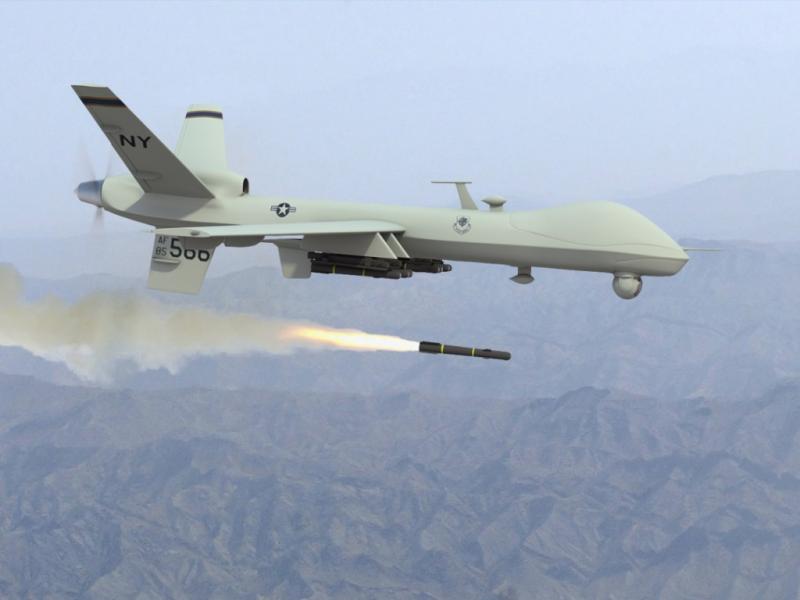
Christmas Reaper Drones #droneattacks


Then, being divinely warned in a dream that they should not return to Herod, the magi departed for their own country another way.

Then Herod, when he saw that he was deceived by the wise men, was exceedingly angry; and he launched a MQ-9 Reaper attack drone to launch AGM-114 Hellfire air-to-surface missiles into and drop laser guided bombs on the little town of Bethlehem.  In this way he put to death all the male children who were in Bethlehem and in all its districts, from two years old and under (along with an unrecorded number of other non-combatants and civilians).

Then was fulfilled what was spoken by Jeremiah the prophet, saying:

“A voice was heard in Ramah,
Lamentation, weeping, and great mourning,
Rachel weeping for her children,
Refusing to be comforted,
Because they are no more.


Monday, December 15, 2014

The Secret Torture of the Magi


The official story, released to all media outlets through Herod’s press corps is that the magi, having been warned in a dream not to go back to Herod, returned to their country by another route.  The truth is that the magi were captured by Herod’s secret police and quickly and quietly taken to an undisclosed location in the Judean wilderness. 

And there they were subjected to refined interrogation techniques. 

Melchior was forced to stand erect for several hours on his toes with his arms shackled to the ceiling, and not allowed to sleep.  Gaspar was given forcible rectal hydration.  And Balthazar was isolated into a darkened chamber and forced to listen to the screams of his companions.

The interrogators asked the Magi over and again, “Where is the Christ?  Where was he born?”  The wise men held out as long as they could, but no one can withstand torture indefinitely.  “In Bethlehem!” they screamed in order to make the torture stop.

But this was nothing that Herod didn’t already know.

Wednesday, December 10, 2014

Fight or Flight into Egypt

Behold, the Angel of the Lord appeareth to Joseph in a dream saying, “Arise, and take the young child and his mother, and flee into Egypt, and be thou there until I bring thee word: for Herod will seek the young child to destroy him.”

But Joseph replied, “There is no need for flight. I am well equipped to defend my family, armed as I am with a Beretta 9mm handgun with M6 Tactical light with laser and Trijicon night sites.  With it I can respond to any threat that might come against the child or his mother.”

The Angel of the Lord spoke a second time unto him saying, “King Herod is exceeding wroth and will send his men of might to slay the child. Arise! Arise now and flee into Egypt…”

But Joseph interrupted him saying, “I also have a Mossberg 500 pump-action shotgun with Winchester PDX-1 shotgun shells. I have no need for alarm; I am not afraid.”

Then the Angel of the Lord left him, for there is no reasoning with some people.

Friday, December 13, 2013

Shall We Speak into the Night?


Shall we speak into the night
say all the things left unsaid,
shall we break the silence?
shall we speak the truth?
No, no, no.

We proclaim the power
of white Jesus who came to please us
and release us from our darkened skins
which Adam’s transgression had wrappéd us in

While another Herod ignites a militant display
of unmanned attack drones
sent out from the terrordome
to rocket little sister’s wedding party.

Why would we care?
She wasn’t one of us.

Lock up our enemies
until we can tame them,
reframe them upon their deaths
as unimpeachable saints
and heroes we can ignore;
rewrite their histories
till they’re one of us.

Blast the stars from that ordinary sky
lest Immanuel disrupt our plans
to sell a few more guns,
 and drop a few more bombs.

We can’t have a black man
teaching good (white) Americans
the meaning of civilization.
Tell us to turn the other cheek?
Beat our swords into plows?
Right…  Where’s the profit in that?

Meanwhile the words of the prophets
from long ages of the past
are sold at discount
in the Bible bookstore. 

Biblical Limericks: Christmas Edition 8


Herod was the craftiest of kings,
but his paranoia was crippling;
when the magi took flight
he ordered in his fright
the slaughter of all boy childlings.

Matthew 2: 16

Tuesday, December 3, 2013

Biblical Limericks: Christmas Edition 2


The Magi came riding from the east
with treasures loaded upon their beasts;
they raised Herod’s ire
when they did inquire
of him Herod would have seen deceased.


Matthew 2: 1 - 12

Saturday, December 1, 2012

The Dawning Light of Hope - An Anachronistic Christmas Drama


This is a Christmas drama that I wrote for our congregation a few years ago.  It is a bit anachronistic, but I still like it for what it is...


I say anachronistic because 1) I've retrojected the political climate  and the zealots of the latter half of the first century back into the story of Jesus' birth, 2) I've merged the two birth stories of Matthew and Luke with an utter disregard for historicity,and 3) I included the words of Oscar Romero in one of the speeches.

Still and all... I like it. And if you like it, you are free to use it.
The Dawning Light of Hope

Wednesday, July 11, 2012

Salome - The Exploited Child

Sunday's sermon will come from Mark 6: 14 - 19.  Here's a sermon I wrote a several years ago on this same story.

***


Today we’ll look at a young woman who doesn’t even get her name mentioned in the bible. Her story – or rather one story from her life – is told in 2 of the 4 gospels (and alluded to in one other). We have very few details about her so we cannot speak authoritatively on her life – but we can explore some of the issues and implications of her story.

She is Salome, and though her name is not given in the gospels we know it from extra-biblical sources. (There is a Salome mentioned in the gospels, but this is not her story) Salome’s family was as messed up as any you’d find on daytime television today. Marriage, Divorce, Remarriage, Adultery, Incest, Lust, Jealousy, Murder, and Revenge are all key words in Salome’s family.

Her mother was Herodias. Herodias was the granddaughter of Herod the great (the Herod who slaughtered the innocents in Bethlehem in an attempt to kill the infant Jesus). Salome’s father was named Phillip. But Herodias had divorced Phillip to marry his half-brother, Herod Antipas.\

Herod Antipas had also divorced his wife in order to marry his sister in law, Herodias. Herodias was also his niece as her father, Aristobulus, was Herod’s half-brother. Herod Antipas married Herodias, his niece and sister in law. Herod Antipas was the son of Herod the great, and was the Herod who mocked Jesus during his trial before the crucifixion.

John the Baptizer had often spoken out against Herod’s marriage to his niece and sister-in-law, Herodias, because it was an illicit marriage. “It is unlawful for you to have her,” he told Herod.

Herod’s first wife (the daughter of a king from Arabia) was still alive; Herodias’ husband Phillip was also still alive. According to the laws of the Jews, both were committing adultery, and also incest.

-Leviticus 18:16 “‘Do not have sexual relations with your brother's wife; that would dishonor your brother.
-Leviticus 20:21 “‘If a man marries his brother's wife, it is an act of impurity; he has dishonored his brother. They will be childless.

Because of his boldness in speaking against Herod Antipas and Herodias, Herod seized John and had him arrested and imprisoned in the fortress- palace Machaerus on the coast of the Dead Sea, which had been built by Herod the great as a defense against the Moabites and Arabs (according to Jewish historian, Josephus).

Herodias wanted John dead. She hated him. She hated that he dared to speak out against her. She carried a grudge against him and wanted him executed, but she could not because Herod wouldn’t allow it – though he also wanted John dead.

Matthew tells us that Herod feared that the common people, the followers of John would riot if he had John killed. Mark tells us that Herod kept John in safe custody because he liked to listen to John’s preaching – even though it left him confused and perplexed. Herod was afraid of John and knew that he was a good and holy man. Herod was a complexly fearful man. He feared losing his control as Tetrarch (a local ruler - not really a King). He feared that Rome would remove his title. He feared a riot by the followers of John. He feared an attack from Arabia by the king whose daughter he had divorced and sent away. He feared his wife, Herodias.

And he feared the word of God as delivered by John the Baptizer. He wanted to hear it, but also didn’t want to. He knew it was right and true, but also feared it because he did not want to change anything in his life. So he kept John imprisoned, not intending to harm him.

Herodias, however, had not forgotten her grudge against the prophet. She waited for her chance to avenger herself on John the Baptizer.Her chance finally came when Herod Antipas held a birthday banquet to which he’d invited the principal leaders, authorities, and commanders of Galilee. This was a late afternoon / early evening meal that would last for several hours. The long celebration banquet was concluded with what was called a comissatio. 

The comissatio was a post-banquet social drinking bout for the men often involving risqué entertainment – usually dancers and or prostitutes.As the dinner concluded and the men became drunker and drunker, Herodias sent her daughter in to dance for Herod and his guests. Salome was a young woman; the men were grossly intoxicated. Her dance was a seductive alluring dance to entice the men, specifically to entice Herod Antipas. 

Entertaining at a commissatio was only for lewd servant women or actresses and prostitutes – not members of one’s own family, and not for descendants of royalty. Herodias, however, was intent on executing John the Baptist and was willing to shame and degrade her own daughter in order to achieve her wicked goal.

Herod Antipas, it seems, was enticed by this dance. He was allured and his lusts inflamed. So much so that after the dance was over he said to her, “Ask me for anything: I’ll give it to you! … Ask me for anything and it’s yours by Heaven, even if it’s half my kingdom.” Herod swore to give her anything; even up to half his kingdom (though he was not a king and had no kingdom to give away, Rome was in control…)

Prompted by her mother, Salome asked for the head of John the Baptist to be brought in on a platter. She was lead and instructed by her mother to ask for this gory prize.

Herod was trapped. He had promised, he had sworn to give her whatever she asked for. He had spoken an oath in front of witnesses. The spoken word had power, and rather than look weak and vulnerable in front of his guests, Herod agreed to her request. He sent a soldier from his personal guard to execute the sentence on John. When he returned, the soldier carried John’s head on a platter. He gave it to Salome who in turn gave it to Herodias.

This was child pornography. Herodias used and abused Salome to get revenge on John the Baptizer. Herod and his guests used and abused her to satisfy their drunken lusts. Salome was manipulated like a tool by her mother and seen as an object, a pedophilic fantasy by her uncle/step-father and his guests. The end result was not just the death of John the Baptist, but also the death of Salome’s innocence.

Salome has been an attractive person for writers, composers, and painters. There have been a large number of paintings, movies, operas, plays, and novels about her. And for the most part her character is described as an insatiable virgin who wants to destroy men through sex and sin. Instead of the guilt being on Herodias and the manipulator and pornographer or on Herod Antipas as the voyeur and pervert – Salome has been tagged as a Femme Fatale, a beautiful woman who desires to seduce and entrap men and to destroy them by leading them to sin and death.

Salome, as described in the very brief gospel narratives however, was an unprotected young woman. Her family, the ones who should have been protecting her, and shielding her instead used her to further their own evil plans and abused her innocence. Preachers and commentators and artists have focused on woman’s wiles, and the seductive danger that they are to men, rather than on protecting the innocent.

The world is still putting young women into this mold. From Barbie dolls to Britney Spears young girls see that in order to fit in they need to be sexy and flirtatious. Pornography continues to degrade and exploit women. There are some who argue that the women in these magazines and films are willing participants – even so, they are willingly participating in their own exploitation, not realizing that they could be so much more.

Salome represents not the femme fatale who wants to destroy men, but the young and innocent manipulated by those who should have protected her. She is the face of the children victimized by child pornographers; she is the face of women who grow up believing that they need to use sex to get what they want. Salome is the symbol of a whole generation of young girls and young women who have been taught that they are only a construction of parts to pleasure men’s fantasies.

We need to rescue these Salomes from the manipulative Herodias of this world, from those who would use them to further their own ambitions. We need to rescue these young Salomes from the Herod Antipas’ of this world who are content to see them merely as sexual fantasies.

Friday, January 6, 2012

The Star of Glory


It may seem strange to discuss the birth of Jesus and the journey of the wise men in January, after we have already celebrated Christmas. Some of you may have already taken down the tree, and packed away the decorations. You may have already packed away the manger scenes. But in many churches January 6th is celebrated as the Epiphany – the “manifestation” or the “showing forth” of Jesus in fulfillment of the prophecies of his birth. The birth of Christ is celebrated at this time along with the adoration of the magi and thus the manifestation of God’s Glory to the Gentiles.

After Jesus was born in Bethlehem in Judea, during the time of King Herod, Magi from the east came to Jerusalem and asked, "Where is the one who has been born king of the Jews? We saw his star in the east and have come to worship him."

When King Herod heard this he was disturbed, and all Jerusalem with him. When he had called together all the people's chief priests and teachers of the law, he asked them where the Christ was to be born. ”In Bethlehem in Judea," they replied, "for this is what the prophet has written:

" 'But you, Bethlehem, in the land of Judah,
are by no means least among the rulers of Judah;
for out of you will come a ruler
who will be the shepherd of my people Israel.'"

Then Herod called the Magi secretly and found out from them the exact time the star had appeared. He sent them to Bethlehem and said, "Go and make a careful search for the child. As soon as you find him, report to me, so that I too may go and worship him."
Matthew 2:1-12

After they had heard the king, they went on their way, and the star they had seen in the east went ahead of them until it stopped over the place where the child was. When they saw the star, they were overjoyed. On coming to the house, they saw the child with his mother Mary, and they bowed down and worshiped him. Then they opened their treasures and presented him with gifts of gold and of incense and of myrrh. And having been warned in a dream not to go back to Herod, they returned to their country by another route.

These gentile magi – wise men - were probably Persian astrologers, priests of Zoroastrianism looking for the birth of the coming redeemer of the world, the Sosiosh of their religion, whom they had identified as the King of the Jews.

These Persian astrologers had anticipated the coming of a great leader, from the land of Israel. And this was a common expectation of the time. The Jewish historian, Josephus, as well the Roman historians Suetonius and Tacitus describe the whole of the east as living in great expectation of one who would come from Judea “to attain universal empire” and to “possess the dominion”.

They came to Jerusalem and asked, “Where is he that was born King of the Jews? We have seen his star.” Theses gentile astrologers may have been aware of the prophecy of the messiah’s birth by yet another gentile, Balaam, who said:

I see him - but not in the present.
I perceive him – but not close at hand:
a star is emerging from Jacob,
a scepter is rising from Israel
Numbers 24:17

But this also accords with the Persian idea of a fravashi – that is the stellar counterpart to a great man. When a new great leader was born on earth, a new brilliant star would appear in the heavens. The magi had observed and followed the star that betokened the birth of the great leader from Judea, the one who would attain a universal kingdom – the king of the Jews.

There has been through the centuries much speculation about the nature of this “star.” The Greek word aster is commonly translated in the New Testament as star, but is used frequently in other Greek writings to describe other shining object, which is helpful because the star that the magi followed didn’t act very much like a normal star. It moved across the sky – like you would expect, but then it disappeared from their sight, so that the magi had to stop and ask for directions in Jerusalem, and it also stopped over a particular place. Natural stars don’t behave like this.

Nearly every kind of cosmic phenomenon has been suggested to explain the nature of this star; everything from meteors, meteor showers, and comets to eclipses of the sun or moon, supernovas, and bolides (super large meteors that can generate as much light as the full moon).

Stellar conjunctions, and planetary conjunctions, have also been proposed as the explanation for the star. In the 17th century German astronomer, Johannes Kepler observed the triple conjunction of the planets: Jupiter, Saturn, and Mars. Working backwards he calculated mathematically that the same kind of triple conjunction of these planets would have occurred in the year 7 B.C. which would have been about the right time for the birth of Christ, but there is some question as to how this conjunction of planets would have guided the wise men to Bethlehem, and how it would halt over the place where the child was.

Other less scientific explanations have been proposed through the years. Some Eastern Orthodox traditions describe the star as a specially created planet (like the specially ordained fish that swallowed Jonah) that was put into place by God bearing a picture (an icon) of Mary and Jesus, or of Jesus holding a cross.

Gregory of Tours in the 6th century AD said that the star was an angel that tumbled out of heaven and landed in a well in Bethlehem. He further said that the angel was still there and could be observed by passers-by.

More recently, author Barry H. Downing in the book entitled The Bible and Flying Saucers explained the star as a “space vehicle answering the description of modern UFOs” with a “star-like beacon” to lead the wise men, sent by beings from another world to “deliberately draw attention to the birth of Christ” But as much as I’ve always liked the X-Files, I don’t find this to be a very plausible or compelling explanation.

Instead I’d like us to search the scriptures to see if we can’t find a more biblical explanation. And to start, I’d like for us to look back to the book of Exodus.

By day the LORD went ahead of them in a pillar of cloud to guide them on their way and by night in a pillar of fire to give them light, so that they could travel by day or night. Neither the pillar of cloud by day nor the pillar of fire by night left its place in front of the people.” (Exodus 13:21-22)

This pillar of cloud by day, and pillar of fire by night guided the Israelites as they left the slavery of Egypt. They followed it out of Egypt and to Mt. Sinai where it settled over the mountain. It was the Glory of God and to the people it looked like a devouring fire on the mountain-top. (Ex. 24:17) Later, after they had constructed the tabernacle, the Glory of God, this fiery presence of God, filled the tent. (40:34 – 35)

The Glory cloud / fire, the Glory of God, is also called the Shekinah. This is the transliteration of a Hebrew word not found in the Bible but used in many Jewish writings to speak of God’s presence. The term means, “that which dwells.” It is often used in combination with Glory to speak of the presence of God’s Shekinah Glory.

It was this same cloud by day, fire by night that the Israelites followed to the land of Canaan. Whenever the Glory cloud rose from the tabernacle, the Israelites broke camp and followed. When the Glory cloud halted, there the Israelites pitched camp. (Numbers 9: 17 – 23)

When Solomon built his temple in Jerusalem we are told that, “fire came down from heaven and consumed the burnt offering and the sacrifices; and the Glory of YHWH filled the temple The priests could not enter because the Glory of YHWH filled the temple. When all the Israelites saw the fire come down and the Glory of YHWH resting on the Temple, they bowed down on the pavement with their faces to the earth, worshipping and praising YWHW with ‘For he is good, for his faithful love lasts forever!’
(2 Chron. 7:1 – 3)

The Shekinah Glory – the fiery cloud – was the visible symbol of God’s presence among the people. It was this fiery presence that Moses observed in the burning bush. When the Israelites fled from Egypt they followed this pillar of fire during the night. When they camped in the wilderness, the fire hovered over the tabernacle at the center of the camp. The people camped around the tabernacle and dwelt in the light of God’s presence. When the Glory cloud moved, the people followed the brilliance of his presence. When they finally settled in the Promised Land God’s Glory resided with them at the temple.

The fiery cloud guided them towards safety out of Egypt and through the wilderness into the Promised Land. The Shekinah cloud also protected the Israelites from their enemies. When the armies of the Pharaoh pursued them to the Sea of Reeds, the Glory cloud moved from their front and took position behind them. It came between the army of the Egyptians and the Israelites (Ex. 14: 19 – 24)

But…

But because of their sin and disobedience and their rejection of the covenant God had made with them, that cloud of fire, the Glory of God was removed from amongst them.

The prophet Ezekiel observed as the Glory of YHWH came out over the temple threshold and rose from the center of the city and halted over the mountain to the east of the city. (Ezekiel 11:22-23) The Glory of God was abandoning the city. The city of Jerusalem had been polluted by the crimes and sins of the people and so God was removing His presence from among them. It came out of the temple, over the city, to the Mount of Olives, and hovered there, as if loath to completely abandon the city.

A Midrash ascribed to the 3rd century AD. Rabbi Johanan expresses this as follows: “For three and a half years the Presence [Shekinah] tarried on the Mount of Olives, proclaiming thrice daily, ‘Return wayward sons’ (Jer. 3:22). When it saw they would not repent, it flew away, saying ‘I will go back to my [heavenly] place till they realize their guilt; in their distress they will seek me and beg for my favor’” (Hos. 5:15)

And that was it. The Glory of God was removed and the city along with the temple was destroyed, and the people were sent into exile. That was the last time in the pages of the Old Testament that the Glory of God – that Shekinah cloud of fire was observed. God removed His presence from amongst the people.

Now God did promise that the Glory would return. When the exiles returned from Babylon and rebuilt the temple in Jerusalem Zerubbabel was promised that the temple would one day the Temple would be filled with Glory, “A little while now, and I shall shake the heavens and the earth, the sea and the dry land. I shall shake all the nations, and the treasures of the nations shall flow in, and I shall fill this Temple with Glory.” (Haggai 2:6 – 7)

Meanwhile, the Shekinah presence of God was removed from the people. But not everything was lost. All was not in despair for Ezekiel had received a vision of the return of the Glory of God. “… and I saw the Glory of the God of Israel coming from the east. His voice was like the roar of rushing waters, and the land was radiant with his Glory.” Ezekiel 43:2.

I propose that the star that lead the magi was not a UFO, or a comet or even a spectacular planetary conjunction, but that it was the Glory of God- the Shekinah presence that lead the magi.

Ezekiel said, “…and I saw the Glory of the God of Israel coming from the east. His voice was like the roar of rushing waters, and the land was radiant with his Glory.”
 Ezekiel 43:2.

During the reign of King Herod, some wise men came to Jerusalem from the east…

Isaiah prophesied

“Arise, shine out, for your light has come

and the Glory of YHWH has risen on you.
Look! though night still covers the earth
and darkness the peoples,
on you YHWH is rising
and over you his Glory can be seen.

The nations will come to your light
and kings to your dawning brightness."
(Isa. 60: 1 – 3)

Where is the one born king of the Jews? We saw his star at its rising.

This star and its fiery light guided the magi from their home in the East to Israel to find the newborn King who would attain a universal kingdom. They followed the star in the same way the Israelites followed the pillar of fire by night.

The star that the magi followed led them to another star – the bright morning star Jesus Christ - 2 Peter 1:19 Rev. 22:16.

And just as the Israelites were protected from their enemies by the presence of God, the wise men too were protected from the evil of King Herod, being warned in a dream not to return the same way they had come.

This unearthly light – the Shekinah presence – had retuned from its heavenly place as the star to guide the magi to the infant Jesus Christ whose name was Immanuel “God with us”(Isa. 7:14)– the incarnation of God’s Glory. It was this epiphany, or manifestation of God’s Glory to mankind that we celebrate today.

God sent his Glory again, his Shekinah Glory in the person of Jesus to dwell among us. Just as the Glory cloud inhabited the camp with the Israelites in the wilderness and the city of Jerusalem at the temple – Jesus inhabited the camp with us. He “tabernacled” here among us and we saw his Glory, the Glory that he has from the Father as the only son of the Father, full of grace and truth (John 1:14).

Jesus, our Emmanuel brings us into the presence of God, into the Glory of the Father. “Look, here God lives among human beings. He will make his home among them; they will be his people, and he will be their God, God-with-them.” Rev. 21:3

O star of wonder star of night,
star with royal beauty bright,
westward leading, still proceeding,
guide us to thy perfect light.

--John H. Hopkins jr.

The star – the Glory of God – led the wise men to Jesus, the incarnate Glory of God; the bright morning star. Jesus as the star, as the Glory of God guides us to the presence of the Father. We must do as the magi did, we must follow the star.

As with gladness men of old
did the guiding star behold,
as with joy they hailed its light
leading onward, beaming bright;
so most gracious Lord may we
ever more be lead to thee.

--William Chatterton Dix

Wednesday, December 28, 2011

Jesus and the Holy Innocents


Today is marked in the Church calendar as the day to remember the “Holy Innocents.”  Matthew’s gospel tells us that King Herod was so disturbed and frightened by word of the birth of “the king of the Jews” – a potential rival for the throne that he occupied – that he ordered his soldiers to kill all the boys 2 years old and younger in Bethlehem and the surrounding area. 

St. Augustine called these slaughtered children “the first buds of the church killed by the first frost of persecution,” and said that they died not only for Christ, but in his stead.”

This is a story that haunts me.  Every time I read it, am struck by its cruelty and horror.  Though it is recorded in just a few brief words in Matthew’s infancy narrative, its impact is staggering. 

One tradition, from Greece, asserts that 14,000 boys were murdered in this campaign against the newborn king of the Jews. Other traditions say 64,000 children were slaughtered, and some Medieval writers claimed as many as 144,000 died. This is, of course, extravagant and unreasonably outrageous. Bethlehem was only a small hamlet and was of little importance. Few people would have lived there at that time, perhaps only 200 or so. Modern estimates of the number of innocents killed by Herod range from 6 to 20 boys. But that does not in any way diminish the cruelty of King Herod the Great, the evil genius of the Judean nation. Even one state sponsored murder is one too many.


The Slaughter of the Innocents


When the soldiers came with sharpened swords 
obeying orders from a paranoid and murderous king 
the holy family fled across the sands to a pagan land. 
Mothers screamed into the silent starry night 
as their tiny infants bled out and died. 
Rachel weeping for her children would not be comforted. 


When heavy booted solders come again with rifles and grenades 
obeying orders as patriotic soldiers always do,
             when refugees flee across barb-wired borders
            when innocents are crushed beneath the rubble
            when mothers scream into satellite skies how will they be comforted?


O Lord, have pity on those today who live in rough and ragged places as you did; have mercy on those who, because of persecution and violence have sought refuge and shelter in a foreign land. We know that you care for them because you yourself were once one of them.  Help us to care too. Show us how we may help them. Amen.


I recorded this for KJLY radio in Blue Earth, Minnesota.  It should be broadcast this morning at about 8:40 AM. I thought I'd post it here for those who are not within the listening area of that station.
Jeff Carter's books on Goodreads
Muted Hosannas Muted Hosannas
reviews: 2
ratings: 3 (avg rating 4.33)

Related Posts with Thumbnails