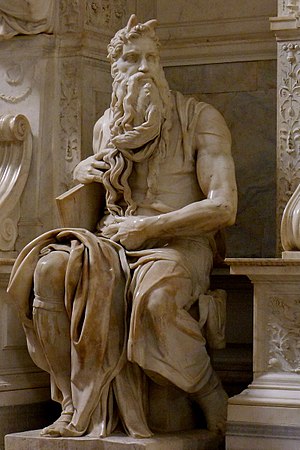
Moses walked a few silent steps behind the large bearded man
that was his father-in-law, Jethro. Jethro had come to him in the early
morning, still before dawn, well before Moses would have risen to lead the
family’s herds of sheep and goats out to the pasture land.
“Get up, Moses. Today you will come with me,” Jethro said in the stuffy
darkness inside Moses’ tent.
“But the sh- sh- sh- sheep, father…” Moses objected.
“Nevermind the sheep.” Jethro told him. “Today I take you to the shrine of the
Midianites.”
Jethro led him to the coastal city of Aqaba. “I come here four times each year
to participate in the sacred rituals. I am a priest of Midian. This is my noble
duty. While we are here I will instruct you in the proper way to worship.”
And, true to his word, Jethro shared the secrets with his son-in-law. “First, I
will teach you to pray,” he said as they stood at the bottom of a flight of
stairs that led up to a long narrow temple built of simple, unornamented,
dressed stones.
“We kneel here,” he said and, placing his hands on Moses’ shoulders, gently
pushed him to his knees. “And we pray this way:
“To the god who is unknown, I pray.
To the goddess, the mother-goddess who is unknown, I pray.
To the god who is angry with me, I pray.
To the mother-goddess who is angry with me in this place, I pray.
My transgression is unknown to me.
The sin I have committed, I know not.
May the unknown god give me a good name.
May the mother-goddess I do not know pronounce for me a good name.
If I have eaten the food of my god unwittingly,
if I have drunk the waters of a cesspool without knowledge,
If I have done what is forbidden by the mother-goddess unwittingly,
I beg mercy.
God, known or unknown, my transgressions may be many.
Mother-goddess, known or unknown, many may be my sins.
I seek help. Where is the one who will take my hand?
I have wept. Where is the one who will come to my side?
I utter laments and shriek my grief. Where is the one who hears me?
Mankind is dumb and cannot speak. He knows nothing.
The sin I have sinned, turn it away.
The sin I have sinned, blow it away in the wind;
transgressions seven times seven, forgive.
And may my heart, like the heart of my mothers, be brought to the place of
return.”
Moses listened carefully to this prayer and then said, “E- e- e-excuse me- me-
me, father Jethro, bu- bu- bu- but there seem t- t- t- to b- b- be mu- much
that you do not kn- kn- know. What is it you would te- te- te- teach me?
“Yes," said Jethro as he stood up from the steps.“I am ignorant of many things. But tell me,
Moses, who came to my tents as a stranger, fleeing the wrath of the Egyptian
Lord, and who has married the eldest of my seven daughters, tell me what you
know. Tell me, what is the name of your
God?”
Moses did not answer.
“Go on, Moses, foundling and fugitive, tell me the name of your God,” Jethro
pressed.
“I d- d- d- do not kn- kn- know.” Moses stammered in frustration.
“You do not know.” Jethro shook his head. “And can you recount for me the great
things that your god has done? Tell me of his mighty deeds? What great things
hath he done?”
“I d- d- d- do not kn- kn- know.”
Jethro scowled at his son-in-law. “Well then, maybe you should listen to me. I
may have much to teach you yet.”
**
The religion of the Midianites is largely unknown. Jethro’s prayer is adapted
from a Sumerian “Prayer to any God.” (Thomas, 111-117)
Thomas, D. Winton. Editor. Documents from Old Testament
Times. New York: Harper Torchbooks. 1958. Print.
Welcome, welcome welcome to the Biblioblog Carnival for May 2017, a round up of, if not the best of biblical studies on the world wide web of information, then at least the stuff I thought was interesting. Here at the carnival there are rides and games of chance, performers and daredevils (and regular devils, too). The bearded woman's here (she's Calvanist, obviously). There are thrills and spills and delights around every new corner. Take your time. Stroll down the midway and enjoy the sights.
The story of Moses doesn’t just show up in the Bible. In the
ancient world, nearly every culture had their own version of what happened. The
Egyptians, the Greeks, and the Romans all had their own way of explaining why
thousands of people left Egypt to live in Jerusalem. The Moses you know, who
performed miracles and freed the Jewish slaves from Egypt, is just one version
of the story. There are others – and they paint a completely different picture
from the one you’ve heard
Our discussion is all about the mystery of Israel’s origins.
And it is a mystery. The exodus and conquest of Canaan (Exodus through Joshua)
are central to Israel’s identity, and are certainly informed by old traditions
and authentic historical memory—but they not historical accounts in the modern
sense. How and when, historically speaking, Israel stepped out onto the world
stage is a huge mystery, though we have some clues to piece together a
compelling picture.
…the first story in 1 Kings has many incredible elements. This did not incline
me to reject the existence of Solomon as a historical person (as it did some),
but it suggested that much of what we find in the Bible about Solomon is not
history.
Saying this in non-musical language is nearly impossible. My
overall thesis is that the use of the accents defines poetic structure (and
prose also) beyond the scope of the line and beyond the scope of the verse. As
I have noted elsewhere, this thesis contradicts claims made over the past 1000
years in the literature on the accents, notably from Wickes in his treatises
from the 19th century. Two excellent examples are Psalm 96, where the accents
define the scope of the stanzas so clearly, and from the prose books, the
lament of David over the death of Saul and Jonathan. I can only illustrate
these with the music, which to a musician is so much clearer than any list of
accents would tell us.
Thus, Jewish priestly
education inherited from the Babylonian lexical lists some numerical schemes
based on the sexagesimal counting system (i.e., a numerical system with sixty
as its base), and the Levitical author presented it as part of priestly
knowledge. Once Levi learns how to prepare the holocaust offering and
accompanying meal offering together with the fraction notations (14–61), then
in his wisdom poem (82–98) he instructs his children/students not to neglect
the study of scribal craft (88, 90, 98). The priestly education system is
characterized as belonging to the scribal type of knowledge, which indicates a
strong Babylonian background and a clear link with the pseudepigraphic book of 1
Enoch
In this volume of collected articles—most of them published
previously in a variety of scholarly venues, though updated here—Loren
Stuckenbruck of the Ludwig-Maximilians-Universität, Munich, takes the reader on
a detailed exploration of the birth and early history of this legend as
attested in ancient Judaism and earliest Christianity. There are few, if any,
as capable of guiding this tour, and though these individual studies were not
originally intended to be read as part of a comprehensive account, readers of this
book will come away with a rich understanding of the myth of the fallen,
rebellious angels and their offspring as understood in ancient Judaism and
Christianity.
NT Jesus Never Saidby Scott Fritzsche at Unsettled Christianity:
An argument from silence is a rhetorical device designed to
be a convincing argument in a simple and straight forward way. It often, on the
surface, is. There are numerous inherent flaws in an argument form silence
however. This becomes important in theology as arguments from silence are, and
have been, used to try and form persuasive arguments as well as having become
part of the basis for theological stances.
I love this line on Galatians: “The best way to comprehend
Galatians is to read it out aloud, shouting in an angry voice at the
appropriate points” (475).
The chapter begins with a very
brief run through the rhetorical structure of Philippians with a view to
possible sacrificial metaphors. Patterson's claim is that these sacrificial
metaphors are more than "rhetorical flourishes" but are "a tool
of active thought" (113). She wishes to show that "the shelamim sacrifices
(sacrifices of thanksgiving) constitute a pattern of offering that Paul applies
metaphorically and imaginatively as a guide for the actions of the
Philippians" (86).
In some discussions of a Christian view of creation much has
been made of the phrase “it was good” in Genesis 1 repeated in verses
3,9,12,18,21. In verse 31 we have the summary: God saw all that he had
made, and it was very good. One can, of course, take the position that the
image of the sea as chaos and the denizens of the deep as creatures of terror
are a result of the fall. Prior to Genesis 3 they were “good” in an
idyllic sense. If there had been no fall, they’d be good and tame yet. But
we still have a problem in scripture – at least if we take a literal
approach as preferred and assume a motif of creation, fall, redemption, and
restoration. Revelation does not really depict a restoration of an idyllic
primeval garden or the reestablished perfect creation of Genesis 1.
Kevin McKissick, M.Div student at Grand Rapids Theological
Seminary, reviews The Apostle Paul and the Christian Life, edited by Scot
McKnight and Joseph B. Modica.
Wait. What? … We don’t need to blacken Simon’s character,
but it’s totally cool to call the woman a whore even if there’s no evidence of
it in the text? We can construct an entire narrative around her life as a
prostitute, and her expensive oil that could only have been purchased through
her elicit [sic] activity, but let’s make sure we don’t disparage the man in
the room — the one who is totally missing the message of Jesus, who is over
there looking down on this woman in his heart, playing at the pretense of
hospitality with no real love behind it, withholding the lavishness of his love
and worship while this woman lets it all out?
Here’s the big picture: Those educated today in typical
schools learn to think in what is called the historical-critical method. That
is, students in theology and Bible are taught to think like a historian, to
think critically over against the received traditions, and to base their
theology on the evidence (the Bible). The goal, then, is to determine the
intent of the author. They are taught not so much to say What does God say in
Matthew 5:17-20 but instead, What does the author of Matthew intend to communicate
with this text in his historical (Jewish) context?
That form of interpretation is not 1st Century and derives
from developments following the Renaissance and the Enlightenment and,
ironically enough, the interplay of tradition and history in the orthodox-fundamentalist
vs. the who-cares-about-the-orthodox and modernist stream of thinking.
Jesus, the apostles and the early church did not read the
Bible in the historical-critical method.
The Date of Thomas – by Jonathan Bernier at Critical Realism
and the New Testament:
Now, let me be clear: I'm not arguing that Thomas' Gospel
should be dated c. 60. The above is a hypothesis, one which at this point I
neither affirm nor reject. I have not yet thought through the issue
sufficiently to reach a final judgment. But one who would undertake to argue
that many of the texts of the New Testament canon are notably earlier than
typically supposed cannot in principle exclude the possibility that the same is
the case for some of the New Testament apocrypha. It is thus incumbent upon me
to explore such possibilities, considering and vetting hypotheses for such
earlier dates. Any other procedure would run the risk of special pleading.
What the Gemara does not point out, but struck
me as remarkable, is that the Torah portion that lays out the rule for levirate
marriage comes in Deuteronomy, while the story of Zelophehad’s daughters is in
Numbers, which of course precedes Deuteronomy in the Five Books of Moses. In
other words, the rabbis envision Moses possessing a complete Torah while the
events the Torah recounts are still taking place. While he is wandering the
wilderness, in Numbers, he can consult the law code he will not actually
deliver to the Israelites until years later, in Deuteronomy.
The Apocalypse of Elijah is not strictly speaking an
apocalypse. It is strongly influenced by the book of Revelation, especially
11:1-12 (the appearance of two witnesses in Jerusalem). There are dozens of
possible ways to interpret the two witnesses, from literal people (Elijah and
Moses, Elijah and Enoch) to figurative (the Old and New Testament, two
volcanoes, etc.) The book does not contain any of the sorts of things we expect
in a true apocalypse: heavenly journeys, thinly veiled reviews of history,
revelation of mysterious secret knowledge, or angelic guides. Coptic
translations of a Greek original of the Apocalypse date to the fourth century.
The book is clearly dependent on Revelation and appears to quote 1 John 2:18. A
date of the mid-second century seems probable (OTP 1:730). If the book was a
Christian re-working of a Jewish original, then some material may be still
older (There is a Hebrew Apocalypse of Elijah which may stand in the background
of the book, but no one has systematically studied the possibility of a Hebrew
to Greek to Coptic translation). The book may reflect an Egyptian Christianity,
but this is far from clear.
Reports came last week that President Donald Trump would
avoid visiting the ancient site of Masada in the Judaean desert during his trip
to the Middle East because his helicopter was not allowed to land on the sacred
ground there. Here is why the site is important and why President Trump should
have walked or taken the cable car to the top--just like everyone else.
Numismatic Report – by David Hendin – at The Ancient Near
East Today:
Readers of Israeli newspapers and archaeology blogs for the
last few years have seen a notable uptick in the number of coin finds reported
by “good Samaritans” (both Israelis and tourists) and turned into the Israel
Antiquities Authority (IAA), as well as some newsworthy numismatic finds at
licensed excavations. This led The Ancient Near East Today to ask me to
look into the finds and their importance, as well as other numismatic
discoveries in or related to Israel. I recently returned from Israel, where I
talked with numismatic scholars, officials of the Israel Antiquities Authority,
licensed antiquity dealers, and collectors. Here is my report.
In light of the recent day-session on “Coins and the Bible”
here, I want to note two recent books.
Coins were a regular medium for kings and administrators to promote
themselves and their regimes. Coins were
also sometimes minted to celebrate military victories. Coinage is one important part of the
“material culture” of the ancient world.
The metals used, the use of images and writing, the places where coins
were minted, all these things and more contribute to historical understanding
of the period in which they were minted.
Thousands of artifacts are being stolen every year and
making their way into Jewish hands, yet the Israeli division responsible for
theft prevention has just one inspector to cover 2,600 sites
Behaviour is deeply embedded within individual cultural
psyches, reinforced by the social groups. As children we are taught to say
please and thank you, or to refer to our elders with special terminology to
infer respect. In British society, certain behaviour is encouraged and
considered polite - eating with a knife and fork, keeping your elbows off the
table - standard parental ways to help children understand what is expected of
them socially.
We Evangelicals have a 500-year history of dividing over all
sorts of issues ranging from modes of baptism to the color of the carpets in
our sanctuary – even (maybe even especially!) with our fellow Protestants.
While there is a pastoral responsibility to inquire with love about a leaver’s
spiritual health, what happens if you discover that the one moving to another
faith tradition is doing so because their faith is growing, and that growth has
shifted their faith out of your particular stream?
… his progressive views have garnered no shortage of
controversy. Conservative pastor Tim Keller has gone so far as to say that he’s
not sure whether George MacDonald was even a Christian. However, despite all
the accusations brought against him, I’ve never heard anyone call George
MacDonald an open theist. Of course that would technically be anachronistic, as
the term open theism didn’t come into use until the late twentieth century, but
my point is that I’ve not heard his beliefs compared to what open theists
believe about God and the settledness of the future.
It is rare that archival research makes the national
news. Jeffrey Alan Miller’s
identification of a draft of a portion of the King James Bible hit the
headlines in October 2015: not only was it the earliest known draft, but was
uniquely a draft written by the hand of one of the translators, who was known
by name. The notebook in which Miller
found this work – Sidney Sussex College, MS Ward B – had belonged to Samuel
Ward (1572-1643), Master of the College from 1610 until his death. Eighteen months after the discovery, the
notebook has been digitised in full and published on the Cambridge Digital
Library, in the latest instance of an ongoing collaboration between the
University Library and the Cambridge Colleges to make archival and manuscript
material available online.
Augustine’s reading is what many Christians believe Paul
actually said, and which is why Augustine’s notion of “original sin” is
defended with such uncompromising vehemence as the “biblical” teaching. But
neither Romans nor Genesis or the Old Testament supports the idea.
Matthew Bates’ book Salvation by Allegiance Alone: Rethinking Faith, Works, and
the Gospel of Jesus the King is just one straw in a strong wind blowing out of
biblical studies, driving us away from theological towards narrative
constructions of Christian identity and purpose. In my view, this is an
exhilarating and necessary development, but Matthew’s book, for all its merits,
has highlighted a fundamental shortcoming. Because evangelicals naturally want
to retain the direct practical application of the “gospel”, evangelical
narrative theologies exhibit a consistent tendency to leapfrog history.
Jesus said, "I am the #Covfefe of life. All who cov and fefe in me shall have eternal life."
— Unvirtuous Abbey (@UnvirtuousAbbey) May 31, 2017
How odd then, that the man who believed in spiritual
perfection of the saints as one full of grace would remove this article? Odd or
completely in line with Wesley’s thinking? I think Wesley got tired of the
elevation of bishops clearly undeserving of blessing the sacrament. It was a
new world, with no episcopal jurisdictions, yet, Wesley was laying the ground
for a kingdom of priests, without sin.
"It has never been good for anyone—including (and
particularly) Martin Luther—to look too frequently or lengthily or seriously or
systematically at demons (who for Luther were usually compressed into the
single figure of the Devil.) It does not make the slightest impression on the
demons if we do so, and there is the imminent danger that in so doing we
ourselves might become just a little or more than a little demonic."
My basic thesis is that inerrancy may only be used as a
secondary criterion for the original reading. It cannot be used to overturn
strong external support or to support conjecture.
Recently, Andrew Wilson shared an impressive critique of
open theism called: “Responding To Open Theism In Fourteen Words.” Andrew’s
article didn’t persuade me, but it did challenge me (seriously!). Below I will
respond to each of the words Andrew presents. But first I will add one word of
my own (if Andrew gets 14 words, I should get at least 1, right?). The word I
want to add to the discussion is “Holy.”
Taking inspiration from grim Hollywood reboots like Man of
Steel and Batman v Superman: Dawn of Justice, B&H Kids announced Tuesday
that it would be relaunching the Bibleman series of superhero stories in a dark
and gritty resurrection of the purple-and-gold caped crusader.
Jim Bakker says Colbert Is Provoking Anti Trump Violence -
KimKierkegaard:
Enjoy how you look now because you're not getting any younger. The most painful state of living is remembering the future.
— KimKierkegaardashian (@KimKierkegaard) May 13, 2017
At the end of the day, no one had come up with a Grand Unified Theory about how
Joseph Smith translated, but we had raised some important issues that show the
inadequacies of the old model (Smith translating from one language to another
without any of his own input, or what Skousen called the “tight control”
model).
The Book of Mormon is a wholly American Scripture. It is the
sacred text for the 15 million-strong Church of Jesus Christ of Latter-day
Saints. It’s the calling card for thousands of missionaries, and part of the
inspiration for a Tony award-winning Broadway musical. But rarely has the book,
on its own merits, been considered a genuine work of art. That’s changing, as
American literary scholars embrace it as worthy of attention. In 2012, during
the waning days of Mitt Romney’s presidential campaign and the nation’s
so-called “Mormon moment,” literature professors were on the cusp of their own
“Book of Mormon moment.” For the first time, studies of the Book of Mormon’s
literary qualities were appearing in major journals of American literary
studies. Literature courses that prominently featured the Book of Mormon
started to appear with more frequency in secular university course catalogues.
Now the text, first published in 1830 and once derided as “a fiction of
hob-goblins and bugbears,” is being parsed by non-Mormon students across the
country, with literature scholars breaking more than a century of professional
silence on the book.
St.
Athanasius:
“The world is against you, Athanasius!”
”Then I am against the world." + St Athanasius (commemorated May 2) pic.twitter.com/uxSKTOUP3J
Stephan Huller spent hours compiling all the bad things that
scholars have observed about Epiphanius's reliability as a historical witness.
"But when you give a feast, invite the poor, the crippled, the lame, the blind, but don't make it too good cause, you know..." Luke 14:13 https://t.co/hj334dvuNX
Today is the feast of Gregory of Nazianzus. Of Christ's full humanity, he said "that which He has not assumed He has not healed." pic.twitter.com/4hoRHzCPIE
Oh, and by-the-by, Jim West is hosting his own so-called "Avignonian Carnival." You can visit there if you like, but don't feel like you have to, or anything. I mean, if you do you're likely to see him wearing plaids - two different plaids. How uncouth.
FUTURE CARNIVALS
If you would like to host the Biblioblog Carnival in the near future (and I recommend that you do) contact Phil Long:
We said last week that Lent is a dangerous journey. It is a
pilgrim’s journey through wild and wasted places (Psalm 121), across rugged
terrain, up and down steep slopes, under the sweltering sun and the poisonous
moon, through thirsty, arid lands where there is no water, surrounded by wild
animals, thieves and demons and foul spirits of every kind. And yet the guardian of Israel is there for the pilgrim, to help and to
protect, to preserve. “Yahweh guards your comings and goings henceforth and
forever.” (Psalm 121: 8 New Jerusalem Bible)
In our text this week, we continue that dangerous journey theme.
The people of Israel, having left the slavery of Egypt, head into the wild and
wasted place – three month journey from Egypt to Sinai, through the wilderness
of Sin (location unknown.)
This is not “sin,” – the violation of God’s will or command, but the Wilderness
of Sin, one of the seven wildernesses crossed by Moses and the Israelites (Shur
– Exodus 15: 22 -23, Etham - Numbers 33:6-8, Sin – Exodus 16: 1, Sinai – Exodus
19: 1 - 2, Paran – Numbers 10: 12, Zin – Numbers 27:14, and Kadesh – Psalm 29:8)
The name “Sin” here may refer to the Mesopotamian moon god “Sin,” or – perhaps more
probably – to an Egyptian border fortress in the Nile Delta, Pelusium, also
named “Sin” in Ezekiel 30:15 (KJV). (Seely 47)
In the course of this three month journey so far, the people
of Israel have been pursued by the chariots and armies of Egypt and been
protected from those foes. They’ve crossed parched, dry deserts where the only
water they could find was bitter, brackish water – and the bitter water had
been made sweet and fresh for them. They’ve
stared down the face of starvation – and been fed with quail and miraculous manna
(just don’t ask ‘what is it?’ you might not like the answer). It has been a difficult journey, an arduous
journey and they’ve not yet arrived at their destination.
Now at Rephidim (location unknown) they are thirsty again – they, their
children, and their cattle with them are so very thirsty. And why not? The
desert is a thirsty place. And so the people – the whole congregation of them –
“find fault” with Moses, “took issue” with Moses (Exodus 17: 2 RSV and NJB). “Why did you bring us out of Egypt – to kill
us and our children and cattle with thirst?” (17:3)
Maybe that is a fair question. Moses was leading them, and one of the demands
of leadership is demonstrable results. Moses had promised to lead them to a
land of milk and honey (Exodus 3: 17), maybe that’s started to sound to the Israelites
like so many empty political promises. They were thirsty and cried for water - ‘demonstrate
the effectiveness of your plan or we’ll find a new leader,’ seems to be the
unspoken subtext of this demand. But before we criticize the Israelite people
too harshly we should remember 1- they were thirsty in the desert, a situation
that if not remedied can quickly lead to death, and 2- our American system of
government is pretty much based on this demand of leadership – prove your
promises or we’ll elect someone else…
But, then again, maybe it is not a
fair question. Moses has not failed them in this journey so far. They’ve faced
several seemingly impossible obstacles and each time they have endured, they’ve
survived. Maybe it is not fair that they quarrel with Moses here. Maybe his
record so far should have earned him some trust.
And further, the way this story is presented by the author / editors of Exodus,
a complaint against Moses is not merely a complaint against Moses the man, but
also against Yahweh God who has appointed Moses (though this detail isn’t
mentioned until the very final verse of the story). Their complaint isn’t just:
‘Hey! We’re thirsty!’ it is: ‘Hey!’ We’re thirsty! Is Yahweh with us or what?!’
And Moses cries out in fear, “they’re ready to stone me!” (17:4)
I wonder if his fear was legitimate or, perhaps, if it was over exaggerated somewhat,
embellished in order to provoke God to action, if not for Israel’s benefit,
then for his. (There were occasions also when Moses would have preferred to die
than to lead the people of Israel any more – Numbers 11: 15).
And speaking of Moses’ fear that the Israelite people were ready to kill him, I
make a slight wilderness wandering within this wilderness sermon. The Austrian
neurologist and founder of psychoanalysis, Sigmund Freud wrote a book in 1939
entitled Moses and Monotheism, in which he described how the Israelite people
rebelled against, and then killed Moses and replaced him with a new leader.
Freud went on to say that the guilt for this vaticide (the killing of a
prophet) caused them to long for the coming of “one like Moses,” a messiah to
rescue them from their sin and guilt.
Very few (if any) take this theory seriously.
But in response to the people’s complaints (We’re thirsty!)
and Moses’ fear (They’re going to kill me!) Yahweh God “stands before” Moses on
rock at Rephidim and says ‘Swing away, boy. Hit that rock.’ Moses does, and
water comes gushing out, sweet, fresh water to slake their thirst and stop their
murmuring and complaints. Moses names the place “The Spring of Trial and
Contention” or “The Spring of Testing and Strife” because of the people’s sour
attitude and fault finding.
Now the author / editors of this story in Exodus seem to want us to understand
that God (and God’s agent) cannot be, should not be doubted, that God is not to
be tested, that God’s reliability is not something that needs to be proved or
established. (Hamilton Handbook 185)
And maybe that’s true; the psalmist we read last week (Psalm 121) was equally
confident that the Guardian of Israel neither slumbers nor sleeps (121:4) but
remember the other psalms that we mentioned calling for God to wake up and do
something: “Wake, Lord! Why are you asleep? Awake! Do not abandon us for good.”
(Psalm 44: 23 NJB) “Up, awake, to my defense, my God and my Lord, to my cause!”
(Psalm 35:23) There certainly are times when it feels like God is asleep and his anointed agents
have lead us awry.
It is also interesting to see Yahweh God “standing before Moses” in this story.
It’s a very anthropomorphic idea: God walking and talking and standing among the
people (though a question arises here - could Moses and the elders of Israel
present for this event actually see
Yahweh God standing before them on the rock?)
And to “stand before” had a particular connotation in Hebrew thought,
one that wasn’t always acceptable to the faithful when it was applied to God.
To “stand before” someone implies service, homage, a state of inferiority. It
also indicates worship. (Hamilton Genesis
23) That is why the Masorites who copied and edited the Jewish scriptures
between the 7th and 10th centuries altered a verse in
Genesis. Genesis 18: 22 in the Masoretic
Text (which is widely used as the basis for the Old Testament in Protestant
bibles) says that “the men turned from there, and went toward Sodom, while
Abraham remained standing before the Lord.” (NRSV) but there is a footnote to
explain that in an earlier scribal tradition the verse says that it was the
LORD who remained standing before Abraham.
There are several of these scribal corrections, emendations
made by the Masorites – to remove unseemly expressions, and to protect the dignity
of God. Perhaps the Masorite scribes were uncomfortable with the idea of Yahweh
God, the creator of the heavens and the earth “standing before” Abraham, and so
made a change, reversing their positions, leaving Abraham to stand before God
instead of the other way around. (Hamilton Genesis
24)
And yet the phrase remains here in Exodus 17. (Did the Masorites miss this
one?) Yahweh God, creator of the heavens and the earth, the Guardian of Israel,
“stands before” Moses and the assembled elders of Israel and makes himself
vulnerable to them – risking physical injury if Moses’ swing goes wild,
perhaps? (Hamilton Handbook 188) But
even if we don’t go so far as to suggest that Moses could have clobbered God in
the head with his staff, God still made himself vulnerable to his people. He
heard their complaints, he heard their desperation and frustration and fear and
anger and vexation and -
and he stood before them on the rock at Rephidim to give them what they needed,
to give them water in a place of dryness, to give them life in a place of
death, to give them peace in a place of anxiety and intimacy in a place of
dissent.
You see, as a symbol the wilderness is an ambiguous, ambivalent place. It is
not only a wild and wasted place, the haunt of jackals and demons, of fiery
serpents and scorpions, underneath an oppressive sun and a baleful moon; the
wilderness is also a place of enlightenment and vision and intimacy with God. The
wilderness is a powerful place. To enter the desert, one must leave behind the security
of settlement and venture into a region of physical and spiritual danger. The
wilderness is a liminal place, the borderland between here and there, a “thin
place” between the physical and the spiritual. (Blenkinsopp 161)
For the prophet Jeremiah, the wilderness was where Israel and Yahweh God shared
their most intimate time together:
‘Yahweh says this:
“I remember your faithful love,
the affection of your bridal days,
when you followed me through the desert,
through a land unsown.”’ (Jeremiah 2: 2 NJB)
The Qumran community went out into the wilderness near the
Dead Sea in order to find a renewed intimacy with God. Christian monks went
into caves and wild places to experience that intimacy with God that comes with
getting away from the rest of the world. Jesus himself was driven into the
wilderness by the Holy Spirit and after his confrontation with the Tempter was
comforted by the angels of God. (Mark 1:12 -13) The desert is a visionary
place, a refining place, a place of innocence and intimacy with God.
And here, at the rock of Rephidim, in the Wilderness of Sin, Yahweh God – the creator
of the heavens and the Earth, the Guardian of Israel, “stands before” Moses and
the people – makes himself vulnerable to their distress and their anxiety. He
makes himself vulnerable to their testing and strife. He condescends to their
weakness.
This is the point of Jesus’ incarnation – that God is willing to come down and “stand
before” us in our weakness. He lowers himself, humbles himself – even to the
point of death (Philippians 2: 8) so that we might live.
We are in the middle of our Lenten journey, a journey through the wilderness of
sin and death. We are in a dry and weary land, thirsting for comfort and
relief. We are in the place of death, under an oppressive sun, beneath a
malicious moon – but we are journeying towards the land of milk and honey, the promised
land of life, and life to the fullest, life everlasting. And, what is more, we
are not making this journey alone. The Guardian of Israel stands before us,
stands with us, goes with us. He gives us our spiritual food and our spiritual
drink from the spiritual rock that follows – which is Christ himself (1
Corinthians 10:4)
We are in the desert place, making a dangerous journey through life, surrounded
by death, but we are not dismayed, for God is with us. We will not give in to
our fears and our desperation. We will not let our thirst overwhelm us. We will
not harden our hearts as at Meribah. We will listen to his voice. (Psalm 95: 8 –
9) We will follow him through the wild place of death to the land of rest and
resurrection.
***
Blenkinsopp, Joseph. The Pentateuch: An Introduction to
the First Five Books of the Bible. New York, NY: Doubleday. 1992. Print.
Freud, Sigmund. Moses and Monotheism. Knopf. 1939.
Print.
Rephidim’s rock, so it is written,
followed Israel like a lost kitten -
the rock, as would behove
did pursue out of love
for by Moses it had been smitten.
This one is a little complicated to explain but here goes:
In Exodus 17: 1 – 7 the Israelites are somewhere near Rephidim which is near
Mt. Horeb. They’re thirsty, they
complain, God tells Moses to strike the rock there with his staff, and they
have water. And Moses names the place, “Meribah.”
Later, after receiving the torah, they
leave that place and head to Kadesh (Numbers 20:1–14) where again they are
thirsty and complain that they need water. Moses strikes the rock again (a
no-no this time) and they have water. And
again Moses names the place “Meribah”
This might be an example of one traditional story being told in two different
ways, but the Jewish rabbis had a legend that since the rock is named “Meribah”
in both places, that it was the same rock and that the rock actually followed
the people of Israel from Rephidim to Kadesh.
“And so the well, which was with Israel
in the desert, looked like a rock with the size of a sieve, surging and
gurgling upward, as from the mouth of this flask, rising with them up on to the
mountains and going down with them into the valleys.
“Wherever the Israelites would encamp, it made camp opposite to them, opposite
to the Tent of Meeting.” Tosefta Sukkah 3:11
The Apostle Paul apparently knew of this legendary
tradition. He draws from the story of the “rolling stone” in his letter to the
church at Corinth: “and all drank the same spiritual drink. For they drank from
the spiritual rock that followed them,
and the rock was Christ.” (1 Corinthians 10: 4 NRSV)
Israel in Sin was hungry, you bet.
So God fed them with manna, no sweat.
This event they did mark,
putting some in the Ark;
only problem: there weren’t no Ark yet.
Moses was a bit of a wowzer,
and before you object, note how sir:
he swung his wooden rod,
as instructed by God,
and struck the rock just like a dowser.
Phinehas, on account of his zeal,
is numbered third in glory-for real!
First Moses, then Aaron,
but Phin is forgotten
and who can recall his spear of steel?
Though Jerome was a sage not to be scorned,
if you read his translation, be warned:
he made a small mistake
(but that is all it takes).
In his version Moses comes down horned.
As Moses came down the mountain trail
God’s glory on his face did prevail.
The people, filled with fear,
were afraid to draw near
so they screamed, “Moses, put on a veil!”
Biblical law was left incomplete
till Zelophehad’s daughters could meet
with Moses to request
that their father’s bequest
be delivered to them tout de suite.
“Moses, my patience is about spent,
I am the Lord; I said what I meant,
so when I did aver
that you have found favor,
it’s true! Stop fishing for compliments!”
The LORD was angry, just about flipped!
“Moses, why’d you lead them from Egypt?
I’ll kill them before long!”
Moses said, “God, you’re wrong;
it’s you that brought them out of Egypt.”
Moses, you are such a goddamn putz!
Did you lead us out here to kill us
with hunger and with thirst?
Good grief! You are the worst!
If we grouse it’s ‘cause we hate your guts!
In Ex’dus seventeen it’s okay
for Moses to strike the rock, but hey,
in Numbers twenty when
Moses does it again
he’s barred from the Promised Land, oy vey!
Egyptian magicians served their king
by each of the plagues reproducing,
snakes, blood, and frogs as well
which caused Pharaoh to yell,
“Dammit, you guys! This isn’t helping!”
God revealed his name, as we’ve been taught,
to Moses on the mount, but we ought
to recall: we can’t know
what God is, even though
he’s I AM, we know naught but what he’s not.
Exodus 3: 14
“…we cannot know what God is, but rather what he is not…” Thomas Aquinas
The flames in the bush were aflutter
when Moses first heard God’s voice utter
the command to go speak,
but Moses said, “I’m weak
and I st- st- st- st- …can’t speak well.”
The rulers will take credit, no doubt
for good that happens under their clout:
Pharaoh’s daughter sent her
maid into the river
then made the claim, “I drew Moses out.”
Hey, hey wait! There’s something amiss here:
Amram married his father’s sister,
but by Torah you can’t
copulate with your aunt,
even to produce Moses, mister!
It’s no wonder that when the Hebrews
came to the time their babies were due
the midwives weren’t around,
there were few to be found,
in all Egypt there were only two!