Every so often we have a "movie night" with our congregation - not just to watch a movie and be entertained, but to discuss and to learn something from a great film. Tonight we're going to be watching John Ford's
The Grapes of Wrath based on John Steinbeck's novel. It's a film I've used in previous appointments. What follows is a the brief discussion guide I printed up for the group a few years back.
The Grapes of Wrath – Movie Night Discussion Guide
In the mid to late
1930s a series of Dustbowls – dust storms that darkened the skies across nearly
the entire nation – devastated the Great Plains of the United States and
Canada. Powerful winds, picking up dirt
and dust from the ground made the sky appear black all the way to Chicago. Eventually the soil was completely lost as it
was blown out to the Atlantic Ocean.
Topsoil across millions of acres was blown away because of the indigenous
sod had been broken for wheat farming and the vast herds of bison that once
fertilized that sod were gone, nearly exterminated.
With their crops ruined, lands barren and dry, and homes foreclosed for
unpayable debts, many farm families gave up and left. They left homes and farms that had been part
of their families for generations to look for a better life elsewhere. Many of the displaced were from the state of
Oklahoma, where 15% of the state’s population left. The migrants were often called Okies whether they were from Oklahoma or
not.
This is the setting of John Steinbeck’s powerful novel, and the equally
gripping 1940 movie version directed by John Ford, the mass migration of people
for the “Promised Land” of California and the promise of good jobs with decent
pay. But that promise would remain
unfulfilled. In California the Okies found, not the sweet nectar of
grapes running down their chins, but the “Grapes of Wrath.”
In 1937 California passed the so-called “Anti-Okie Law” which stated: Every person, firm, or corporation, or
officer or agent thereof that brings or assists in bringing into the State any
indigent person who is not a resident of the State, knowing him to be an
indigent person, is guilty of a misdemeanor.” The statute was eventually overturned in 1941.
The title of the novel
and subsequent film – suggested to Steinbeck by his first wife – was drawn from
“The Battle Hymn of the Republic” He is
trampling out the vintage where the grapes of wrath are stored… Steinbeck said that when he wrote The Grapes of Wrath he was “filled…with
certain angers… at people who were doing injustices to other people.” The writing of the book was his response to
the injustice he saw committed against the poor and helpless.
Proverbs: 14: 31 – If you
oppress poor people, you insult the God who made them, but kindness shown to
the poor is an act of worship.
Proverbs 21: 13 – If you refuse to listen to the cry of the poor, your own cry
for help will not be heard.
Proverbs 22:9 – Be generous and share your food with the poor. You will be
blessed for it.
… if a fella’s got sompin to eat an’
another fella’s hungry – why the first fella aint got no choice. (Grapes,
66)
The movie ends on a
much more positive note than the novel – with Ma’s declaration that she won’t be
scared any longer, and that “we’ll go on
forever, Pa, because we’re the people.” The
family is safe – at least temporarily – in the government camp and in the
promise of “twenty days work.” The novel, however, is not quite that
upbeat. It’s not hopeless, but the hope is a deeply troubled hope, a hope that has
hurt, continues to hurt, but goes on despite.
Their hope is built in community, in unity with “our own people,” people working together.
The shocking conclusion of the book – omitted from the movie – was considered
scandalous and prurient by many, and led to the book being banned from many
libraries. Rose of Sharon’s baby is
stillborn, the family is forced to move out of the security of the camp, and
Tom has left the family. But they continue, doggedly struggling to work and to
live. The Joads, who don’t have much
themselves, continue to share what little they have, Rose of Sharon going so
far as to feed a starving old man her own breast milk.
Steinbeck wrote, “I am not trying to write a satisfying story. I have done my damndest to rip a reader’s
nerves to rags. I don’t want him satisfied.”
Indeed, the book left many people unsatisfied. They reacted with a fierce hostility to the
book, calling it “a lie, a black infernal creation of the Marxist, Soviet
propaganda.” Ministers, republicans, bankers, senators and librarians denounced
it as communist, immoral, degrading, warped and untruthful.
It’s a powerful work of anger, but not a hateful, destructive anger. Steinbeck’s anger, and Ford’s, was directed
against injustice and oppression. In
this way, their anger is a motivating energy, driving us to learn from each
other, and to stand with each other to create a better world for the whole
community.
Questions and Reflections
What is more important – ownership and possession or work and labor?
How does Jim Casey, the former preacher, embody a “Christ figure”?
“They payin’ you 5¢?” “Come now, you rich people, weep and wail for
your miseries that are coming to you… Listen!
The wages of laborers who mowed your fields, which you kept back by
fraud, cry out, and the cries of the harvesters have reached the Lord of hosts.”
– James 5: 1 – 6
How is a fair wage determined?
Socialists and Reds have a bad reputation in the mouths of rich and powerful
characters in the movie. They are “agitators”
and “troublemakers.” Why are they so
despised? Who is working to help the
poor and downtrodden in the movie?
“Cursed be anyone who deprives the alien, the orphan, and the widow of
justice. And all the people shall say,
Amen!” - Deuteronomy 27: 19 What does
the movie have to say about this verse?
The service station attendants say that the Joadas, and all the Okies like them, “…got no sense and no feeling; they aint human. A human being wouldn’t live like they do. A human being couldn’t stand to be so dirty
and miserable. They aint a hell of a lot
better than gorillas.” (Grapes,
301) What should our attitude be towards
those who are less fortunate?
The book and the movie are both structured on the progression from the “I” to
the “We”, from a struggle of the individual to the struggle of the group. What does the Christian faith have to say
about the struggle of the community? How
does that play against the American value on “rugged individualism”?
The following quote is often attributed to Karl Marx: “The rich will do anything for the poor, but
get off their backs.” Is that an
accurate statement?
“Then I looked again at the injustice that goes on this world. The oppressed were crying, and no one would
help them. No one would help them
because their oppressors had power on their side.” Ecclesiastes 4:1 As the woman who was accidentally shot in the
“Hooverville” lies bleeding to death, one of the deputies rather callously
says, “what a mess those .45s make” How is power and wealth used against the
poor? Who makes the law? Who enforces it?

“I’ll be all around in the dark. I’ll be everywhere; wherever you can look,
wherever there’s a fight so hungry people can eat, I’ll be there. Wherever there’s a cop beatin’ up on a guy, I’ll
be there. I’ll be in the way guys yell
when they’re mad. I’ll be in the way
kids laugh when they’re hungry and they know supper’s ready. And when people are eatin’ the food they
raised and livin’ in the houses they built, I’ll be there too.” – Tom Joad

“While women weep, as
they do now, I’ll fight. While children
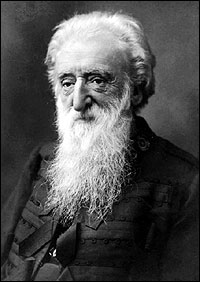
go hungry, as they do now, I’ll fight. While men go to prison, in and out, in and out, as they do now, I’ll fight. While there is a drunkard left, while there is a poor lost girl upon the street, while there remains one dark soul without the light of God, I’ll fight! I’ll fight to the very end!” - General William Booth of The Salvation Army
Sources
Ebert, Roger The Great Movies II,
Broadway Books; New York, NY 2005.
Steinbeck, John The Grapes of Wrath,
Penguin Books, New York, NY, 1939.
Steinbeck, John, ed Robert Demott, Working
Days: The Journals of The Grapes of Wrath, Penguin Books, New York, NY,
1989.