Pages

google analytics

Showing posts with label William Booth. Show all posts

Saturday, February 7, 2026

I Contain Multitudes – I Am Legion

     Here it is – Like Whitman, I contain multitudes. I am Legion.

    “That’s not funny, Carter. I’ve always said you were Satanic.

    Yeah, yeah, yeah. Give me my influences. Give me my heroes. Le t me name them:

    Archibald MacLeish – librarian poet
    Madeline L’Engle – universalist author, Christian author
    Burroughs – both Edgar Rice and William
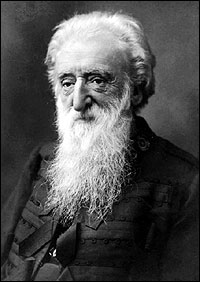
    William Booth – the only General I would follow

    Howard Zinn – historian
    
Marc Chagall – dreamer, poet, painter, fool

    “You’re a fool, Carter. Everything you say only confirms it the more…”

    Gustavo Gutiérrez – Dominican liberationist
        and
    Roger Corman – the king of cult

    “You go too far.”

    Give me scream queens. Give me Elvira,
    Give me Neil Young and Nick Cave.
    Give me Camus and Kierkegaard
    Give me the blessed Saint Francis and Sister Death

    “Stop. Stop. You’re only embarrassing yourself with this… contortion. This confession.”

    Kropotkin. Cash. Dylan.
    Brian Wilson. John Coltrane and John Yoder (though, I acknowledge the danger)
    Umberto Eco, and Echo and the Bunnymen

    “I don’t even know these names. No one cares.”

    Poe, and King, and Dick
    Sartre, Beauvoir, Silverstein
    Give me Black Francis screaming into the void

    “You need to stop. This is unhealthy.”

    Give me Martin Luther King Junior

    “He was an adulterer”

    I know, but give me Tillich.

    “Pornographer.”

    I know, but give me…

    “No. I will give you nothing.”

    Give me Jesus.

    “Jesus! The Blasphemy you breathe…”


Sunday, January 8, 2017

What Did He See? (Sermon - Matthew 3: 16)


Then Jesus appeared – coming from the soft, green hills of Galilee down to the Jordan River valley, to the river – which was not much of a river, not more than a stream in many places. He came to be baptized by John. But John objected, “I should be baptized by you.” Jesus insisted, “Let this be done to fulfill all the demands of righteousness.”

So he was passed through the baptismal waters and God was with him (Isaiah 43:2). He went down into the waters that were at the same time embryonic and chthonic - a symbol of both his new life as a prophet and his coming death. As Jesus was immersed in the swirling, muddy waters of that narrow stream, he closed his eyes and held his breath. He felt the firm press of John’s hand, holding him under for a timeless fraction of a second, then raising him up again. The water streamed from his hair, down his face and beard. Jesus sputtered for air, wiped his eyes and looked up toward the sky. And suddenly the heavens were opened.

“Oh that you would tear the heavens open and come down
- in your presence the mountains would quake…” (Isaiah 64:1)

And what, besides the Holy Spirit descending like a dove, did he see when the sky was ripped open? What did Jesus see when the One “who created the heavens and spread them out” (Isaiah 42: 5) now ripped them open? What visions did he see? Matthew’s gospel does not say – not specifically. But I would like to hazard a guess.

In that moment, as he stood up from the river with the water pouring from his face as the heavens were opened for him, I think he saw the brilliant, blinding light of billion dimly burning wicks. (Isaiah 42:3) I think that he saw the Kingdom of Heaven in all its righteousness, in all its varied splendor and in its many forms of suffering.

He saw “the masses of men live[ing] with their backs constantly against the wall…the poor, the disinherited, the dispossessed” (Thurman 3). He saw the tired, the poor huddled masses yearning to breathe free, the wretched refuse of a thousand teeming shores, and the homeless who are tempest-tossed from one place to another, never able to settle or find a home.  (Lazarus)

He saw the widows and orphans of every unjust war. He saw the massacred innocents, the displaced refugees, the frightened and the terrorized. He saw the helpless and the powerless and the desperate.
He saw women weeping and little children going hungry. He saw men going to prison, in and out, in and out. He saw drunkards and poor lost girls upon the streets and dark souls lost without the light of God. (Booth) He saw walking lepers and lurching bravoes from the ditch. He saw the dribs and drabs of drug fiends with pale faces and minds still ridden with corrupted passions, and soul-powers frail. He saw vermin-eaten saints with mouldy breath, and the unwashed legions of the ways of death. (Lindsay)

He saw people lingering in, and dying from illnesses that could easily be treated and cured if not for the greed of powerful and wealthy men. He saw hungry children. He saw mothers and fathers out of work. He saw the illiterate struggling to fit in with the rest of society. He saw the immigrant struggling to speak a second (or third) language along with the people of their new country. He saw the mentally ill and the learning disabled. He saw the lonely elders in nursing homes and sterile hospital rooms.

He saw the “wretched of the earth,” all the disreputable people piled on top of one another in crowded slums and barrios and ghettos, living in shacks squeezed tightly together in a world with no space, famished and hungry for bread, meat, shoes, coal, and light, crouching and cowering on their knees. (Fanon 4 – 5)

He saw all of the people, in every part of the world, who are “tired of being trampled over by the iron feet of oppression,” who are “tired of being flung across the abyss of humiliation” and tired of experiencing the "bleakness of nagging despair” (King “MIA Mass Meeting”)

He saw “the slow, the suffering, the quick, the dead” (Rice) He saw nuns and priests assassinated in South America, and black American prophets gunned down in Harlem and in Memphis. He saw husbands and wives struggling to keep their love for each other alive. He saw children used and abused and pushed into prostitution.

He saw the poor and the poor in spirit. He saw the gentle. He saw those in mourning. He saw the hungry and those who hunger and thirst for righteousness. He saw the merciful and the pure in heart. He saw all the struggling peacemakers living in a world of war. He saw the persecuted and the oppressed, the abused and maligned. (Matthew 5: 3 – 12)

He saw the gentle ones – the crushed reeds and faltering wicks – struggling to keep the flame of faith alight. He saw the blind and captives in prison and the ones living in dark dungeons without light (Isaiah 42: 3, 7)

He saw them in the east and the west, the rich and the poor, the despised, the distressed (Gowans #1011) a huge number of them, impossible for anyone to count, of people from every nation, race, tribe and language, standing in front of the throne and in front of the Lamb (Revelation 7: 9). He saw the serried ranks of countless millions - billions of children, women, and men unknown and unnamed by history – but known, and named, and loved by his father in heaven. And he saw the against-the-evidence hope for triumph over evil (West 35) in each of their lives.

He saw all of this but did not balk at the pressure, he did not recoil from the demand, or hesitate at the thought of countless, inevitable failures along the way, or the long, long delay before full and final glory. He did not grow faint and would not be crushed until he had established justice and righteousness on the earth (Isaiah 42: 4)““Oh it is hard continuing believing, continuing loving, continuing resisting all that opposeth! We are subject to be weary of well doing” (Bunyan 193). He knew that “the time may be long, the obstacles great, and the chance of success dim,” but he knew that, “the servant continues to perform his mission, conscious of his election and calling and endowment” (Coffin 466).

Coming up out of the waters of the River Jordan, Jesus saw all of this and he knew what he had to do. He knew what he would do: he would be the Servant of the Lord. He would give his life in service to all of these, and in this way fulfill all the demands of righteousness.


Booth, William “While Women Weep – I’ll Fight” - this may be one of the apocryphal quotes, something the founder of The Salvation Army never actually said, but is very much in line with all that he did and said in his life. 

Bunyan, John. “Christian Behavior.” The Practical Works of John Bunyan Vol. VI.

Coffin, Henry Sloane “Isaiah: Exposition” The Interpreter’s Bible Volume V.  Nashville, TN: Abingdon Press. 1956. Print.

Fanon, Frantz. “On Violence” The Wretched of the Earth. Trans. Richard Philcox. New York, NY: Grove Press. 1963. Print

Gowans, John and John Larsson. “They Shall Come from the East” The Salvation Army Songbook. London. The Salvation Army. Print.

King, Martin Luther. “MIA Mass Meeting” Holt Street Baptist Church, Montgomery, Alabama: 5 December, 1955. Speech. 

Lazarus, Emma. “The New Colossus” 1883. 

Lindsay, Vachel. “General William Booth Enters into Heaven” General William Booth Enters into Heaven and Other Poems. Doylestown: Wildside Press. 1913. Print. 

Rice, Tim and Andrew Lloyd Webber. ”Hosanna” Jesus Christ Superstar. 1970. 

Thurman, Howard. Jesus and the Disinherited. New York: Abingdon – Cokesbury Press. 1949. Reprint Boston, MA: Beacon Press. 1996. Print

West, Cornel. Prophesy Deliverance! Louisville, KY: Westminster John Knox Press. 1982. Print.

Sunday, August 7, 2016

Heaven Is in the Sharing


“Do not be afraid, little flock, for it is your Father’s good pleasure to give you the kingdom. Sell your possessions, and give alms. Make purses for yourselves that do not wear out, an unfailing treasure in heaven, where no thief comes near and no moth destroys.  For where your treasure is, there your heart will be also.” Luke 12: 32 – 34 NRSV

The reading for today begins simply enough, “Do not be afraid…” It’s good advice, if easier to say than to do. It’s sometimes said that the phrase “Fear not,” or a similar equivalent, is found 365 times in the Bible, one for each day of the year. Which sounds nice but isn’t exactly true. Even so – “Do not be afraid…” is good instruction for us, the little flock of Jesus.

Do not fear – even though this life and this world are difficult, troublesome, worrisome, wearisome. It’s easy to worry about finances, security, and peace – easy to be anxious about paying for medication or for the kids to go to college. When we hear the news, it is easy to be distressed about wars and rumors of wars. But still, Jesus tells us, “do not fear…”

Do not fear because it is God’s good pleasure to give us the eternal kingdom of peace and joy. That is what he wants to do. He does not give the kingdom begrudgingly or reluctantly. Our Father wants to give us the peace, and hope, and joy of his kingdom. He delights in the giving. He gives prodigiously - wastefully, wonderfully.

He is not like a stingy employer counting out the pennies to pay his employees, looking for ways to cut costs. He isn’t looking for us to do more and more to earn it. It’s not a matter of being obedient enough, or having right and perfect doctrine. It is our father’s delight, God’s grace, to give. This is his character.

These words come in a chapter full of Jesus’ thoughts on the place of wealth in the world. Earlier in the chapter he told a parable of a wealthy man – who gained even more wealth – who hoarded his resources and his increasing financial empire.  His sin, his error, his foolishness was not in being wealthy, but in refusing to share that great wealth with others. He died, and what could he do with his great wealth then?  Jesus concludes the parable with advice to be “rich toward God.”  (Luke 12: 16 – 21)

Jesus talks about God’s provision for the flowers and the birds, because life is more than food and the body more than clothes. He promises that God will provide.  (Luke 12: 22 – 31) “All good gifts around us are sent from heaven above. So thank the Lord, Oh thank the Lord for all his love.” (Schwartz)

So “do not fear, little flock,” because God wants to give us the Kingdom, he wants to provide for us, he wants to give to us. And we, in turn, are to sell and to give to others, and we find joy in the giving. Jesus instructs us to store up treasure in heaven, treasure that can’t be stolen or destroyed. This “storing up treasure in heaven” is very similar to the earlier instruction to “be rich in the sight of God.” We are rich when we share, when we give, we are a blessing to others.

There is an old story of a man who had a vision of hell. In this vision he saw hell as a magnificent feast, a luxurious table spread with cooked meats, fine vegetables, rich deserts, the finest wine and the smoothest coffee. And all those souls in hell sat down at the table to eat this glorious spread – only to realize that they had no elbows. They could not bring any of this wonderful food to their mouths and so they were tortured for all eternity by the sight of it.  The man then had a vision of heaven. And in this vision he saw heaven as a magnificent feast, a luxurious table spread with cooked meats, fine vegetables, rich deserts, the finest wine and the smoothest coffee. And all those souls in heaven sat down at the table to eat this glorious spread – only to realize that they had no elbows. They could not bring any of this wonderful food to their mouths, so they fed each other.  They shared with their neighbors and each one enjoyed the feast for all eternity.

Heaven is in the sharing and the serving.

I have quoted the founder of the Salvation Army, William Booth before, and I will share this quote again and again. He said, “Making heaven on earth is our business” (Booth). And heaven is made in the sharing. Do not fear – even though we know the world is difficult. In this life we will have trouble (John 16:33) but we should not fear, instead we take joy in sharing with others – just as God, our father, delights in sharing the kingdom with us.

Booth, William. “Don’t Forget” 1910.
Schwartz, Stephen. “All Good Gifts.” Godspell, 1971.


Thursday, April 21, 2016

The Sermon on Mount Shangri-La


I recently read (re-read, actually) James Hitlon’s 1933 novel Lost Horizon.  The novel describes an ancient utopian community known as “Shangri-La.” It’s a reclusive community, hidden deep in the mountains of Tibet, devoted to the task of safeguarding human wisdom and beauty from the approaching storm of holocaust and apocalyptic war. Hilton proved to be a bit prescient, envisioning the horrors of World War II.

I like the book, even if it’s not aged especially well. The writing feels a little dated, and somewhat stilted. The characters are a little flat.  But it’s the idea-the idea that’s important here. Shangri-La is the antithesis of the modern world - all frenetic motion with no peace. If you’ve ever wanted to get away from the tyranny of the hurry-faster-more capitalistic, militaristic frenzy, you might feel at home at Shangri-La.

“We have reason. It is the entire meaning and purpose of Shangri-La. It came to me in a vision long, long ago. I foresaw a time when man exalting in the technique of murder, would rage so hotly over the world, that every book, every treasure would be doomed to destruction. This vision was so vivid and so moving that I determined to gather together all things of beauty and culture that I could and preserve them here against the doom toward which the world is rushing. Look at the world today. Is there anything more pitiful? What madness there is! What blindness! A scurrying mass of bewildered humanity crashing headlong against each other. The time must come, my friend, when brutality and the lust for power must perish by its own sword. For when that day comes, the world must begin to look for a new life. And it is our hope that they may find it here"(Hilton).

As in other books about fictional utopian communities, the climax of the story involves the protagonist’s choice: will he give up the world he knows in order to risk living in Shangri-La?

I think that I would rather enjoy living in that hidden mountain city-a sort of melancholy utopia, like an oriental work of art, all the more appreciated because of its imperfections. The retreat from passion, machinery, ambition, destruction, and war, a place where it’s safe to be meek and unassuming. I could definitely see myself living there.

I believe in utopias. Or rather, I want to believe in them. The word “utopia” was coined by Sir Thomas More for his 1516 book Utopia. The word comes from the Greek: οὐ ("not") and τόπος ("place") and means "no-place.” But alternately, Utopia can be derived from the Greek εὖ ("good" or "well") and τόπος ("place"), meaning: "good place.” It’s a homophonic pun: no-place /good-place. I want to believe in utopian communities that are good places, able to devoid themselves of all the rot and filth of this world, able to devote themselves to learning, wisdom, justice, and health for all.

But I have been told – and repeatedly – that it’s naïve to hold any such utopian fantasies because they are, by their very name, “no-place” nowhere. I should, I am told, understand that such communities cannot and will not exist. Not in this world.

But why is it naïve to believe, or to want to believe that something better is possible in this world?  Why must we “be realistic” or “practical”? Why should we believe that the “good place” utopia can only exist in fictional literature and in a far removed heaven of the future? 

I find these questions especially perplexing in light of Jesus’ teaching in the Sermon on the Mount. Possibly the best known portion of Jesus’ teaching, it may be, at the same time the least applied portion of his instruction. Jesus’ teaching in the Sermon on the Mount has inspired the lives and work of many influential people throughout history. Martin Luther King Jr.’s work in the 1960s was grounded in the revolutionary nature of Jesus’ words. Count Leo Tolstoy, the famous Russian author, was motivated by this sermon to a radically new lifestyle; he gave away his land holdings and copyrights, freed his serfs, and began to practice a life based on the Sermon on the Mount as he understood it. Even non-Christians have been challenged by the Sermon on the Mount. Mahatma Gandhi, though a devout Hindu, said that the words of the Sermon on the Mount went straight to his heart, and he read from them as part of his daily meditation. (Dear)

But here’s where you can take out your scissors and cut up the bible. There are some Christians that don’t believe that these passages apply to us today, that we are not obliged to live by these standards. The Sermon on the Mount, they say, belongs not to Christians living in the here and now, but to a yet future remnant of Jews who will someday believe in Jesus as the Messiah.

The “study” notes of the 1917 Scofield Bible said, “The Sermon on the Mount, in its primary application, gives neither the privilege no the duty of the church” (Scofield). [i] This was the bible that popularized the pre-millennial dispensationalism understanding of eschatology, with all of that Left Behind and Late Great Planet Earth crap. Another influential dispensationalist author, Clarence Larkin, wrote: “The ‘Sermon on the Mount’ was spoken by Christ before His rejection, and was the Constitution of the then offered Kingdom; now that the Kingdom has been withdrawn it is not in force, but will be in the Millennial Kingdom. So we see that we must discriminate between the Dispensations and not dislocate scripture” (Larkin).

More recently, Thomas Ice and Timothy Demy in their Fast Fact on Bible Prophecy wrote, “The sermon was not given directly to the church-age believers since, in context, Christ is addressing entrance to the kingdom…The kingdom will be brought to earth at the second coming of Christ. Many of the specific statements in this sermon will be fulfilled during the millennium" (Ice, Demy 188).

Setting aside the crazy nutbaggery that is Pre-millennial Dispensational eschatology, even some respected Christian leaders argue that we’re not really expected to live up to the standards set in the Sermon on the Mount. Reinhold Niebuhr taught that Jesus’ cross set up an unrealizable goal – “a state of perfection which no individual or group in society could ever fully hope to achieve.” The most, he said, we could achieve would be “proximate justice.” (Cone 71) Niebuhr is another of those voices telling us to "be realistic."

According to these teachers, we could be justified in taking scissors to the pages of our bibles. We could safely remove the Sermon of the Mount because it’s either not for us or unrealistic and unachievable. But I don’t believe this.

The beatitudes and the gospel of the Kingdom of God have often been described as a “great reversal," The kingdoms of this world live by fierce struggle, survival of the ruthless, he-who-dies-with-the-most-toys-wins kind of mentality. But Jesus didn’t teach “blessed are the fortunate and well provisioned;” he said, “blessed are the desperate.” Jesus didn’t teach “happy are the religious” but “Happy are those who are hunger and thirsty for righteousness.” Jesus didn’t preach, “blessed are the warriors” but “blessed are the peacemakers.”

This is the great reversal. It turned the world on its ear when he said it to his disciples and followers in that Sermon on the Mount, and it shattered the forces of darkness when he lived it out on the mountain top where he was crucified. And it continues to upset and overturn the world wherever and whenever it is put into practice in the lives of his followers.

Utopias don’t have to be “no-place,” idealistic retreats from the so-called “real-world.” Jesus gave instructions that, if followed, could create that radical utopian “good-place” in the here and now. Is it really impossible or unrealistic to live in a Sermon on the Mount kind of community, or are we just unwilling to try?

I’ve often quoted the founder of the Salvation Army, William Booth, who said, “Making heaven on earth is our business." It’s not Shangri-La, tucked away on a remote mountain, retreating from the horrors of the world, but rather the glorious eternal Kingdom of God being made in the here and now world around us.


Cone, James H. The Cross and the Lynching Tree. Maryknoll, NY: Orbis Books. 2011. Print.

Dear, John. ”Gandhi’s Daily Scripture Readings for Peace.” National Catholic Reporter. Aug. 20, 2013.

Hilton, James. Lost Horizon.

Ice, Thomas, Timothy Demy. Fast Facts on Bible Prophecy. Eugene, OR: Harvest House Publishers. 1997. Print.

Larkin, Clarence. Dispensational Truth.
Scofield, Cyrus. Scofield Reference Bible.  1917.


[i] That note, along with many others, was eliminated and or softened in the 1967 revision. 

Tuesday, August 25, 2015

Socialism Is Love


I often tell people that if I am a socialist (and I do think of myself that way) it’s not because of Karl Marx. I have read Marx – a little – but, good grief, he’s sooooooo dull. No. I’m only a Marxist if you mean Groucho, Harpo, and Chico. I tell people that I learned my socialism from Jesus, the Hebrew prophets, General William Booth (founder of the Salvation Army) and the novels of John Steinbeck – and I’m only about 20% joking.

Last night, a friend of mine tried to correct me. “You didn’t learn socialism from Jesus – because that’s not what he teaches. You learned how to love others from him.”

To which I said, “It’s the same thing.”

As I have come to understand it socialism is (or can be) a political expression of those biblical instructions to care for the poor, the outcast, the marginalized. Socialism is (or can be) a political expression of that biblical injunction to love my neighbor as myself. Socialism is love.


Saturday, July 4, 2015

Two Williams and the Cab Horse Charter


In 1890 William Booth (founder and first General of The Salvation Army) along with British newspaper editor and Christian Socialist, Frank Smith, wrote In Darkest England and the Way Out – a controversial blueprint for the welfare system in England. In it he laid out what became known as the Cab Horse Charter:

"I sorrowfully admit that it would be utopian in our present social arrangements to dream of attaining for every honest Englishman a jail standard of all the necessaries of life. Some time perhaps, we may venture to hope that every honest worker on English soil will always be as warmly clad, as healthily housed, and as regularly fed as our criminal convicts -but that is not yet.

…

"What, then, is the standard toward which we may venture to aim with some prospect of realization in our time? It is a very humble one, but if realized it would solve the worst problems of modern society. It is the standard of the London cab horse.

"When in the streets of London a cab horse, weary or careless or stupid, trips and falls and has stretched out in the midst of the traffic, there is no question of debating how he came to stumble before we try to get him on his legs again. The cab horse is a very real illustration of poor, broken down humanity - he usually falls down because of over work and under feeding. If you put him on his feet without altering his conditions, it would only be to give him another dose of agony; but first of all you'll have to pick him up again. It may have been through overwork or underfeeding, or it may have been all his own fault that he has broken his knees and smashed the shafts, but that does not matter. If not for his own sake, then merely in order to prevent an obstruction of the traffic, all attention is concentrated upon the question of how we are to get him on his legs again. The load is taken off, the harness is unbuckled or, if need be, cut, and everything is done to help him up.Then he is put in the shafts again and once more restored to his regular round of work.That is the first point.  The second is that every cab horse in London has three things: a shelter for the night, food for its stomach, and work allotted to it by which it can earn its corn.

"These are the two points of the Cab Horse Charter. When he is down he is helped up, and while he lives he has food, shelter and work. That, although a humble standard, is at present absolutely unattainable by millions - literally by millions - of our fellow men and women in this country. "

But William Booth was not the first to use this particular metaphor. 267 years earlier, in his play As You Like It, (1623) the bard himself, William Shakespeare used the same idea. At the beginning of the play, Orlando de Boys complains of the way his brother treats him saying:

As I remember, Adam, it was upon this fashion
bequeathed me by will but poor a thousand crowns,
and, as thou sayest, charged my brother, on his
blessing, to breed me well: and there begins my
sadness. My brother Jaques he keeps at school, and
report speaks goldenly of his profit: for my part,
he keeps me rustically at home, or, to speak more
properly, stays me here at home unkept; for call you
that keeping for a gentleman of my birth, that
differs not from the stalling of an ox? His horses
are bred better; for, besides that they are fair
with their feeding, they are taught their manage,
and to that end riders dearly hired: but I, his
brother, gain nothing under him but growth; for the
which his animals on his dunghills are as much
bound to him as I. 


Wednesday, June 3, 2015

#KenHam, Take a Word from General William Booth


Ken Ham has a huge expensive dream – to build a life size replica of Noah’s Ark and theme park in Kentucky.  And he needs to raise 29.5 million dollars to do it. 

Yesterday Dan Arel, at the blog Danthropology, called out Ham and his project:  Ken Ham Says Building His Ark Is More Important than Feeding the Homeless


Ken Ham takes on a wearied tone when he writes to rebut these sort of claims:

Nearly every time I post an update on the exciting Ark Encounter project, there seem to be those habitual complainers who claim the money should be spent on the poor instead and not be “wasted” this way. …

I think it’s a simple as this—it’s the message! The Ark project (like the Creation Museum) will in a professional, powerful, and gracious way present the truth of God’s Word and the gospel. Sadly, even some people claiming to be Christians complain about the Ark project and that the money should be given to the poor instead. Such people either don’t understand or don’t seem to care about the millions who will be reached with the most important food in the universe—the spiritual food of the saving gospel—the very message that their eternal life depends on. …

So while it is important to help the poor and needy meet their physical needs (which we do), it is even more important to help meet their spiritual need—the need to come to know Jesus Christ, the Savior of the world—because lives—and eternity—hang in the balance….

But all this pious sounding talk about “spreading the gospel” is just window dressing.  The Ark Encounter Park is less about spreading the gospel, than it is about Ham and his fellow creationists doubling down on their insistence that their idiosyncratic young earth creationism interpretation of the biblical stories is the gospel.

Even if we were to concede that the Ark Park was, in fact, about spreading the gospel, it is still an expensively misguided project. As the founder and first General of the Salvation Army, William Booth said, “You can't tell a man about the love of God if he has an empty stomach.” 

That $29.5 million would be better spent feeding, clothing, sheltering, and educating the poor-and that would be a better proclamation of the gospel than any amusement park.


Monday, March 2, 2015

Heaven Is Irrelevant – Making Heaven on Earth


In his 1969 book Black Theology & Black Power, James H. Cone made a powerful and provocative statement that I’m sure many of my colleagues and fellow Salvationists would find shocking – though we should not.

Cone wrote: “The idea of heaven is irrelevant for Black Theology (125).” This must buck against many years of ingrained teaching. Christians talk all the time about heaven, and especially about going to heaven someday, after we die.

And this, for Cone, is where Christian theology has gone wrong – to use heaven someday as the reward for a submissive, docile life in the here and now. “Be good,” we are told.  “Accept the trouble of this world, for there is heaven to look forward to.” But Cone will have nothing to do with that ‘pie-in-the-sky-by-and-by” kind of theology. “Radical obedience to Christ means that reward cannot be the motive for action. It is a denial of faith to insist on the relevance of the reward” (Cone 125).

For Cone, and his theology of black power, eschatology cannot be concerned merely with the salvation of the soul, for individual rescue from this evil world but must be about turning our future expectations into present realities (126).  And as a member of The Salvation Army, I don’t find this shocking at all. Our founder and first General, William Booth said, “Making heaven on earth is our business.”

In 1909 he wrote To My Officers: A Letter from The General on His Eightieth Birthday, in which he wrote the following:

I want you to stand up more boldly and firmly than you ever have done for the great object for which God has made you Salvation Army Officers…it consists in any intelligent, practical partnership with God in the great business of saving the world.
This you may take to be:
1 The putting down of the rebellion of man against the Divine government.
2 The expulsion of all wrongdoing from the earth.
3 The dethronement of the devils that now occupy the hearts of men.
4 The universal acceptance of men of Jesus Christ as their sovereign Lord.
5 The bringing about of the reign of righteousness, and the obedience of the entire race to the law of love.
There can be no possible room for doubt in your minds, as to the object being the Divinely appointed end at which as Salvation Army Officers, you are to aim (Green 64).


For Booth, as for Cone, there can be no acquiescence to “the way things are” in Christianity.  If the systems and structures of this world oppress and degrade human beings, they are to be torn down and replaced with something new, something better. Oppressive systems are to be dethroned, and the rule of love to be established in their place.

I am not interested in “going to heaven” when I die. That heaven is irrelevant. I want to see heaven made in the here and now in this present world. That is my business as a Salvation Army officer.  That is my business as a follower of Christ.

Cone, James H. Black Theology & Black Power San Francisco.  Harper San Francisco, 1969.
Green, Roger J. War on Two Fronts: The Redemptive Theology of William Booth. Atlanta, Georgia.  The Salvation Army Supplies, 1989.


Friday, February 27, 2015

The Apolitical Army Is a Surrendered Army

Oh! people say, you must be very careful, very judicious.  You must not thrust religion down people’s throats.  Then, I say, you will never get it down.
                                                                             - Catherine Booth, Aggressive Christianity

Though I don’t often make much noise about my rank and title, I am an officer-a Major-in The Salvation Army, that part of the Christian church founded by William and Catherine Booth, with a mission to preach the gospel, and to meet human needs in the name of Jesus Christ without discrimination.

Recently, I have been chastised by some in our leadership for being too political. I have been upbraided for being vocal about my opinions. Apparently some of my comrades “vehemently disagree,” with my “political, social [and] spiritual views,” and they have made their disagreement with me known to the leaders at our territorial headquarters.

In a recent email correspondence I was told:

...officers are expected to remain a-political in their association with the Army, understanding that the freedom to exercise their civil rights and political activities are to be done outside of this association. That was easier to do when we could merely say "don't put up political signs in the front yard of your quarters" or "don't wear your uniform to a political rally". However, in a cyber world, our personal identity and actions aren't easily separated from our ministry standards and undertakings as a Salvation Army officer. The lines are more blurred online and we must be even more prudent if we are going to remain effective in our ministry.

And to this I say: Nonsense!  The Salvation Army has never been a-political.  

From Bramwell (son of the founders, and second General) Booth’s participation with journalist William T. Stead in the Eliza Armstrong case to rescue young girls from prostitution and “white slavery” in 1885 (and The Salvation Army work that continues to oppose human trafficking around the globe), to The Salvation Army’s work to reform and eventually close the notorious French penal colony at “Devil’s Island,” to the Salvation Army doughnut girls of World War I, the Salvation Army has, throughout its entire history, been politically active; aggressively so.

“There is no neutral position in a war,” says James H. Cone, "...preaching of the Word presents a crisis situation" (46) and one must make a stand, choose a side. The Army that is apolitical is an army that is no longer storming the forts of darkness to bring them down. The Apolitical army is a surrendered army.

Now, to give some concession to the officer who has criticized me, I recognize that I do not speak for the entire Salvation Army. I recognize that our international organization is large and varied, that there is a diversity of political opinion. I acknowledge and take seriously my responsibility to make clear what is my opinion and what is official Salvation Army policy. But putting on the uniform does not mean that my personal identity, my convictions, my political, social, and spiritual views will disappear. Nor should they be expected to disappear.

Yet I am told:

“If your witness and ministry is important to you - and even more, of greater importance than other ideologies you have embraced - then I encourage you to make your choices based on these priorities.”

Again, I say: Nonsense!

My witness and ministry are not of greater or lesser importance than the ideologies I’ve embraced. They are not divisible quantities that can be separately compartmentalized.  My witness and ministry and ideology are all part of the unified thing that is me.  If I am a socialist in my political thinking (one of those viewpoints that are so vehemently disliked) that is not separate from my faith; I learned my socialism from the Gospels and the Hebrew Bible prophets.  If I argue for full inclusion of LGBTI individuals in the ranks of The Salvation Army (something not yet done) that is not something separate and apart from my preaching of the gospel of grace; it is precisely because of that gospel of grace.

I have opinions, yes. And strong ones. I will be as careful as I can to portray them as my opinions - and to be clear when my opinions differ from others within The Salvation Army, or when my opinions may be at variance with Salvation Army policy, but I will not be neutral. I will not be apolitical. To be apolitical is to surrender to oppressors, and I refuse to surrender when the victory has already been won.

Cone, James H. Black Theology & Black Power.  San Francisco, California: Harper San Francisco, 1969.

This disclaimer can be found on every post I make here, but I put it here again to be clear:

The views, comments, statements and opinions expressed on this Web site do not necessarily represent the official position of The Salvation Army.


Wednesday, October 1, 2014

I'll Fight

 photo IllFight_zps359f2721.jpg


A photo of my friend, David W. as General William Booth, founder and first General of The Salvation Army.  David delivered a portion of Booth's final address, given at the Royal Albert Hall in 1912.  

“While women weep, as they do now, I’ll fight; while children go hungry, as they do now I’ll fight; while men go to prison, in and out, in and out, as they do now, I’ll fight; while there is a poor lost girl upon the streets, while there remains one dark soul without the light of God, I’ll fight, I’ll fight to the very end!”

Thursday, February 6, 2014

In the Prison


The Salvation Army, as a Christian denomination, is something of an oddity in the Christian community – in several regards, but perhaps most distinctively in regard to our songs.  In the Salvation Army we have a tradition of warfare songs – combat songs.  We sing about ourselves, The Salvation Army, going into battle against sin and despair, of fighting against the forces of darkness and liberating the captives of sin. 

In 1965 the Salvation Army published a sort of companion to its songbook, entitled Combat Songs,  a collection of songs presented to the soldiers (lay members) of the Salvation Army  as a challenge “to fight harder in the battle for mankind’s spirit.”

“These pioneer songs are echoes of some of the fiercest battles in The Salvation Army, particularly in the United States.  A few remain in the contemporary song book as they were composed; others have been contemporized.  Many, conceived in the heat of the conflict and inattentive to sentence construction and grammatical correctness, never reached print.  Some are the melodic sob of soldiers in search of the anguished, but all strike a note of victory.  They are Salvationalia at its best – yearning, spirited, determined.  They embody the spirit of William Booth, who ordered his soldiers forward despite privation, heartache, disillusionment, and brutal attack, with words that kept them marching: ‘Go on!’” [i]

One of the songs in this collection, In the Prison, was written by the “Newton, Iowa Lassies” in 1894.  And since that is the corps to which I am currently appointed, I am delighted to share it with you.  It is sung to the hymn tune Slade (also sometimes known as Over Jordan.)


With cheerful hearts the soldiers
To prison they did go,
Of victory they are sure in the prison.
Though our hides they are sore,
For we've been sleeping on the floor,
But we never will give o'er in the prison.

In the prison, in the prison,
In the Jasper county jail,
Where we never will give bail;
In the prison, in the prison,
We are hallelujah soldiers in the prison.

The hoodlums they did roar,
Till their throats were getting sore,
But they can't do any more, hallelujah!
With Jesus as our friend, He'll guide us to the end,
And on Him we will depend, in the prison.

It is not so very well,
To be lying in a cell,
But we're saved from sin and hell in the prison;
The devil tries his best
Our souls to distress,
But Jesus gives us rest in the prison.


“Sing to make the world hear!

The highest value of our singing after all has not been the mere gladness we have felt because of our own salvation, but the joy of pouring out the praise of our God to those who have not known Him, or of arousing them by our singing to new thoughts and a new life.

Sing till your whole soul is lifted up to God, and then sing till you lift the eyes of those who know not God to Him who is the fountain of all our joy.  I cannot imagine that in Heaven itself we can cease to remember and repeat to each other the strains our souls have reveled in most here below.

Till then, let us sing.”   
- William Booth (founder of The Salvation Army)

I want to thank my friend Sean W. for passing this along to me. 


[i]  From the Foreward

Friday, January 17, 2014

Well Done, Good and Faithful Servant (A Promoted to Glory Sermon)

This is the sermon I gave this morning at the funeral service of one of our soldiers (Salvation Army church members).  

Before the service, as prelude music this arrangement of the song Joy in the Salvation Army was played (it's number 8 in the playlist).

The scripture texts were Psalm 23, Isaiah 49: 1 - 7, and 1 Corinthians 15: 50 - 58.
Congregational songs were: What a Friend We Have in Jesus and Greater Things
***

It is the tradition and custom of The Salvation Army to speak of the death of its soldiers (lay

members) and officers (clergy) as a “Promotion to Glory.”  Though we recognize and validate the grief and sense of loss felt by friends and family member who remain, underlying our funeral services is a sense of joy and celebration.  There is honor here, joy even, because one of our comrades has put down her sword, ceased her warfare and gone to receive her reward – to receive her “promotion to glory” in the presence of God the Father, and of the Son, Jesus Christ our Lord, and of the Holy Spirit.

I haven’t been here in Newton very long, a little more than a year and half so far.  I didn’t have time to get to know Donna very well before her death.  By the time that we arrived at this appointment her mental faculties had already begun to rapidly deteriorate.  She loved to play the piano, and for the first few weeks that we were here she accompanied our congregational singing.  But she knew that her abilities were fading.  She came to me and asked to be relieved of that duty as she felt that she wouldn’t be able to perform adequately any longer.

It was difficult for those who cared about her to watch her decline, to see her slipping away.  And it frustrated her as well – to know that there things she couldn’t remember, people she knew but couldn’t place. 

She’d been a faithful servant of God throughout her life, in many different roles, and in a variety of works – but at the end, all of that seemed to be slipping away with her memory and her mind.  Like the servant of the prophet Isaiah’s second servant song, “I have labored in vain, I have spent my strength for nothing and vanity…” (Isaiah 49: 4)

Life is difficult and filled with struggle.  And sometimes the all the good we do seems to get swallowed up by that struggle, forgotten like the names and faces in Donna’s memory. The servant of Isaiah’s song was chosen and equipped by God for a good work – to serve the Lord, and to bring glory to God.  But in the end the servant felt like a failure.  His sword was blunted, his arrows spent. 

But the servant, discouraged as he was, never gave up his faith: “I have labored in vain; I have spent my strength for nothing and vanity, yet surely my cause is with the Lord, and my reward with my God.”  And Donna’s faith, also, never diminished, even as her life was fading away.  She trusted in the grace and goodness of God.

Death has no victory over her.  Death has no sting.  Thanks be to God.  He has given Donna and he has given us the victory through our Lord Jesus Christ.  Her life and labor were not in vain (1 Cor. 15: 50 - 58).  She has been welcomed into the Kingdom of Heaven and she has heard the master say, “Well done, good and faithful servant.”
  

Summoned home, the call has sounded,
Bidding a soldier her warfare cease;
And the song of angels resounded,
Welcomes a warrior to eternal peace.
Praise the Lord! from earthly struggles
A comrade has found release.
Death has lost its sting, the grave its victory;
Conflicts and dangers are over;
See her honored in the throne of glory,
Crowned by the hand of Jehovah!

Strife and sorrow over,
The Lord’s true faithful soldier
Has been called to go from the ranks below,
To the conq’ring host above.

Once the sword, but now the scepter,
Once the fight, now the rest and fame,
Broken every earthly fetter,
Now the glory for the cross and shame;
Once the loss of all for Jesus,
But now the eternal gain.
Trials and sorrow here have found their meaning
Mysteries their explanation;
Safe, forever in the sunlight gleaming
Of His eternal salvation.

-Promoted to Glory – Herbert Booth 1890


The service concluded with an arrangement of Herbert Booth's (son of Salvation Army founders, William and Catherine Booth)  Promoted to Glory.  This arrangement ends with a Salvation Army benediction, "Praise God, I'm saved! Praise God, I'm saved. All's well.  All's well.  He sets me free!"  


Thursday, October 24, 2013

Is it Marx or Booth?


I’ve been fielding some complaints recently from members of my denomination (The Salvation Army) that I am too liberal, that I am a Socialist, that I am a Marxist etc.  I’ll admit that I am somewhat liberal in my political and theological views (more than some, less than others), and I will wear the label “Socialist” with pride – though I don’t think of myself as a Marxist (unless you mean Groucho, Harpo, and Chico).

But I propose a little test.  Tell me, of the quotations below, which came from William Booth – founder and first General of The Salvation Army – and which came from Karl Marx.

“Legally the State accepts the responsibility of providing food and shelter for every man, woman, or child who is utterly destitute.  This responsibility it, however, practically shirks by the imposition of conditions on the claimants of relief that are hateful and repulsive, if not impossible”.[i]

“But what is the use of preaching the Gospel to men whose whole attention is concentrated upon a mad desperate struggle to keep themselves alive?  You might as well give a tract to a shipwrecked sailor who is battling against the surf which has drowned his comrades and threatens to drown him.  He will not listen to you.  Nay, he cannot hear you any more than a man whose head is under water can listen to a sermon.” [ii]

“If anyone asked me to state in one word what seemed likely to be the key of the solution of the Social Problem I should answer unhesitatingly Co-operation.  It being always understood that it is Co-operation conducted on righteous principles, and for wise and benevolent ends; otherwise Association cannot be expect to bear any more profitable fruit than Individualism.  Co-operation is applied association – association for the purpose of production and distribution.  Co-operation implies the voluntary combination of individuals to the attaining of an object by mutual help, mutual counsel, and mutual effort.” [iii]

“It is inconvenient for ministers or responsible church-wardens or deacons to ask how Mr. Moneymaker gets the golden sovereigns or crisp notes which look so well in the collection.  He may be the most ‘accursed sweater’ who ever waxed fat on that murderous cheap needlework system which is slowly destroying the bodies and ruining the souls of thousands of poor women, both in this and other civilized countries. He may keep scores of employees standing wearily sixteen hours per day behind the counter, across which they dare not speak the truth, and on salaries so small that all hope of marriage or home is denied to them.  Or he may trade in some damning thing which robs men of all that is good in this world and all hope for the next, such as opium or intoxicating drinks; but if you were simple enough to suppose that modern Christianity would object to him on account of any of these things – how respectable Christians would open their eyes, and, in fact, suspect that you had recently made your escape from some lunatic asylum.”[iv]

“Of the schemes of those who propose to bring in a new heaven and a new earth by a more scientific distribution of the pieces of gold and silver in the trouser pockets of mankind, I need not say anything here.  They may be good or they may not.  I say nothing against any short cut to the Millennium that is compatible with the Ten Commandments. I intensely sympathize with the aspirations that lie behind all these Socialist dreams.  … What these good people want to do, I also want to do.” [v]

If I am a Socialist (and I am) it’s not because I’ve read Marx; I came to it through the gospels and through General William Booth. 


[i] William Booth – In Darkest England and the Way Out– pg. 75
[ii] William Booth – Darkest England – pg. 53
[iii] William Booth – Darkest  England – pg. 237
[iv]  All right – this one is actually Catherine Booth, William’s wife – quoted in The Life of Catherin Booth: the Mother of the Salvation Army  -(1912) Vol. 1 page 288
[v]  William Booth – Darkest England  - pg. 87

Friday, October 18, 2013

The Grapes of Wrath – Movie Night Discussion Guide

Every so often we have a "movie night" with our congregation - not just to watch a movie and be entertained, but to discuss and to learn something from a great film.  Tonight we're going to be watching John Ford's The Grapes of Wrath based on John Steinbeck's novel.  It's a film I've used in previous appointments.  What follows is a the brief discussion guide I printed up for the group a few years back.

The Grapes of Wrath – Movie Night Discussion Guide

In the mid to late 1930s a series of Dustbowls – dust storms that darkened the skies across nearly the entire nation – devastated the Great Plains of the United States and Canada.  Powerful winds, picking up dirt and dust from the ground made the sky appear black all the way to Chicago.  Eventually the soil was completely lost as it was blown out to the Atlantic Ocean.  Topsoil across millions of acres was blown away because of the indigenous sod had been broken for wheat farming and the vast herds of bison that once fertilized that sod were gone, nearly exterminated.

With their crops ruined, lands barren and dry, and homes foreclosed for unpayable debts, many farm families gave up and left.  They left homes and farms that had been part of their families for generations to look for a better life elsewhere.  Many of the displaced were from the state of Oklahoma, where 15% of the state’s population left.  The migrants were often called Okies whether they were from Oklahoma or not.

This is the setting of John Steinbeck’s powerful novel, and the equally gripping 1940 movie version directed by John Ford, the mass migration of people for the “Promised Land” of California and the promise of good jobs with decent pay.  But that promise would remain unfulfilled.  In California the Okies found, not the sweet nectar of grapes running down their chins, but the “Grapes of Wrath.”
In 1937 California passed the so-called “Anti-Okie Law” which stated: Every person, firm, or corporation, or officer or agent thereof that brings or assists in bringing into the State any indigent person who is not a resident of the State, knowing him to be an indigent person, is guilty of a misdemeanor.”  The statute was eventually overturned in 1941.


The title of the novel and subsequent film – suggested to Steinbeck by his first wife – was drawn from “The Battle Hymn of the Republic” He is trampling out the vintage where the grapes of wrath are stored…  Steinbeck said that when he wrote The Grapes of Wrath he was “filled…with certain angers… at people who were doing injustices to other people.”  The writing of the book was his response to the injustice he saw committed against the poor and helpless.

Proverbs: 14: 31 – If you oppress poor people, you insult the God who made them, but kindness shown to the poor is an act of worship.
Proverbs 21: 13 – If you refuse to listen to the cry of the poor, your own cry for help will not be heard.
Proverbs 22:9 – Be generous and share your food with the poor. You will be blessed for it.

… if a fella’s got sompin to eat an’ another fella’s hungry – why the first fella aint got no choice. (Grapes, 66)


The movie ends on a much more positive note than the novel – with Ma’s declaration that she won’t be scared any longer, and that “we’ll go on forever, Pa, because we’re the people.”  The family is safe – at least temporarily – in the government camp and in the promise of “twenty days work.”  The novel, however, is not quite that upbeat.  It’s not hopeless, but the hope is a deeply troubled hope, a hope that has hurt, continues to hurt, but goes on despite.  Their hope is built in community, in unity with “our own people,” people working together.

The shocking conclusion of the book – omitted from the movie – was considered scandalous and prurient by many, and led to the book being banned from many libraries.  Rose of Sharon’s baby is stillborn, the family is forced to move out of the security of the camp, and Tom has left the family. But they continue, doggedly struggling to work and to live.  The Joads, who don’t have much themselves, continue to share what little they have, Rose of Sharon going so far as to feed a starving old man her own breast milk.

Steinbeck wrote, “I am not trying to write a satisfying story.  I have done my damndest to rip a reader’s nerves to rags. I don’t want him satisfied.”  Indeed, the book left many people unsatisfied.  They reacted with a fierce hostility to the book, calling it “a lie, a black infernal creation of the Marxist, Soviet propaganda.” Ministers, republicans, bankers, senators and librarians denounced it as communist, immoral, degrading, warped and untruthful.

It’s a powerful work of anger, but not a hateful, destructive anger.  Steinbeck’s anger, and Ford’s, was directed against injustice and oppression.  In this way, their anger is a motivating energy, driving us to learn from each other, and to stand with each other to create a better world for the whole community. 

Questions and Reflections

What is more important – ownership and possession or work and labor?

How does Jim Casey, the former preacher, embody a “Christ figure”?

“They payin’ you 5¢?”  “Come now, you rich people, weep and wail for your miseries that are coming to you… Listen!  The wages of laborers who mowed your fields, which you kept back by fraud, cry out, and the cries of the harvesters have reached the Lord of hosts.” – James 5: 1 – 6

How is a fair wage determined? 

Socialists and Reds have a bad reputation in the mouths of rich and powerful characters in the movie.  They are “agitators” and “troublemakers.”  Why are they so despised?  Who is working to help the poor and downtrodden in the movie?

“Cursed be anyone who deprives the alien, the orphan, and the widow of justice.  And all the people shall say, Amen!”  - Deuteronomy 27: 19 What does the movie have to say about this verse?

The service station attendants say that the Joadas, and all the Okies like them, “…got no sense and no feeling; they aint human.  A human being wouldn’t live like they do.  A human being couldn’t stand to be so dirty and miserable.  They aint a hell of a lot better than gorillas.”  (Grapes, 301)  What should our attitude be towards those who are less fortunate?

The book and the movie are both structured on the progression from the “I” to the “We”, from a struggle of the individual to the struggle of the group.  What does the Christian faith have to say about the struggle of the community?  How does that play against the American value on “rugged individualism”? 

The following quote is often attributed to Karl Marx:  “The rich will do anything for the poor, but get off their backs.”  Is that an accurate statement?

“Then I looked again at the injustice that goes on this world.  The oppressed were crying, and no one would help them.  No one would help them because their oppressors had power on their side.”  Ecclesiastes 4:1   As the woman who was accidentally shot in the “Hooverville” lies bleeding to death, one of the deputies rather callously says, “what a mess those .45s make”  How is power and wealth used against the poor?  Who makes the law?  Who enforces it?


“I’ll be all around in the dark. I’ll be everywhere; wherever you can look, wherever there’s a fight so hungry people can eat, I’ll be there.  Wherever there’s a cop beatin’ up on a guy, I’ll be there.  I’ll be in the way guys yell when they’re mad.  I’ll be in the way kids laugh when they’re hungry and they know supper’s ready.  And when people are eatin’ the food they raised and livin’ in the houses they built, I’ll be there too.” – Tom Joad


“While women weep, as they do now, I’ll fight.  While children go hungry, as they do now, I’ll fight.  While men go to prison, in and out, in and out, as they do now, I’ll fight.  While there is a drunkard left, while there is a poor lost girl upon the street, while there remains one dark soul without the light of God, I’ll fight!  I’ll fight to the very end!”  - General William Booth of The Salvation Army


Sources
Ebert, Roger The Great Movies II, Broadway Books; New York, NY 2005.
Steinbeck, John The Grapes of Wrath, Penguin Books, New York, NY, 1939.
Steinbeck, John, ed Robert Demott, Working Days: The Journals of The Grapes of Wrath, Penguin Books, New York, NY, 1989.


Sunday, July 28, 2013

The Lord’s Prayer, the Disciples’ Prayer, Our Prayer


In Luke chapter 11 we read "Once, on a certain day, in a particular place (Luke isn’t exactly piling up the details here, is he?) Jesus was praying. And when he had finished one of the disciples (details, Luke, details! Which one?)  said to him, 'Lord, teach us to pray as John the Baptizer taught his disciples.'"

It’s a little bit disappointing that we don’t have any record of what sort of instruction John gave to his disciples.  Perhaps it was something like the Jewish prayer known as the Qaddish:

Magnified and sanctified be his great name in the world He created according to His will. May He establish His kingdom during your life and during your days, and during the life of all the house of Israel, speedily and in the near future. And say Amen.[i]

Again, it’s a little disappointing not to know what John might have taught his disciples, but Jesus took this opportunity to give to his own disciples a form and model of prayer that they  could pray.  It is often pointed out that, despite what we call it, this is not really the “Lord’s prayer”.  This is the model prayer that Jesus, our Lord, gave to his disciples, and by extension, to us.  If we want to read the “Lord’s prayer” we might look to the Gospel of John, chapter 17.

We should also note that this is not the Lord’s Prayer (by whatever name we call it) that we are immediately familiar with.  If someone should call upon us to pray – not mere to say or to repeat – the Lord’s prayer we are likely to begin:

Our Father, who is in heaven, hallowed be thy name…

which is how Matthew’s version of the prayer begins.  Matthew’s version of the model prayer, which comes in Jesus’ Sermon on the Mount, follows a warning against wordy and verbose forms of prayer – which is a little bit ironic since Matthew’s version of this prayer seems to be an expansion of the shorter and simpler version found in Luke’s gospel.

Luke’s version begins simply, “Father.”

The longer phrase, “Our Father, who is in heaven” is appropriate for communal worship settings; praying it thusly unites us and focuses our combined attention on God who lives and reigns in heaven.  But I like the immediacy and intimacy of “Father.”  He is close, immanent – not far removed in some distant, far away heaven.  He is present in every part of creation and he is here, as close as the breath upon which those two syllables are formed, “Father.”

This is the personal relationship with God that evangelical Christians speak of so often.  This is the personal relationship that Jesus himself had with the father, whom he addressed as “abba” the Aramaic word for Father, both intimate and dignified.   He is the father of us all, collectively and individually.  Your father, my father’s father, and my father.  [ii]

Father,
hallowed be your name

Though it isn’t my favorite version of the bible, I do appreciate the way that the Living Bible (paraphrase, though it is) treats this second phrase: “may your name be honored for its holiness.”  Now in Semitic cultures, a person’s name is so closely associated with the person as to be almost the same.  That is the name IS (nearly) the person.  In fact God is, to this day, referred to as HaShem by the Jewish people – HaShem which means “The Name[iii].”   God is his name, and our prayer is that his name would be honored, that God himself would be regarded as holy. 

Our prayer is that we might understand God in his holiness.    Our prayer is that we might know God’s holy name.  Our prayer is also that others, everyone everywhere would understand and recognize God’s holiness, that we might be so awed by the presence and holiness of God that we would cease trying to use God as tool to use for our own purposes, and instead find ourselves in his will.

Father,
hallowed be your name,
your kingdom come,

This short petition, like Matthew’s more elaborate, Your kingdom come and your will be done, on earth as it is in heaven” is a prayer for the inbreaking of God’s divine rule into the present world.  This is not merely a prayer that we might see heaven someday in the future, but that God’s Kingdom would be as present in the here and now as God is himself.  It is a prayer that the grace and mercy love of God’s peaceable kingdom would be enacted in this world in this present time.

Not merely heaven when we die, but let us, we pray, see something of that kingdom now.  Let us see mercy.  Let us know justice.  Let us live in peace.  Let us be blessed as we live under the sun and upon the earth.

Father,
hallowed be your name,
your kingdom come.
Give us day by day our daily bread.

The first lines of this model prayer are focused on God and God’s activities in this world.  Our prayer now turns toward us as we live in this world.

This next petition, as simple as it sounds, has given exegetes fits for centuries.  It is a phrase that exists nowhere else in the bible (excepting the parallel passage in Matthew) and nowhere else in ancient Greek literature (as far as we know.) Even the early Church Fathers who spoke Greek as their mother tongue were not quite sure what to make of the phrase.

A completely literal translation of the term might render it as our “supersubstantial bread” but that hardly clarifies things for us.

St. John Chrysostom (he of the golden tongue) interpreted it as ordinary bread “bread for today: Just enough for one day….Here Jesus condescends to the infirmity of our nature….[which] does not permit you to go without food….I require necessary food not a complete freedom from natural necessities….It is not for wastefulness or extravagant clothing that we pray, but only for bread and only for bread on a daily basis so as not to worry about tomorrow.” [iv]

St. Jerome believed it to be bread for tomorrow:  “The word used by the Hebrews to denote supersubstantial bread… means ‘for tomorrow’ so that the meaning here is ‘give us this day our bread for tomorrow’ that is, for the future.” [v]

St. Jerome went on to say that this supersubstantial bread is “bread that is above all substances and surpasses all creatures” and connected it to thoughts of the Eucharist, the communion bread which is the mystical body of Christ.   

Without dismissing these more esoteric interpretations, however, I tend to focus more on the ordinary bread – whether for today or for tomorrow as well.  We need bread to eat.  Granted, humankind does not live by bread alone, but also by every word that proceeds from the mouth of God, but we do need physical bread.  We have very physical nutritional needs.  And much of Jesus’ ministry was devoted to meeting the physical needs of those who came to him.  He fed their bodies. He cured their illnesses.  He provided for their needs.  The Gospel – the good news – is not merely the story of spiritual salvation, but also the meeting of physical needs.  This prayer for our “supersubstantial bread” is a prayer for social justice – for the elimination of want and poverty.  Give us the food we need; give us the things we need to sustain our bodies in this world.

Father,
hallowed be your name,
your kingdom come.
Give us day by day our daily bread;
and forgive us our sins,
for we ourselves forgive everyone who is indebted to us;

After the meeting of our physical needs – the bread – comes the meeting of our spiritual needs – the words proceeding from the mouth of God.  It’s appropriate that the physical needs are met first.  Abraham Maslow’s famous hierarchy of needs describes a progression of human needs beginning with the basic physical requirements of human survival – air, food, water, shelter, etc.  If these requirements are not met, the body will die.  And if a person is struggling to meet these needs they will be unlikely to be interested in other, more spiritual needs (equally necessary though they may be). William Booth, founder of the Salvation Army, expressed it the simple phrase, “Soup, Soap, and Salvation.”  The physical needs must be met before the spiritual concerns can be addressed.

But after praying for our daily bread – our physical sustenance – we move to the spiritual, to forgiveness, both vertical and horizontal.  We pray that God will forgive us (the vertical between us and God) in the same way that we have forgiven those who have wronged us (forgiveness in our horizontal relationships). 

But this is a dangerous prayer.  We pray that God will forgive us in the same way that we have forgiven others.  It is reciprocity.  If we want good and right relationship with God, if we want a restored relationship with God, then we must set about restoring the broken and damaged relationships with have with our fellows.  This is community.  This is fellowship.  This is relationship.  Do we want to live in peace with God in God’s peaceable kingdom?  Then we must live in peace with our brothers and sisters. 
  
Father,
hallowed be your name,
your kingdom come.
Give us day by day our daily bread;
and forgive us our sins,
for we ourselves forgive everyone who is indebted to us;
and lead us not into temptation.

Temptation here is a somewhat ambiguous word which can mean something like “trials” or “suffering” or “persecution.”[vi]  This is a prayer for protection, both from within and from without.  We know that we have enemies.  We know that there are struggles and difficulties in this life – and we pray for God to protect us from and through them.  (Though, like Daniel’s three friends said just before being thrown into the furnace, “even if he does not”[vii] we will continue to follow him). 

But never mind those difficulties that come to us in life, and never mind those enemies who might seek to do me harm, Lord, protect me from myself.  I am my own worst enemy.  My weak will and poor choices are more to blame than any persecutor or calumnious enemy.  Lord, do not let me wander away from you.  This is my prayer. Lord, protect me from myself.

And here is where the prayer ends.  That beautiful doxology, “For yours is the kingdom, and the power, and the glory forever and ever. Amen” is not found in Luke’s version of Jesus’ model prayer, nor is it found in the earliest manuscripts of Matthew’s gospel.  It seems to have been added to Matthew’s gospel as part of a liturgical use in a worship setting, sometime in the 2nd century.  Not that it’s wrong; it’s a wonderful way to conclude the prayer, it just doesn’t seem to be part of Jesus’ original teaching.

Father,
hallowed be your name,
your kingdom come.
Give us day by day our daily bread;
and forgive us our sins,
for we ourselves forgive everyone who is indebted to us;
and lead us not into temptation.

This model prayer is intimate and immediate; it focuses our attention on our relationship with God and on our relationship with others.  It seeks to address our physical and spiritual needs.   This prayer is, in short, a succinct summary of the Gospel itself.    We pray it, not out of rote repetition, but in sincere desire.  So perhaps, turning to Luke’s version of Jesus’ model prayer every now again will help us to focus more clearly on what we are praying.  Matthew’s liturgical worship setting prayer is wonderful and the memorization of it can only be helpful.  But to consider the shorter, blunter, more direct, more intimate version recorded in Luke’s gospel can push us deeper into prayer which is communication with the God is here among us and within us.

So let us pray:

Father,
hallowed be your name,
your kingdom come.
Give us day by day our daily bread;
and forgive us our sins,
for we ourselves forgive everyone who is indebted to us;
and lead us not into temptation.


[ii] Can we conceive of God as our Mother as well?  Certainly and rightly so.
[iii] See for example Leviticus 24:11
[iv] Gospel of Matthew Homily 19.5
[v] Commentary on Matthew 1.6.11.
[vi] The Interpreter’s Bible Volume 8, Abingdon Press, New York, 1952.  Page 202
[vii][vii] Daniel 3:18
Jeff Carter's books on Goodreads
Muted Hosannas Muted Hosannas
reviews: 2
ratings: 3 (avg rating 4.33)

Related Posts with Thumbnails