Pages

google analytics

Showing posts with label baptism. Show all posts

Sunday, January 8, 2017

What Did He See? (Sermon - Matthew 3: 16)


Then Jesus appeared – coming from the soft, green hills of Galilee down to the Jordan River valley, to the river – which was not much of a river, not more than a stream in many places. He came to be baptized by John. But John objected, “I should be baptized by you.” Jesus insisted, “Let this be done to fulfill all the demands of righteousness.”

So he was passed through the baptismal waters and God was with him (Isaiah 43:2). He went down into the waters that were at the same time embryonic and chthonic - a symbol of both his new life as a prophet and his coming death. As Jesus was immersed in the swirling, muddy waters of that narrow stream, he closed his eyes and held his breath. He felt the firm press of John’s hand, holding him under for a timeless fraction of a second, then raising him up again. The water streamed from his hair, down his face and beard. Jesus sputtered for air, wiped his eyes and looked up toward the sky. And suddenly the heavens were opened.

“Oh that you would tear the heavens open and come down
- in your presence the mountains would quake…” (Isaiah 64:1)

And what, besides the Holy Spirit descending like a dove, did he see when the sky was ripped open? What did Jesus see when the One “who created the heavens and spread them out” (Isaiah 42: 5) now ripped them open? What visions did he see? Matthew’s gospel does not say – not specifically. But I would like to hazard a guess.

In that moment, as he stood up from the river with the water pouring from his face as the heavens were opened for him, I think he saw the brilliant, blinding light of billion dimly burning wicks. (Isaiah 42:3) I think that he saw the Kingdom of Heaven in all its righteousness, in all its varied splendor and in its many forms of suffering.

He saw “the masses of men live[ing] with their backs constantly against the wall…the poor, the disinherited, the dispossessed” (Thurman 3). He saw the tired, the poor huddled masses yearning to breathe free, the wretched refuse of a thousand teeming shores, and the homeless who are tempest-tossed from one place to another, never able to settle or find a home.  (Lazarus)

He saw the widows and orphans of every unjust war. He saw the massacred innocents, the displaced refugees, the frightened and the terrorized. He saw the helpless and the powerless and the desperate.
He saw women weeping and little children going hungry. He saw men going to prison, in and out, in and out. He saw drunkards and poor lost girls upon the streets and dark souls lost without the light of God. (Booth) He saw walking lepers and lurching bravoes from the ditch. He saw the dribs and drabs of drug fiends with pale faces and minds still ridden with corrupted passions, and soul-powers frail. He saw vermin-eaten saints with mouldy breath, and the unwashed legions of the ways of death. (Lindsay)

He saw people lingering in, and dying from illnesses that could easily be treated and cured if not for the greed of powerful and wealthy men. He saw hungry children. He saw mothers and fathers out of work. He saw the illiterate struggling to fit in with the rest of society. He saw the immigrant struggling to speak a second (or third) language along with the people of their new country. He saw the mentally ill and the learning disabled. He saw the lonely elders in nursing homes and sterile hospital rooms.

He saw the “wretched of the earth,” all the disreputable people piled on top of one another in crowded slums and barrios and ghettos, living in shacks squeezed tightly together in a world with no space, famished and hungry for bread, meat, shoes, coal, and light, crouching and cowering on their knees. (Fanon 4 – 5)

He saw all of the people, in every part of the world, who are “tired of being trampled over by the iron feet of oppression,” who are “tired of being flung across the abyss of humiliation” and tired of experiencing the "bleakness of nagging despair” (King “MIA Mass Meeting”)

He saw “the slow, the suffering, the quick, the dead” (Rice) He saw nuns and priests assassinated in South America, and black American prophets gunned down in Harlem and in Memphis. He saw husbands and wives struggling to keep their love for each other alive. He saw children used and abused and pushed into prostitution.

He saw the poor and the poor in spirit. He saw the gentle. He saw those in mourning. He saw the hungry and those who hunger and thirst for righteousness. He saw the merciful and the pure in heart. He saw all the struggling peacemakers living in a world of war. He saw the persecuted and the oppressed, the abused and maligned. (Matthew 5: 3 – 12)

He saw the gentle ones – the crushed reeds and faltering wicks – struggling to keep the flame of faith alight. He saw the blind and captives in prison and the ones living in dark dungeons without light (Isaiah 42: 3, 7)

He saw them in the east and the west, the rich and the poor, the despised, the distressed (Gowans #1011) a huge number of them, impossible for anyone to count, of people from every nation, race, tribe and language, standing in front of the throne and in front of the Lamb (Revelation 7: 9). He saw the serried ranks of countless millions - billions of children, women, and men unknown and unnamed by history – but known, and named, and loved by his father in heaven. And he saw the against-the-evidence hope for triumph over evil (West 35) in each of their lives.

He saw all of this but did not balk at the pressure, he did not recoil from the demand, or hesitate at the thought of countless, inevitable failures along the way, or the long, long delay before full and final glory. He did not grow faint and would not be crushed until he had established justice and righteousness on the earth (Isaiah 42: 4)“Oh it is hard continuing believing, continuing loving, continuing resisting all that opposeth! We are subject to be weary of well doing” (Bunyan 193). He knew that “the time may be long, the obstacles great, and the chance of success dim,” but he knew that, “the servant continues to perform his mission, conscious of his election and calling and endowment” (Coffin 466).

Coming up out of the waters of the River Jordan, Jesus saw all of this and he knew what he had to do. He knew what he would do: he would be the Servant of the Lord. He would give his life in service to all of these, and in this way fulfill all the demands of righteousness.


Booth, William “While Women Weep – I’ll Fight” - this may be one of the apocryphal quotes, something the founder of The Salvation Army never actually said, but is very much in line with all that he did and said in his life. 

Bunyan, John. “Christian Behavior.” The Practical Works of John Bunyan Vol. VI.

Coffin, Henry Sloane “Isaiah: Exposition” The Interpreter’s Bible Volume V.  Nashville, TN: Abingdon Press. 1956. Print.

Fanon, Frantz. “On Violence” The Wretched of the Earth. Trans. Richard Philcox. New York, NY: Grove Press. 1963. Print

Gowans, John and John Larsson. “They Shall Come from the East” The Salvation Army Songbook. London. The Salvation Army. Print.

King, Martin Luther. “MIA Mass Meeting” Holt Street Baptist Church, Montgomery, Alabama: 5 December, 1955. Speech. 

Lazarus, Emma. “The New Colossus” 1883. 

Lindsay, Vachel. “General William Booth Enters into HeavenGeneral William Booth Enters into Heaven and Other Poems. Doylestown: Wildside Press. 1913. Print. 

Rice, Tim and Andrew Lloyd Webber. ”HosannaJesus Christ Superstar. 1970. 

Thurman, Howard. Jesus and the Disinherited. New York: Abingdon – Cokesbury Press. 1949. Reprint Boston, MA: Beacon Press. 1996. Print

West, Cornel. Prophesy Deliverance! Louisville, KY: Westminster John Knox Press. 1982. Print.

Thursday, January 5, 2017

Background Images for Everyone - Week 2 - 2017


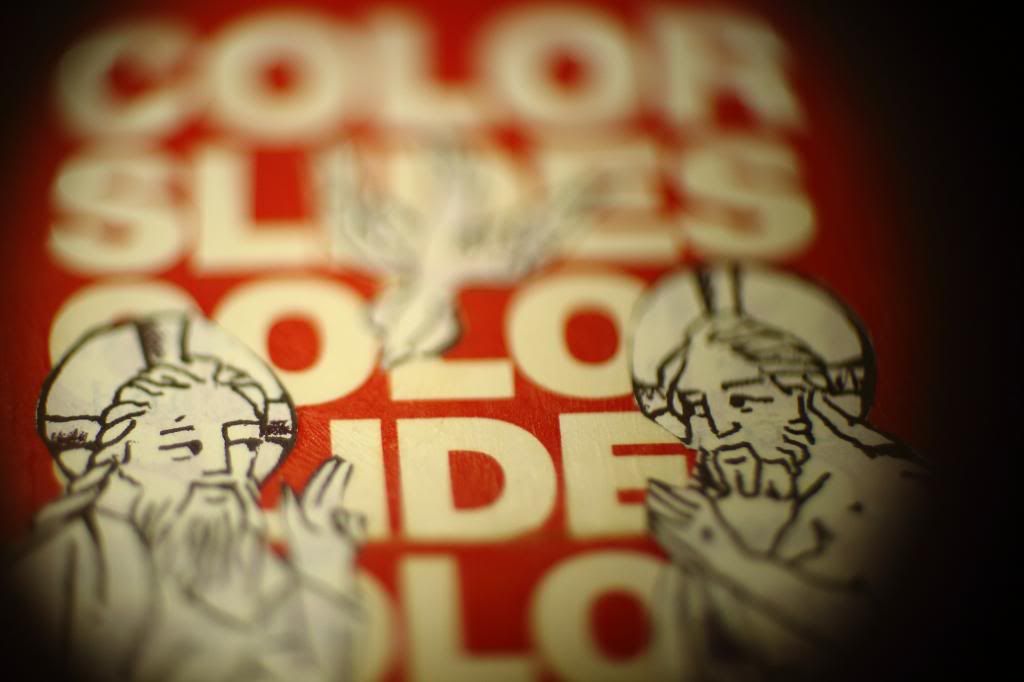
Here it is. Here it is. Just in time for you to use in any of your own projects at home, work, school, or church: this week's free background image. These images are free for you to download and to use - I only ask that you 1) share them freely and 2) that you tell others that you found them here.

This one was made with the Sunday's gospel reading in mind - of Jesus' baptism in Matthew 3; 13 - 7.

Sunday, January 10, 2016

The Failure of Messianic Expectations


Expectations are tricky things. They can keep the fires of hope burning within us when all seems lost, or they can come crashing down around us in splinters and shards of disappointment when they’re not met.

Is a dream a lie if it don't come true,
or is it something worse? (Springsteen)

The people of Israel in the first century lived with a deep expectation, or rather, deep expectations, plural. They waited for a hero, a savior, a messiah but there was no one understanding of what this Messiah would be like. Some expected a warrior and a king, noble and powerful to lead them into battle and victory, a mighty man who would throw off the shackles of their foreign oppressors. Others expected a priestly messiah, who would lead the people to righteousness obedience before God and his torah. They lived with expectations drawn from their own deep longings and from the words of the Holy Scriptures. But there wasn’t a single unified expectation about the Messiah; there were many competing, multivalent interpretations. There was a deep sense of anticipation in the people, a longing, a dream of rescue and salvation, of restoration, redemption and succor, even if this longing was expressed in many different expectations.

So we find them at the beginning of this week’s text-the people of Israel filled with expectations and questions. They’ve come out to the wild place to hear the preaching of John and to be baptized by him in the waters of the Jordan.  Is he, could he be the Messiah, the Christ, the one that we’ve been waiting for?

What I find interesting here is that John the Baptizer had very little in common with the generally held expectations of the coming messiah: he was not a mighty warrior, not a prince or a king, and though he came from a priestly family, he’d (seemingly) renounced the priestly call to live the life of a prophetic hermit in the wildness, wearing camel hair and eating locusts and honey. John the Baptizer did not look like the generally conceived picture of the Christ.

Neither did he perform any (recorded) miracles. He did not provide miracle food for crowds of thousands, he did not walk on water (only shoved people under it), he calmed no storms, exorcised no demons, healed no lepers, restored no sight to the blind or voice to the mute. He did not cleanse the lepers or raise the dead. His reputation was based solely on his fiery preaching and his baptismal ministry. “Yet he moved people so mightily they began to suspect he was the messiah” (Robertson 42).

His words, his fire, his energy, his authenticity, his passion drew the people from across the land to the wild lands. They left the comfort of their homes to hear him preach repentance at the edge of the Jordan. And hearing him, their expectations and dreams were fired up again. After desperate years, after others had failed, after hurts and disappointments, the ministry of John at the water’s edge stirred up dying fire of their hopes.  And they questioned in their hearts whether perhaps he were the Christ. Could he be? Should we dare to hope again?

But if the people thought John might be the longed for Messiah, he would disappoint them. He told them directly, without ambiguity or hedging: he was not the one they desired. “I baptize you with water,” he said, “but he who is mightier than I is coming, the thong of whose sandal I am not worthy to untie.”  Even as his reputation grew, John was diminishing himself, pushing away the expectations the crowds foisted upon him. “I baptize you with water…he will baptize you with the Holy Spirit and with fire. His winnowing fork is in his hand, to clear his threshing floor, and to gather the wheat into his granary, but the chaff he will burn with unquenchable fire” (Luke 3: 16 – 17 RSV).

John, too, had a set of beliefs about the long expected savior-expectations that he was never quite able to reconcile with the one he believed to be the Messiah. At the end of his life, as he was locked up in Herod’s prison, he sent two of his disciples to Jesus to ask, “Are you he who is to come, or shall we look for another?” (Luke 7:20 RSV). 

Expectations are tricky things. 

And Jesus confounds our expectations here as well; he comes into the story and is baptized in the Jordan by John.  Why? Why would he do this?  Baptism, while not a part of the regular practice of mainstream Judaism of that time and place, was not unheard of or uncommon. The Jewish historian Josephus, in his autobiography, wrote, “…but when I was informed that one, whose name was Banus, lived in the desert and used no other clothing than what grew upon the trees, and had no other food than what grew of its own accord, and bathed himself in cold water frequently, both night and day, in order to preserve his chastity… I imitated him in those things and continued with him three years” (Josephus “Life” 2).

And Banus and John were not alone in practicing a form of baptism; other baptismal movements also appeared in the area (Hartman 583). Banus, Josephus’ mentor, used baptism as method to preserve his chastity and self-control; also common during that time was a form of baptism given to gentiles who converted to Judaism (Hartman 583). But John’s message and preaching was of a “baptism of repentance for the forgiveness of sins” (Luke 3: 3 RSV).

But why would Jesus, sinless Jesus, the Son of God, need to be baptized in a baptism of repentance for the forgiveness of sins? Mark and Luke do not describe Jesus’ motives. He comes to John and is baptized by him without any word of explanation. Matthew, sensing something of our discomfort, pauses to have John question Jesus, “I need to be baptized by you, and do you come to me?” and for Jesus to respond, “Let it be so now; for thus  it is fitting for us to fulfill all righteousness” (Matthew 3:14 – 15) – but this doesn’t really give much of an explanation.

Our question lingers there in the water with Jesus. Our expectations come up against the person of Jesus and are stymied. They don’t fit. Our expectations don’t fit the fulfillment. Expectations rarely do.

Our expectations are too small or too large; they don’t fit.

When I was younger I expected that I would eventually begin to ‘understand’ things. I’m getting older now and that expectation is starting to feel ill-fitting. Young people often expect that they’ll be famous or that they’ll do something extraordinary, that they’ll change the world. “We've all been raised on television to believe that one day we'd all be millionaires, and movie gods, and rock stars. But we won't. And we're slowly learning that fact. And we're very, very pissed off” (Palahniuk).

People get married expecting that a spouse will make everything better. People start families, have babies because they expect that children will bring happiness and sense of completeness and fulfillment to their lives. There is often bitter disappointment when those expectations are shattered.

Expectations are tricky; they keep the embers of hope glowing within us, keep us longing for a better future. But when our expectations come up against reality they rarely fit. And what will we do?

Like the people of Israel in early years of the first century, going out into the wilderness to hear the preaching of John the Baptizer, our expectations for the messiah are frequently ill-fitted. Jesus confounds us at nearly every turn. He loves those we would despise. He forgives those we’d condemn. He relaxes codes that we would tighten. He tightens rules that we’d relax. He moves when we’d stay and refuses to leave when we’d get up and go.

He is variously described by his followers as a military general, a prince of peaceful non-violence, a capitalist CEO, a socialist liberator, a radical, a conservative, a hippy, a teacher, a hero, a king, a brother, a father, a lover. But when the person of Jesus is approached and considered without the baggage of our anticipations, each of those expectations is found wanting in some way. And the fault is not in Jesus, but in our expectations. 

If John the Baptist was unsure if Jesus was the one he was waiting for, if the people of the first century failed to recognize Jesus as the Messiah, was the failure in Jesus, or in their expectations? And if Jesus doesn’t meet our expectations, where does the fault lie?

Have we been disappointed with Jesus? Is the disappointment in Jesus or in the failure of our expectations?


Hartman, Lars. “Baptism.” Anchor Bible Dictionary-Volume I. New York, NY: Doubleday. 1992.

Josephus, Flavius. The Life of Flavius Josephus. Translated by William Whiston. Grand Rapids, MI: Kregal Publication. 1960.

Palahniuk, Chuck. Fight Club. W.W. Norton. 1996.

Robertson, Archibald Thomas. Word Pictures in the New Testament: Volume II Luke. Nashville, TN: Broadman Press. 1930.


Springsteen, Bruce. “The River” The River. Columbia. 1980.

Revised Standard Version: New York, NY: Oxford University Press, 1973.

Wednesday, January 6, 2016

Biblical Limericks: Messiah?


Though Herod thought him a pariah,
the crowds said, ‘he’s one we admiah…’
all across the nation
they had expectations:
could John the Baptist be Messiah?

Luke 3: 15

(apparently the crowds were from Boston...)

Wednesday, February 25, 2015

Biblical Limericks: John the Baptizer


John the Baptizer’s one to beware;
he goes about in his underwear,
leather belt at his waist,
he never feels disgraced
though his clothes are made of camel hair.

Mark 1: 6

I've been in a mood for camels recently.  

Monday, January 5, 2015

The Baptism of Jesus


…at the moment Jesus was coming up out of the water
he saw heaven being torn apart…
       Mark 1: 10

A jagged gash in the sublunary world
heaven and earth ripped wide
A flood bleeding through the ragged wound

Judean cliffs of ancient stone
crumple and collapse upon
the panicked crowd gathered at the water’s edge

Great armored locusts
with claws and silver fangs
swarm in the billowing dust

A lion with blood-matted mane
leaps into the sky
and swallows the sun

There is no light
darkness comes
the final night

Then

An exhalation
sweeping wings descend
a dove – a voice

“You are my son
my only son
my beloved”

Jesus rises from the Jordan
wipes the water from his face
and sees the world
Jeff Carter's books on Goodreads
Muted Hosannas Muted Hosannas
reviews: 2
ratings: 3 (avg rating 4.33)

Related Posts with Thumbnails